7 Essential Ways to Spark Visual Content Inspiration
Discover 7 actionable methods for visual content inspiration to help creators and marketers generate fresh, cinematic video ideas and boost creative workflows.
7 Essential Ways to Spark Visual Content Inspiration
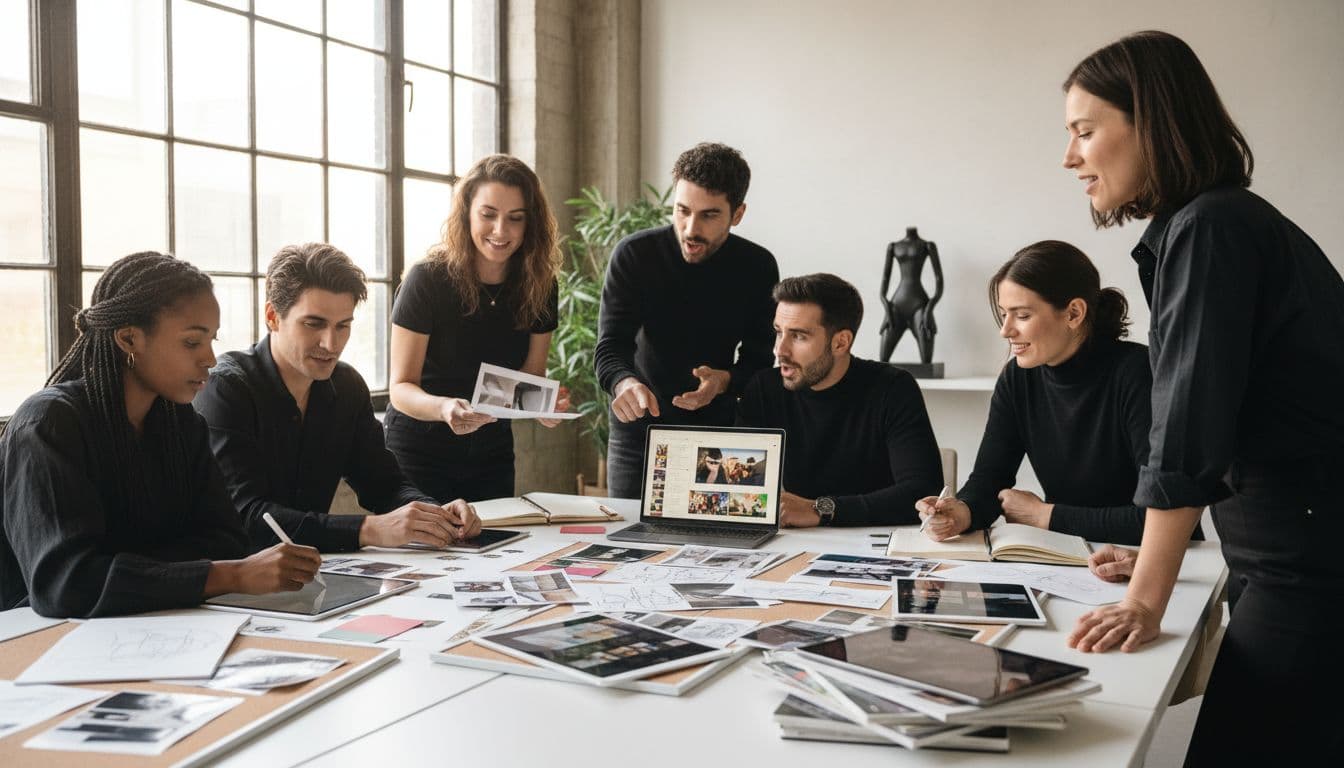
Most american creators know the struggle of turning scattered ideas into strong visual content. With creative industries evolving faster than ever, finding a clear path from inspiration to finished work matters. Research shows that collaborative moodboards and AI tools help speed up the ideation process, letting teams generate and refine concepts much faster. This guide reveals practical ways to use visual planning, cutting edge technology, and teamwork to create content that connects and stands out.
Table of Contents
- 1. Start With Moodboards For Quick Idea Generation
- 2. Leverage AI Tools To Expand Visual Concepts
- 3. Use Storyboarding To Visualize Narratives
- 4. Draw Inspiration From Trending Video Styles
- 5. Mix Reference Images For Unique Visual Impact
- 6. Map Brand Values To Visual Themes Effectively
- 7. Collaborate And Gather Feedback For Fresh Insights
Quick Summary
| Takeaway | Explanation |
|---|---|
| 1. Start with Moodboards for Ideation | Use moodboards to quickly generate and align creative visual concepts across your team. |
| 2. Utilize AI for Concept Expansion | Leverage AI tools to break through creative blockades and explore diverse design variations. |
| 3. Employ Storyboarding for Narratives | Storyboarding helps visualize your narrative, ensuring clarity and emotional progression in your content. |
| 4. Draw from Current Video Trends | Analyze and adapt trending visual styles to keep your content engaging and relevant in today's fast-paced landscape. |
| 5. Mix Reference Images Creatively | Combine contrasting visual elements to create original concepts, enhancing your design's uniqueness and appeal. |
1. Start with Moodboards for Quick Idea Generation
Visual inspiration can strike anywhere, but capturing those creative sparks systematically transforms scattered thoughts into actionable content strategies. Moodboards are your secret weapon for rapid visual content ideation, allowing you to quickly map out aesthetic directions and creative concepts.
Research from Arxiv highlights how AI tools are revolutionizing the ideation process, particularly in design and creative fields. The paper 'AIdeation' demonstrates that collaborative human-AI systems can dramatically accelerate concept generation by facilitating visual exploration through moodboards.
Why Moodboards Matter:
- Provide a visual roadmap for your creative vision
- Help align team understanding of project aesthetics
- Allow rapid iteration and conceptual experimentation
- Serve as a touchstone for future content development
Starting your visual content journey with a moodboard allows you to experiment without commitment. Gather images, color palettes, textures, and reference materials that capture the mood and style you want to achieve. Tools like Google's Mixboard now offer AI-powered capabilities to generate mood boards from simple text prompts, making the process even more streamlined.
Pro tip: When creating your moodboard, think beyond just pretty pictures. Select visuals that communicate emotion, tell a story, and represent the core message of your planned content. Your moodboard should feel like a visual narrative that excites and guides your creative process.
2. Leverage AI Tools to Expand Visual Concepts
When creative blockades hit, artificial intelligence becomes your most powerful brainstorming partner. AI tools are not just technological marvels but intelligent collaborators capable of transforming your initial visual concepts into expansive, innovative designs.
Research from Arxiv reveals fascinating developments in AI assisted design, particularly with systems like SketchConcept. This groundbreaking tool maps functional descriptions directly to visual components, enabling designers to explore creative possibilities far beyond traditional methods.
Key Benefits of AI Visual Concept Expansion:
- Generate multiple design variations quickly
- Break through creative limitations
- Explore unconventional design paths
- Reduce time spent on initial concept development
The D-Graph tool demonstrates how semantic exploration can unlock unique design concepts. By analyzing your initial visual inputs, AI can suggest unexpected connections and interpretive variations that human designers might overlook. This means you are not just generating images but creating entire visual narratives with intelligent computational support.
To effectively leverage AI tools, approach them as creative collaborators. Start with clear, descriptive prompts that communicate your core visual intent. Experiment with different inputs, examine the generated variations, and use AI suggestions as springboards for your own creative refinement. Remember that AI generates possibilities while your creative judgment curates and elevates the final concept.
3. Use Storyboarding to Visualize Narratives
Storytelling is an art form where visual sequencing transforms abstract ideas into compelling narratives. Storyboarding acts as the blueprint for your creative vision, allowing you to map out complex stories frame by frame before investing significant production resources.
The Visual Understanding Environment provides powerful tools for concept mapping that can revolutionize how creators approach narrative visualization. By breaking down your story into sequential visual components, you can identify potential flow issues and narrative gaps before actual production begins.
Storyboarding Strategic Elements:
- Establish clear narrative progression
- Visualize scene transitions
- Identify potential storytelling challenges
- Create a comprehensive visual guide
While traditional storyboarding involved hand drawn sketches, modern platforms like the VIPLE programming environment demonstrate how computational thinking can enhance narrative visualization. These tools help creators structure their stories with precision and creativity.
To effectively storyboard, start with broad narrative beats. Sketch or digitally create key scene moments that capture emotional transitions and critical plot points. Focus on clarity and visual communication rather than artistic perfection. Your goal is to create a clear roadmap that communicates the story arc concisely and powerfully.
Pro tip: Think of your storyboard as a visual script. Each frame should answer three key questions how does this moment advance the story, what emotion does it convey, and how does it connect to the surrounding scenes?
4. Draw Inspiration from Trending Video Styles
The digital content landscape moves at lightning speed, with visual trends emerging and transforming almost daily. Understanding and adapting current video styles can help your content feel fresh, relevant, and deeply engaging to modern audiences.
Tools like Stable Diffusion are revolutionizing how creators explore and experiment with visual styles. This deep learning model allows you to generate images based on textual descriptions, effectively giving you a playground to visualize and understand emerging aesthetic trends.
Strategic Trend Analysis Approaches:
- Monitor popular social media platforms
- Analyze viral video content
- Study content from leading creators in your niche
- Experiment with AI generated visual references
While blindly copying trends is not recommended, understanding their underlying mechanics can spark creative innovation. Eclipse Theia demonstrates how technological frameworks can help creators analyze and adapt emerging design patterns. By deconstructing what makes a trend compelling typically its emotional resonance, visual rhythm, or narrative structure you can integrate those elements into your unique creative vision.
To effectively draw inspiration, become a curious observer. Watch content across different platforms, noting visual techniques that capture attention. Pay attention to color grading, transition styles, camera movements, and storytelling approaches. Your goal is not mimicry but understanding the creative principles driving current visual communication trends.
5. Mix Reference Images for Unique Visual Impact
Visual creativity thrives at the intersection of unexpected combinations. By strategically mixing reference images, you can generate completely original visual concepts that transcend traditional design boundaries.
Research from the AIdeation system demonstrates how image recombination can unlock innovative design outcomes. This approach transforms reference images from static inspiration to dynamic creative building blocks, enabling designers to craft truly unique visual narratives.
Strategic Image Mixing Techniques:
- Select images from contrasting visual domains
- Focus on complementary color palettes
- Identify structural or compositional similarities
- Experiment with unexpected juxtapositions
The SketchConcept tool provides fascinating insights into how visual components can be integrated to create compelling design outcomes. By breaking down images into fundamental visual elements like texture, color, shape, and mood, you can reconstruct them in ways that generate entirely new creative expressions.
To mix reference images effectively, think beyond literal representation. Look for abstract connections between images such as emotional resonance, underlying geometric patterns, or shared chromatic qualities. Your goal is not to clone existing visuals but to create something that feels simultaneously familiar and surprising. Approach this process like a visual alchemist transforming discrete elements into an entirely new creative substance.
6. Map Brand Values to Visual Themes Effectively
Every visual story begins with a core narrative your brand wants to communicate. Translating abstract brand values into compelling visual themes requires strategic thinking and creative insight.
Research from the Character Space Construction tool reveals sophisticated methods for articulating product aesthetics that authentically represent brand semantics. This approach goes beyond superficial design choices, diving deep into how visual elements can communicate core organizational principles.
Brand Value Visual Mapping Strategies:
- Identify core emotional attributes
- Translate abstract concepts into visual metaphors
- Analyze color psychology and symbolism
- Create consistent visual language across media
The D-Graph tool demonstrates how semantic exploration can help designers develop design concepts that genuinely reflect brand identity. By breaking down brand values into fundamental visual components, you can create a visual language that resonates on both intellectual and emotional levels.
To map brand values effectively, start by deeply understanding your organization's core principles. Are you about innovation? Consider sleek, forward looking designs with clean lines and progressive color palettes. Representing tradition? Explore classic typography, muted color schemes, and visual elements that suggest heritage and reliability. Your visual themes should feel like a natural extension of your brand narrative, not an afterthought.
7. Collaborate and Gather Feedback for Fresh Insights
Creative breakthroughs rarely happen in isolation. The most innovative visual content emerges from dynamic collaborative environments where diverse perspectives can challenge and expand your initial concepts.
Research from the AIdeation system highlights how collaborative platforms can dramatically enhance the ideation process. By creating spaces where multiple creators can contribute and refine ideas, you unlock potential far beyond individual creative capabilities.
Effective Collaboration Strategies:
- Create open feedback channels
- Invite perspectives from different disciplines
- Practice active listening
- Embrace constructive criticism
- Develop a culture of mutual respect
The SketchConcept tool demonstrates how collaborative design can generate unique visual insights. By allowing multiple users to contribute and iteratively refine concepts, you transform creative work from a solitary pursuit into a rich collaborative experience.
To gather meaningful feedback, establish clear communication protocols. Set specific parameters for critique create a safe environment where team members feel comfortable sharing unfiltered observations. Remember that valuable feedback is not about proving someone wrong but about collectively elevating the creative vision. Treat each perspective as a potential catalyst for innovation, recognizing that breakthrough ideas often emerge from unexpected conversations and diverse viewpoints.
Below is a comprehensive table summarizing strategies and tools for enhancing visual content creation discussed throughout the article.
| Strategy | Implementation | Benefits |
|---|---|---|
| Moodboards | Use tools like AI-powered Mixboard to organize visuals into a cohesive direction. | Aligns team understanding, allows experimentation, and guides future content development. |
| AI in Concept Expansion | Utilize AI tools like SketchConcept and D-Graph for generating design variations. | Breaks through creative limitations and reduces concept development time. |
| Storyboarding | Develop narratives using digital platforms to map story progression. | Visualizes transitions, identifies gaps, and creates a visual guide. |
| Trend Analysis | Use tools like Stable Diffusion to examine and adapt current video trends. | Ensures content remains fresh and engaging by understanding underlying elements. |
| Image Mixing | Combine different reference images, focusing on unexpected connections. | Creates unique visuals beyond traditional boundaries. |
| Mapping Brand Values | Translate brand principles into visual themes using tools like Character Space Construction. | Develops a visual language resonating on intellectual and emotional levels. |
| Collaborative Feedback | Establish open feedback channels and dynamic collaborative environments. | Enhances ideation process and leads to innovative visual content creation. |
Transform Your Visual Content Ideas into Cinematic Videos Effortlessly
If you have ever struggled to bring your visual content inspiration to life or found it challenging to translate moodboards, storyboards, and brand values into compelling videos, you are not alone. Creative blocks and time-consuming workflows can drain your energy and stall progress. That is why leveraging AI-powered tools designed specifically for video creation is a game changer for creators seeking to expand and refine their visual concepts quickly and professionally.
Palmedor.ai removes the technical hurdles by transforming your simple prompts, reference images, and narrative ideas into high-quality, cinematic videos with minimal effort. Whether you want to experiment with AI-generated scene variations, showcase brand values through smart visual themes, or integrate moodboards directly into your project, Palmedor.ai gives you a seamless platform to accelerate every step of the creative process.
Experience a faster way to bring your visual narratives to life using our AI-driven video creation tools. Start transforming your inspirational ideas into polished video content today by visiting Palmedor.ai. Discover how effortless video production becomes when you let AI handle scene management, editing, and rendering so you can focus on storytelling. Ready to unlock fresh creative possibilities now? Explore Palmedor.ai and take your visual content to the next level.
Frequently Asked Questions
How can I use moodboards to generate visual content ideas?
Starting with moodboards helps you capture creative sparks and map out your visual concepts. Collect images, colors, and textures that reflect your ideas, and arrange them in a cohesive layout. This will create a visual roadmap that guides your content creation process.
What are effective ways to leverage AI tools for visual concept expansion?
AI tools can help you quickly generate multiple design variations and break through creative blocks. Experiment with clear descriptive prompts and analyze the outcomes for further refinement. Aim to explore at least three different variations to inspire your final designs.
How can storyboarding enhance my visual storytelling?
Storyboarding enables you to visualize your narrative frame by frame, creating a structured blueprint for your story. Start by outlining key scenes and transitions, ensuring each moment contributes to the overarching narrative. This approach helps identify gaps and improves clarity in your storytelling.
What should I consider when drawing inspiration from trending video styles?
To effectively adapt trending video styles, monitor popular content on various platforms and analyze their visual techniques. Focus on elements like color grading, camera movements, and emotional resonance. Aim to take notes on at least five visual trends that resonate with your audience's preferences.
How do I mix reference images for unique visual impact?
Mixing reference images allows you to create original visual concepts by combining different elements. Select images from contrasting domains, focusing on complementary colors and structural similarities. Experiment with at least three unexpected combinations to discover new creative expressions.
How can I map my brand values to visual themes effectively?
To map brand values to visuals, identify your core principles and translate them into visual metaphors and consistent design elements. Analyze the symbolism behind colors and styles to ensure they reflect your brand's identity. Create at least three visual drafts that embody these values for further exploration.