Video Production Project Management: Complete Guide
Comprehensive guide to video production project management covering workflow stages, essential roles, tools, workflows, budgeting, risks, and common pitfalls.
Video Production Project Management: Complete Guide
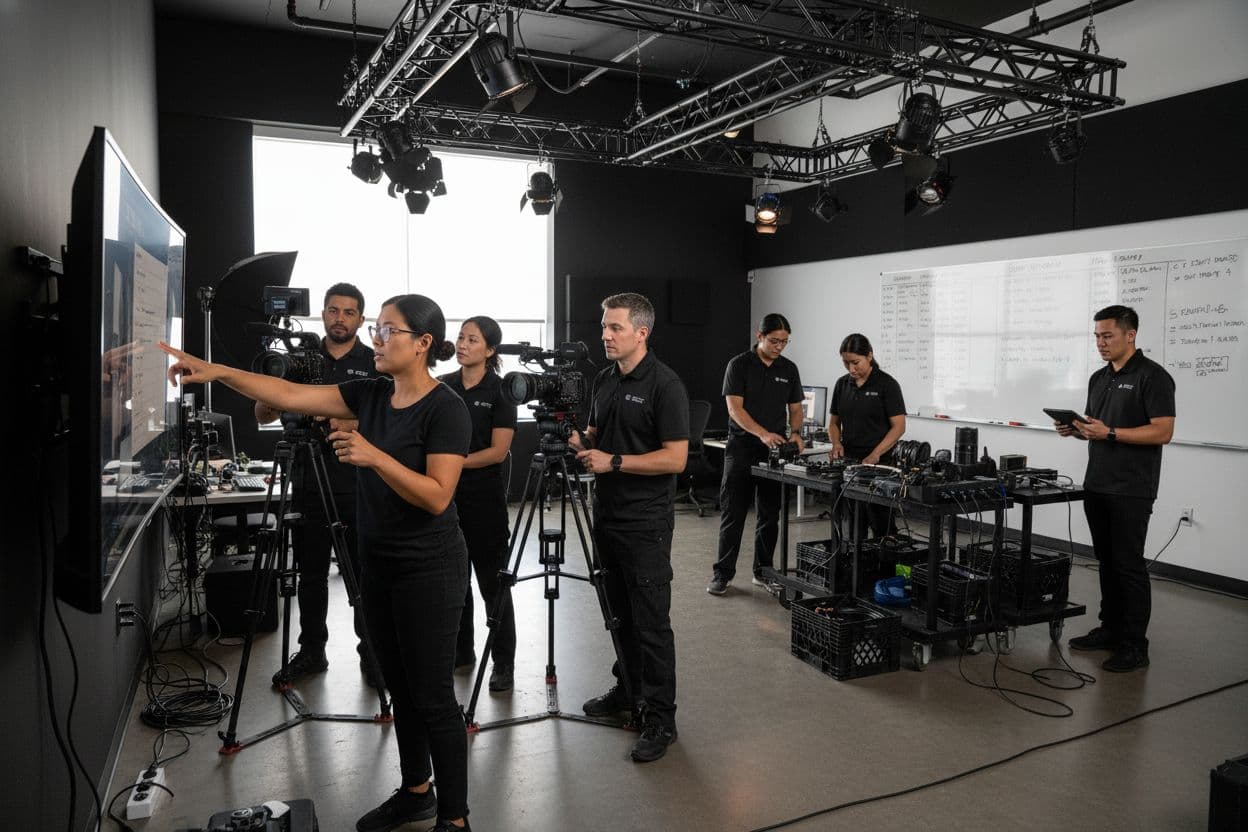
Did you know that over 80 percent of successful video projects credit strong project management as the key to staying on track and under budget? In the fast-paced world of video production, creative talent alone does not guarantee a polished final product. Knowing how to organize teams, schedules, and resources is what transforms an original idea into a memorable story on screen. Mastering these fundamentals means fewer surprises, smoother workflows, and results your audience will remember.
Key Takeaways
| Point | Details |
|---|---|
| Effective Project Management | Centralized communication, schedule coordination, and collaboration are essential to transition from concept to final product in video production. |
| Iterative Production Workflow | The production process is nonlinear, involving continuous feedback loops that refine the creative output through various stages. |
| Resource Allocation and Budgeting | Strategic budgeting is vital, requiring careful planning and flexibility to manage costs effectively without compromising creativity. |
| Risk Management in Production | Proactively identifying and addressing potential pitfalls strengthens resilience and adaptability in executing video projects. |
Table of Contents
- Defining Video Production Project Management Fundamentals
- Key Stages of the Production Workflow
- Essential Roles and Responsibilities Explained
- Project Management Tools and Automation Solutions
- Budgeting, Scheduling, and Resource Allocation
- Avoiding Common Pitfalls and Managing Risk
Defining Video Production Project Management Fundamentals
Video production project management transforms creative chaos into structured success. It's about taking your big vision and breaking it down into actionable steps that turn imagination into reality. Project management in video production isn't just administrative work - it's the strategic backbone that ensures your creative team moves smoothly from concept to final cut.
According to research from NimbleWork, effective production management centers on several critical components:
- Centralized communication channels
- Rapid schedule coordination
- Seamless team collaboration
- On-set logistics management
Successful video projects require more than just talent. They demand meticulous planning and precise execution.
 As insights from HyperWrite suggest, this means:
Here's a comparison of core project management components in video production:
| Component | Purpose | Example in Video Production |
|---|---|---|
| Communication Channels | Ensure clear team interaction | Slack channels, Production meetings |
| Schedule Coordination | Align timelines and deadlines | Shooting calendars, Call sheets |
| Team Collaboration | Foster creative cooperation | Script reviews, Brainstorming sessions |
| Logistics Management | Organize resources and equipment | Equipment checklists, Location bookings |
| Task Assignment | Clarify roles and responsibilities | Crew duty lists, Department briefs |
| Progress Monitoring | Track milestones and deadlines | Status dashboards, Daily wrap reports |
- Clearly defining project goals
- Breaking complex work into manageable tasks
- Assigning clear team responsibilities
- Creating comprehensive project schedules
- Implementing consistent progress monitoring
Think of project management like directing an orchestra - every team member plays a crucial role, and your job is to ensure they're synchronized, motivated, and moving toward a shared creative vision. Without strong management, even the most brilliant concept can dissolve into disorganized confusion.
Key Stages of the Production Workflow
The video production workflow is a strategic journey from initial concept to polished final product, with each stage requiring precise execution and creative problem-solving. Production workflow isn't a linear path but an interconnected series of creative and technical processes that transform raw ideas into compelling visual narratives.
According to research from Markup.io, post-production involves a complex, iterative process that goes far beyond simple editing. The typical workflow includes:
- Rough cut creation
- Fine-tuning the initial edit
- Sound editing and music integration
- Visual effects implementation
- Audio level mixing
- Color grading and final adjustments
Each stage demands specialized skills and meticulous attention to detail. The rough cut establishes the fundamental narrative structure, while subsequent stages refine the visual and auditory experience. Sound editing, for instance, isn't just about cleaning audio - it's about creating an emotional landscape that complements the visual storytelling.
The magic of a successful production workflow lies in its feedback loops. Teams continuously review and adjust, ensuring that each refinement moves the project closer to the original creative vision. This iterative approach minimizes extensive revisions and allows for incremental improvements, transforming a good video into an exceptional one. Think of it like sculpting - each pass reveals more of the hidden masterpiece within the raw material.
Essential Roles and Responsibilities ExplainedVideo production is a complex ecosystem where each team member plays a critical role in transforming creative vision into reality. Collaborative dynamics are the heartbeat of successful video projects, with every professional bringing specialized skills that contribute to the final product's quality and impact.According to research from Wikipedia, the line producer serves as the production's chief operations officer. Their responsibilities span a comprehensive range:
- Managing daily production logistics
- Overseeing budgetary constraints
- Coordinating crew schedules
- Handling location logistics
- Ensuring on-set safety protocols
- Managing equipment requirements
- Tracking overall physical production needs
In broadcast and live video environments, technical director roles become even more nuanced. These professionals are the technical maestros who:
- Operate sophisticated video switchers
- Manage complex video and audio feeds
- Control graphics and visual transitions
- Ensure broadcast-quality signal outputs
- Coordinate entire technical production crews
Beyond these key roles, successful video production requires a symphony of talents - from creative directors who shape the narrative vision to sound engineers who craft immersive audio landscapes. Each team member is a crucial puzzle piece, transforming individual expertise into a cohesive, compelling visual story. The magic happens when these professionals synchronize their skills, turning technical precision into emotional storytelling.

Project Management Tools and Automation Solutions
Project management technology has revolutionized video production, transforming complex workflows into streamlined, collaborative experiences. Gone are the days of endless spreadsheets and missed communications - modern tools bring precision, transparency, and efficiency to creative projects.
According to research from NimbleWork, effective project management tools now offer comprehensive features like:
- Real-time timeline tracking
- On-set logistics management
- Centralized task communication
- Schedule update capabilities
- Seamless team integrations (e.g., Slack)
Research from HyperWrite highlights additional automation solutions that dramatically enhance workflow efficiency:
- Gantt-chart project scheduling
- Cloud-based collaboration platforms
- Digital asset management systems
- Version control mechanisms
- Automated quality control checkpoints
These tools aren't just about tracking progress - they're about creating an ecosystem where creativity and technical precision coexist. By automating repetitive tasks and providing centralized communication channels, teams can focus on what truly matters: crafting compelling visual stories. Think of these technologies as your behind-the-scenes production assistants, quietly ensuring everything runs smoothly while you concentrate on bringing your creative vision to life.
Budgeting, Scheduling, and Resource Allocation
Resource management is the strategic heartbeat of successful video production, transforming creative vision into financial reality. It's a delicate balance of artistic ambition and practical constraints, where every dollar and minute must be carefully choreographed to maximize production value.
According to research from Venture Videos, effective budgeting requires more than simple number-crunching. Key considerations include:
- Accounting for licensing and rights costs
- Allocating funds for distribution
- Establishing a contingency fund (10-15% of total budget)
- Implementing ongoing spending reviews
- Maintaining financial flexibility
Research from Evercast reveals the intricate pre-production planning process. Budget development is a collaborative effort involving:
- Department-level estimates from department heads
- Coordination by the line producer
- Detailed scheduling after finalizing cast, locations, and equipment
- Collaborative schedule creation between assistant directors, producers, and directors
Think of budgeting like composing a complex musical piece - each instrument (or in this case, each production element) must harmonize perfectly. Successful resource allocation isn't about cutting costs, but about strategic investment that transforms limited resources into extraordinary creative output.
Avoiding Common Pitfalls and Managing Risk
Project risk management is the invisible shield that protects your video production from potential catastrophes. It's not about preventing every possible problem, but about building resilience and adaptability into your production workflow.
According to research from Visual Planning, the most critical project management pitfalls include:
- Inadequate planning leading to missed dependencies
- Poor communication causing project stagnation
- Uncontrolled scope creep
- Lack of transparent team coordination
- Insufficient contingency strategies
Research from Venture Videos emphasizes strategic risk mitigation techniques:
- Allocate contingency funds for unexpected events
- Conduct regular budget and timeline reviews
- Proactively adjust plans to prevent disruptions
- Implement early warning detection systems
- Create flexible adaptation strategies
Think of risk management like a safety net for your creative dreams. It doesn't restrict your vision - it empowers you to take calculated creative risks, knowing you have a strategic backup plan. The most successful productions aren't those that never encounter challenges, but those that can gracefully navigate and overcome them.
Transform Your Video Production Workflow With Palmedor.ai
Are you struggling to juggle complex project management tasks, scheduling, and resource allocation in your video production process? Modern production thrives on streamlined communication, efficient workflow automation, and clear collaborative roles. Yet traditional methods often leave creative teams stuck in endless planning cycles and overwhelmed by technical obstacles. You deserve a solution that frees you to focus on creativity and storytelling, not tedious coordination.

Experience firsthand how Palmedor.ai turns your project management challenges into effortless success. Generate scripts, manage scenes, and coordinate every production stage in one powerful platform. You can upload a prompt or image and see your vision brought to life with professional quality results. Stop letting complexity hold back your creative ambitions. Start your next project today by visiting the Palmedor.ai FAQ for more details or discover inspiring case studies on the Palmedor.ai Blog. Bring clarity and cinematic excellence to your story now.
Frequently Asked Questions
What is video production project management?
Video production project management involves organizing and overseeing all aspects of a video production, from initial concept to final cut, ensuring that tasks are completed on time, within budget, and to the desired quality.
What are the key stages of the video production workflow?
The key stages of the video production workflow include pre-production, production, and post-production. Each stage requires specific tasks, such as script writing, filming, and editing, each contributing to the overall narrative structure and quality of the video.
What tools can enhance video production project management?
Tools that enhance video production project management include project scheduling software like Gantt charts, cloud-based collaboration platforms, and digital asset management systems, all of which streamline workflows and improve communication among team members.
How can I effectively budget for a video production project?
Effective budgeting for a video production project involves accounting for all potential costs, including crew, equipment, locations, and a contingency fund for unexpected expenses. Continuous monitoring and adjustments are also important to stay within budget.