Video Making Company: Complete Guide
Comprehensive guide to establishing a video making company—from definitions and types to legal setup, operations, risks, and comparisons—expert overview.
Video Making Company: Complete Guide

Did you know that the global video production industry is expected to surpass $45 billion by 2026? Businesses and creators depend on video making companies to transform raw ideas into captivating stories that connect with audiences. From commercials to documentaries, these organizations blend creativity and technology to deliver polished content for every screen. Understanding how video making companies work helps you choose the right partner and achieve the best outcomes in today's fast-evolving media world.
Table of Contents
- Defining A Video Making Company
- Types And Business Models
- How A Video Making Company Functions
- Legal Setup And Requirements
- Risks, Costs And Compliance
- Comparing Alternatives And Mistakes To Avoid
Key Takeaways
| Point | Details |
|---|---|
| Video Making Company Essentials | A successful video making company requires a strong technical infrastructure, creative talent, and sophisticated project management to effectively produce visual narratives. |
| Diverse Business Models | Companies operate under various business structures, such as independent and freelance networks, allowing flexibility to cater to distinct client needs and market demands. |
| Operational Workflow | The production process is systematic, involving key stages from development to distribution, demanding integration of advanced technologies for efficient content creation. |
| Legal and Financial Considerations | Establishing a video making company necessitates robust legal frameworks and effective risk management strategies to navigate intellectual property rights and project funding challenges. |
Defining a Video Making Company
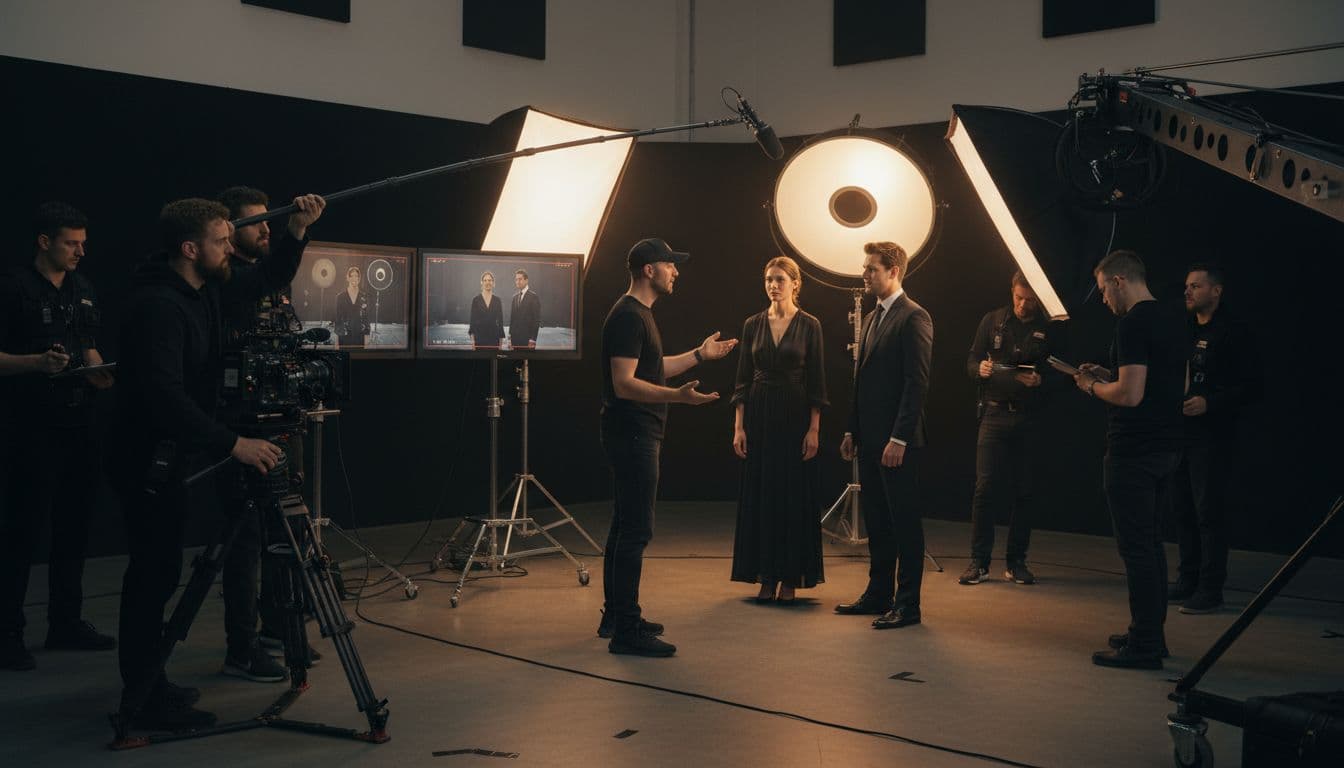
A video making company transforms creative concepts into visual narratives through strategic media production. According to Wikipedia, a production company is a studio that creates works across multiple media platforms, including film, television, video, and interactive arts, typically comprising technical staff organized as a commercial entity.
Key Components of a Video Making Company:
- Technical production infrastructure
- Creative talent pool
- Advanced video creation technologies
- Project management capabilities
- Distribution and post-production services
As defined by UK Government, a production company fundamentally exists to "make" the media product - focusing on the actual manufacturing process rather than just creative ideation. This means translating abstract ideas into concrete visual experiences through systematic workflow and professional execution.
Modern video making companies have evolved beyond traditional studio models. They now integrate advanced technologies like AI-powered rendering, cloud-based collaboration tools, and sophisticated editing platforms. These organizations serve diverse markets - from corporate marketing teams seeking promotional content to independent filmmakers developing narrative projects. The core mission remains consistent: converting imaginative concepts into compelling visual stories that engage, inform, and inspire audiences across multiple platforms.
Types And Business Models
Video making companies operate through diverse business structures that reflect their strategic objectives and market positioning. According to Wikipedia, production companies can function as mini conglomerates, managing multiple divisions across various entertainment and media sectors, allowing substantial operational flexibility.
Primary Business Model Categories:
- Independent Production Companies
- Studio-Affiliated Production Houses
- Freelance Collaborative Networks
- Corporate Media Production Departments
- Specialized Niche Content Creators
Wikipedia further highlights that production companies can strategically operate as affiliates under contract or as subsidiaries for larger entertainment entities, typically being smaller than their primary partnership organizations. These arrangements enable companies to leverage established infrastructures while maintaining creative autonomy.
The contemporary video production landscape has evolved to include hybrid models that blend traditional approaches with emerging technologies. Some companies specialize in specific content types like corporate videos, while others offer comprehensive end-to-end production services. Emerging business models increasingly incorporate AI-driven tools, remote collaboration platforms, and flexible pricing structures that cater to diverse client needs - from independent creators to large multinational corporations seeking dynamic visual storytelling solutions.
Here's a comparison of primary video making company business models:

| Business Model Type | Ownership Structure | Typical Clients | Key Advantages |
|---|---|---|---|
| Independent Production | Founder-owned | Filmmakers, Brands | Creative freedom, Agility |
| Studio-Affiliated House | Subsidiary/Partner | Major studios, Networks | Resource access, Broad reach |
| Freelance Network | Collective contract | Startups, Small businesses | Flexible staffing, Low overhead |
| Corporate Department | In-house team | Corporations | Brand control, Consistent output |
| Niche Content Creator | Specialized entity | Unique industries, Targeted demographics | Market expertise, Focused storytelling |
How A Video Making Company Functions
A video making company operates through a systematic and strategic approach to content creation. Wikipedia outlines the fundamental process as a comprehensive journey that encompasses multiple critical stages - from initial development to final distribution.
Key Functional Stages:
- Project Development
- Pre-Production Planning
- Principal Photography
- Post-Production
- Distribution and Marketing
Wikipedia details that a production company is responsible for an extensive range of critical functions, including budgeting, scheduling, scripting, talent acquisition, resource management, staff organization, production execution, post-production refinement, distribution strategies, and comprehensive marketing initiatives.
Modern video making companies have transformed traditional workflows by integrating advanced technologies and collaborative platforms. This evolution allows for more flexible, efficient production processes that can adapt quickly to client needs. Whether creating short-form social media content or developing complex narrative projects, these companies leverage a combination of creative expertise, technical infrastructure, and strategic planning to convert conceptual ideas into compelling visual narratives that resonate with target audiences.
The operational model typically involves cross-functional teams working seamlessly across different production phases. Creative directors collaborate with technical experts, while project managers ensure timely delivery and budget compliance. This integrated approach enables video making companies to maintain high-quality standards while providing customized solutions for diverse client requirements - from startup promotional videos to large-scale corporate communication projects.
Legal Setup And Requirements
Legal infrastructure forms the critical foundation for establishing a video making company. UK Government specifies that to be recognized as a legitimate film or television production company, an organization must demonstrate clear responsibility for pre-production and principal photography processes.
Essential Legal Considerations:
- Business entity registration
- Intellectual property protections
- Copyright and licensing agreements
- Production insurance
- Talent contract frameworks
- Tax compliance documentation
In the entertainment industry, professional credibility often hinges on strategic legal affiliations. Wikipedia highlights that reputable production companies typically become signatories to professional guilds, which requires agreeing to and consistently implementing comprehensive regulatory standards for talent and crew engagement.
Modern video making companies must navigate a complex legal landscape that extends beyond traditional business registration. This involves creating robust contractual frameworks that protect intellectual property, define project ownership, manage talent rights, and establish clear financial accountability. Successful companies develop comprehensive legal strategies that balance creative flexibility with rigorous compliance mechanisms, ensuring protection for all stakeholders while maintaining the agility required in a rapidly evolving media production environment.
The legal setup process demands meticulous attention to multiple domains - from corporate structure and tax regulations to intellectual property management and talent agreements. Emerging video production companies must invest in comprehensive legal consultation to develop scalable frameworks that can adapt to diverse project requirements while maintaining regulatory compliance across different media production contexts.
Risks, Costs And Compliance
Video making companies operate within a complex financial ecosystem characterized by unique economic challenges. Wikipedia reveals that unlike traditional businesses, these companies do not rely on consistent revenue streams but instead operate through ongoing project-based investments, making financial risk management critically important.
Primary Risk Categories:
- Production Budget Overruns
- Talent Acquisition Expenses
- Technology Investment Costs
- Intellectual Property Disputes
- Market Volatility
- Regulatory Compliance Challenges
Wikipedia also highlights a fascinating dynamic where production companies leverage talent and entertainment franchises to enhance project value and attract broader audiences. This approach creates a democratized power structure ensuring fair compensation and recognition for all production participants.
The financial landscape for video making companies demands sophisticated risk mitigation strategies. Successful organizations develop comprehensive financial models that account for unpredictable variables, including potential project cancellations, technological disruptions, and rapidly shifting market demands. This requires maintaining flexible budget allocations, robust insurance coverage, and strategic diversification across different content types and client sectors.
Compliance represents another critical dimension of risk management. Modern video production companies must navigate intricate legal and regulatory frameworks involving intellectual property rights, talent contracts, data privacy regulations, and international production standards. Proactive companies invest in specialized legal expertise, implement rigorous internal compliance protocols, and develop adaptive frameworks that can quickly respond to evolving industry regulations and technological innovations.
Comparing Alternatives And Mistakes To Avoid
Navigating the video production landscape requires strategic decision making and awareness of potential pitfalls. Wikipedia reveals that even major studios occasionally adapt their strategies, sometimes reducing internal capabilities and exploring co-investment models to manage operational complexities.
Critical Mistakes to Avoid:
- Overextending Financial Resources
- Neglecting Technology Upgrades
- Underestimating Project Complexity
- Ignoring Market Trends
- Rigid Organizational Structures
- Poor Talent Management
Wikipedia highlights an important strategic consideration: successful entertainment production companies understand the potential of branding entertainment projects as either standalone productions or expandable franchises that can potentially evolve across multiple industries, such as transitioning from film to video game markets.
Alternative production approaches require careful evaluation of organizational capabilities, technological infrastructure, and market positioning. Some companies might choose specialized niche production, while others opt for broad-spectrum services. The key is developing a flexible business model that can adapt to changing technological landscapes and client expectations. This might involve strategic partnerships, investment in emerging technologies, or creating modular production frameworks that can scale efficiently.
Effective video making companies distinguish themselves by avoiding common industry traps. This includes maintaining lean operational structures, continuously investing in skill development, staying technologically agile, and creating adaptable project management systems. Successful organizations recognize that survival depends not just on current capabilities, but on the ability to anticipate and rapidly integrate emerging production technologies and creative methodologies.
Transform Your Video Ideas into Stunning Visual Stories Today
Creating videos involves many complex steps from development and principal photography to budgeting and distribution. If you find yourself overwhelmed by managing these stages or navigating risks and compliance in production, you are not alone. The key challenges include balancing creative freedom with logistical demands and staying agile while maintaining professional quality. Terms like "project development," "post-production," and "intellectual property protections" highlight the detailed nature of video making companies discussed in the guide.
Palmedor.ai is designed to eliminate these stress points by streamlining your entire production workflow with powerful AI tools. Whether you need script generation, scene management, or smart presets tailored to your story, our platform empowers you to create cinematic videos effortlessly. You can customize outputs for brand films, social clips, or longer narratives without needing extensive technical skills. Explore how easy it is to transform your vision into reality with advanced features created specifically for creators and professionals.
Ready to take control of your video projects and avoid common industry pitfalls like budget overruns or missed deadlines? Visit Palmedor.ai now to start crafting your videos with confidence and speed. Discover helpful resources, case studies, and flexible pricing plans that adapt to your unique production needs. Elevate your storytelling and bring your creative concepts to life today by choosing Palmedor.ai as your trusted AI-powered video creation partner.
Frequently Asked Questions
What is a video making company?
A video making company is a studio that transforms creative concepts into visual narratives through media production, including film, television, and video content.
What are the key components of a video making company?
Key components include technical production infrastructure, a creative talent pool, advanced video creation technologies, project management capabilities, and distribution and post-production services.
What are the major types of business models in video making companies?
Major types include independent production companies, studio-affiliated production houses, freelance collaborative networks, corporate media production departments, and specialized niche content creators.
What are the essential legal requirements for starting a video making company?
Essential legal requirements include business entity registration, intellectual property protections, copyright and licensing agreements, production insurance, talent contract frameworks, and tax compliance documentation.