Understanding Social Media and Video Marketing Strategies
Explore social media and video marketing to understand its importance, concepts, and applications in today's digital landscape.
Understanding Social Media and Video Marketing Strategies

Social media and video marketing have reshaped how brands talk to people online. Over 72 percent of American adults now use social media, making it the biggest stage for sharing stories and building connections. You might think that tossing up a simple video is enough to stand out. The twist is that real success comes from understanding the psychology, storytelling, and strategy behind every engaging clip.
Table of Contents
- What Is Social Media And Video Marketing?
- Why Social Media And Video Marketing Matters
- How Social Media And Video Marketing Works
- Content Creation And Distribution
- [Algorithmic Engagement And Reach
](#algorithmic-engagement-and-reach)
Quick Summary
| Takeaway | Explanation |
|---|---|
| Video content drives engagement. | Videos encourage user interaction through comments and shares, making them more engaging than static ads. |
| Optimize for each platform. | Tailor video formats and lengths to meet specific requirements of social media channels for maximum impact. |
| Target content effectively. | Create videos that cater to specific audience segments to build connections and foster engagement. |
| Measure performance beyond views. | Track metrics like engagement rates and conversions to refine marketing strategies based on real-time insights. |
| Leverage visual storytelling. | Use emotional narratives in videos to create memorable brand connections and enhance authenticity. |
What is Social Media and Video Marketing?
Social media and video marketing represent a powerful digital strategy where businesses and creators leverage video content across online platforms to engage audiences, communicate brand messages, and drive specific marketing objectives. This approach combines the visual storytelling capabilities of video with the expansive reach of social media networks.
Understanding the Core Concept
At its fundamental level, social media and video marketing involves creating compelling video content specifically designed for sharing on social media platforms. These videos can range from short promotional clips and tutorials to behind-the-scenes glimpses and narrative-driven brand stories. Research from Harvard Business School highlights that this strategy transforms traditional marketing by enabling more dynamic, interactive communication with potential customers.
Key characteristics of effective social media video marketing include:
- Targeted Content: Videos crafted for specific audience segments
- Platform Optimization: Tailoring video formats to each social media channel's requirements
- Engagement Focus: Creating content that encourages viewer interaction
Strategic Purpose and Impact
The primary goal of social media and video marketing extends beyond mere visibility. It aims to:
- Build authentic brand connections
- Explain complex products or services visually
- Generate emotional resonance with viewers
- Drive measurable marketing outcomes like lead generation and sales
Video content allows brands to communicate more dynamically compared to traditional text or static image advertisements. By combining visual storytelling with social media's widespread connectivity, businesses can create memorable experiences that convert viewers into engaged customers.

Why Social Media and Video Marketing Matters
Social media and video marketing have transformed how businesses communicate, engage, and convert audiences in the digital landscape. Their significance goes far beyond simple promotional tactics, representing a fundamental shift in how brands connect with potential customers and stakeholders.
Economic and Engagement Impact
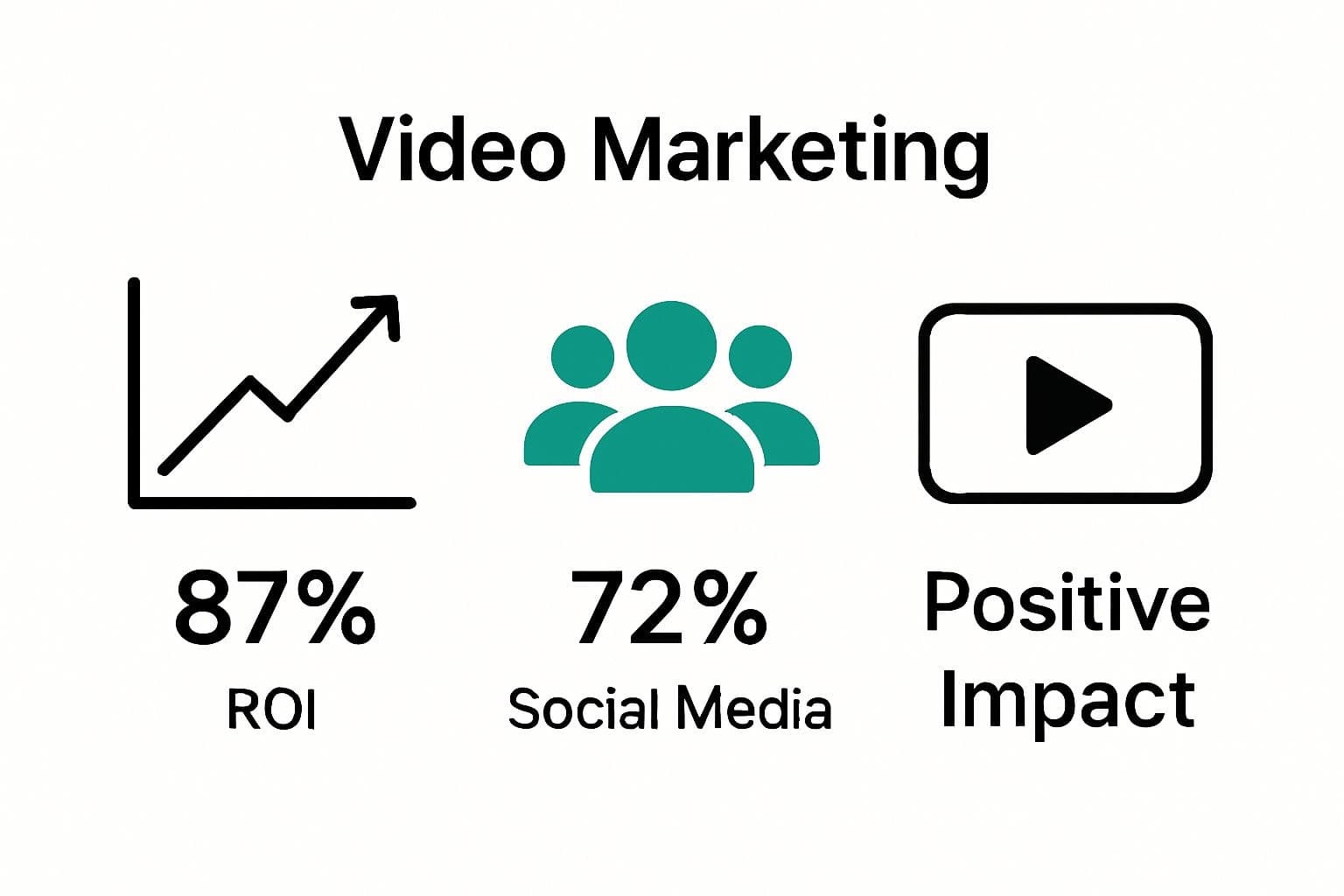
Research from Pew Research Center reveals that 72% of American adults use social media platforms, underscoring the massive potential reach for businesses. This extensive digital presence means brands can now interact directly with audiences in ways previously impossible through traditional marketing channels.
Key economic motivations for social media and video marketing include:
- Significantly lower customer acquisition costs
- Ability to track precise audience engagement metrics
- Enhanced brand visibility and recognition
- Direct communication channels with potential customers
Psychological and Communication Advantages
Video content triggers psychological responses more effectively than text or static images. Humans process visual information exponentially faster, making video an incredibly powerful communication medium. By combining storytelling, emotion, and visual stimulation, brands can create deeper, more memorable connections with their audience.
The most compelling psychological advantages include:
Below is a table comparing the psychological and communication advantages of video content as discussed in the article, making it easier to grasp why video is a powerful medium for marketing.
| Psychological/Communication Advantage | Description |
|---|---|
| Faster information retention | Humans process and remember visual information much more quickly than text. |
| Emotional resonance through visual narratives | Storytelling in videos can create strong emotional connections. |
| Higher perceived authenticity and transparency | Videos can enhance trust by showcasing real people and processes. |
| Increased trust through personal storytelling | Sharing personal stories can foster trust and main brand loyalty. |
- Faster information retention
- Emotional resonance through visual narratives
- Higher perceived authenticity and transparency
- Increased trust through personal storytelling
Brands that effectively leverage social media and video marketing can transform passive viewers into active community members, creating lasting relationships that extend far beyond traditional advertising approaches.
How Social Media and Video Marketing Works
Social media and video marketing operate through a sophisticated ecosystem of digital platforms, content creation strategies, and audience engagement techniques. Understanding the mechanics behind this approach reveals a complex but highly effective method of modern digital communication and brand promotion.
Content Creation and Distribution
Research from Wyzowl indicates that 87% of marketers report video delivers a positive return on investment, highlighting the critical importance of strategic content development. The process involves several interconnected stages that transform creative concepts into impactful digital experiences.
Key elements of content creation include:
- Identifying target audience demographics
- Developing compelling narrative structures
- Matching video style to platform requirements
- Ensuring high production quality
- Optimizing content for mobile viewing
Algorithmic Engagement and Reach
Social media platforms utilize sophisticated algorithms that determine content visibility and audience reach. These algorithms analyze multiple factors to decide which videos appear in user feeds, including:
- Viewer engagement rates
- Video watch duration
- User interaction metrics
- Content relevance
- Posting frequency and timing
Successful social media and video marketing strategies leverage these algorithmic principles by creating content that naturally encourages user interaction. This means producing videos that are not just visually appealing but also designed to trigger comments, shares, and sustained viewer attention.
By understanding platform-specific algorithmic preferences, creators can strategically position their video content to maximize organic reach and audience engagement. The result is a dynamic marketing approach that transforms passive content consumption into active community building.
Key Concepts in Social Media and Video Marketing Strategies
Social media and video marketing strategies represent a nuanced approach to digital communication that requires understanding complex interconnected principles. Successful implementation demands strategic thinking, creative execution, and data-driven decision making.
Strategic Content Development
Research from ResearchGate highlights the critical importance of developing comprehensive content strategies that align with audience expectations and platform dynamics. This involves creating purposeful content that resonates with specific audience segments and drives meaningful engagement.
Primary strategic components include:
This table breaks down the key elements of strategic content development in social media and video marketing to help clarify each component for effective planning.
| Strategic Content Development Component | Description |
|---|---|
| Audience segmentation and persona development | Identifying and categorizing target viewers for tailored messaging. |
| Content relevance and contextual alignment | Ensuring that videos match the needs and situations of the audience. |
| Brand voice consistency | Keeping messaging and tone uniform across all content. |
| Emotional storytelling techniques | Leveraging narratives that evoke emotions and drive engagement. |
| Clear communication objectives | Establishing specific goals for every piece of content. |
- Audience segmentation and persona development
- Content relevance and contextual alignment
- Brand voice consistency
- Emotional storytelling techniques
- Clear communication objectives
Performance Measurement and Analytics
Understanding and interpreting marketing performance requires sophisticated analytical approaches. Modern social media and video marketing strategies rely on comprehensive metrics that go beyond traditional view counts and likes.
Key performance indicators to track include:
- Engagement rates
- Conversion metrics
- Audience retention
- Demographic reach
- Cost per interaction
Successful marketers view analytics not as retrospective reporting but as dynamic insights that continuously inform and refine marketing strategies. By closely monitoring these metrics, brands can adapt their approaches in real time, ensuring maximum impact and efficiency in their digital communication efforts.
Transform Your Social Media and Video Marketing Strategy Instantly
Struggling with the challenge of creating high-impact videos that truly resonate on social media? If you are spending hours on content planning, script writing, scene design, or just trying to stand out in crowded feeds, you are not alone. As explored in our article, visual storytelling and strong platform optimization are now critical for effective engagement and ROI—yet the process can feel overwhelming without the right tools.
Imagine skipping the technical barriers and letting your creativity lead. 
Elevate your strategy with Palmedor.ai's AI-powered video creation. Our platform enables you to generate high-quality branded videos simply by describing your ideas or uploading images. From smart script generation to seamless format customization for every platform, our automated tools eliminate frustration and help you launch compelling social and branded content fast. Visit https://palmedorai.com now to see how easy it is to transform your next campaign. Take control of your digital presence and turn your creative vision into scroll-stopping videos today.
Frequently Asked Questions
What are the key elements of social media and video marketing strategies?
The key elements include targeted content creation, platform optimization, and an engagement focus. Start by identifying your audience demographics and crafting videos that resonate with them to enhance engagement.
How can I measure the effectiveness of my video marketing strategies?
You can measure effectiveness by tracking key performance indicators such as engagement rates, conversion metrics, and audience retention. Monitor these metrics regularly to adapt your strategies based on real-time insights and improve performance over time.
What types of videos should I create for social media marketing?
Create videos that suit your audience's interests and platform dynamics, such as promotional clips, tutorials, or behind-the-scenes content. Focus on storytelling and ensure high production quality to capture viewer attention.
How can I optimize my videos for different social media platforms?
To optimize videos, tailor their formats, lengths, and styles to each platform's requirements. For example, create shorter clips for platforms like Instagram while providing more in-depth content for YouTube.
What strategies can I use to enhance viewer engagement with my video content?
Encourage viewer interaction by asking questions, prompting shares, or incorporating polls within your videos. Aim for higher engagement by including calls to action at the end of your videos, driving comments or shares, which can increase reach by approximately 30%.