Understanding Color Grading: A Comprehensive Guide
Dive into understanding color grading, its significance, and the concepts behind this essential process for video creators and marketers.
Understanding Color Grading: A Comprehensive Guide
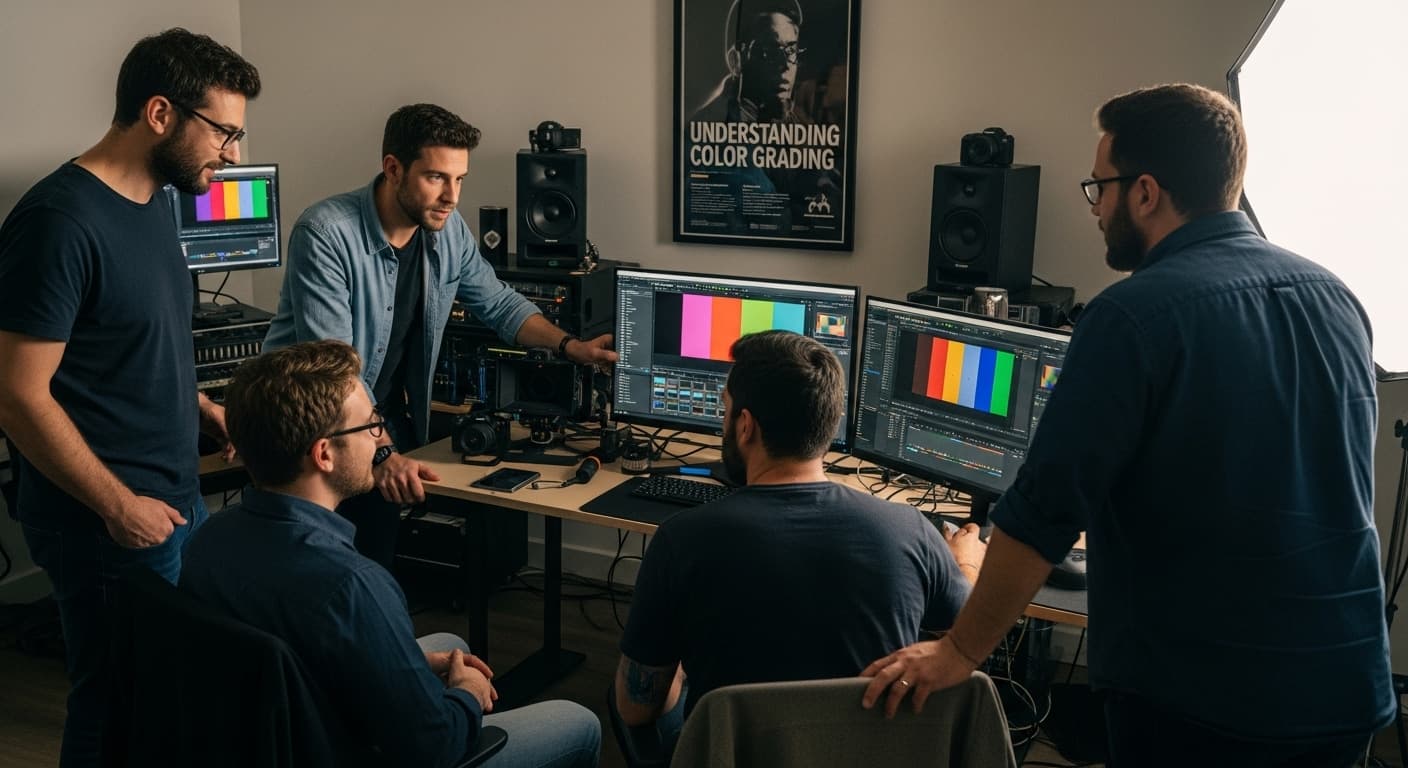
Color grading turns plain footage into something you actually feel. Professional filmmakers rely on it to create moods and pull viewers into a story and get this. Even a simple shift in color palette can make the same scene feel nostalgic, tense, or utterly surreal without changing a single line of dialogue. Most people think color grading is just about fixing colors or making shots look nice. Truth is, it is a secret storytelling tool hiding in plain sight, shaping emotions and meaning every time you press play.
Table of Contents
- What Is Color Grading And Its Purpose?
- The Importance Of Color Grading In Visual Storytelling
- How Color Grading Influences Emotions And Perception
- Key Concepts And Terminology In Color Grading
- Practical Applications Of Color Grading In Different Media
Quick Summary
| Takeaway | Explanation |
|---|---|
| Color grading enhances emotional impact. | It transforms basic footage into cohesive visual narratives that evoke specific psychological responses. |
| Consistent color palettes reinforce storytelling. | Establishing uniform visual tones helps maintain narrative immersion and guide viewer perception across scenes. |
| Strategic color application effects viewer emotions. | Different colors can subliminally communicate themes such as nostalgia, tension, or comfort without the need for dialogue. |
| Color grading blends technical skill with artistry. | Mastering this technique requires understanding visual perception, emotional communication, and the use of specialized software. |
| Color is a powerful narrative tool. | By manipulating color temperature and saturation, colorists effectively convey emotional landscapes and thematic elements in storytelling. |
What is Color Grading and Its Purpose?
Color grading represents a sophisticated visual transformation technique that goes beyond basic color correction, turning raw video footage into a cinematic experience with emotional depth and visual coherence. Professional filmmakers, video creators, and content producers use this advanced process to manipulate color, tone, and mood, transforming ordinary footage into compelling visual narratives.
The Fundamental Concept of Color Grading
At its core, color grading is an artistic and technical process of adjusting and enhancing the color palette of video footage. Unlike simple color correction, which fixes technical color issues, color grading is about creating a specific aesthetic and emotional atmosphere.
 Cinematographers and video editors use specialized software to manipulate various color elements:
- Adjusting color temperature (warm or cool tones)
- Modifying color saturation
- Balancing contrast levels
- Creating specific color palettes
- Establishing visual consistency across scenes
According to American Cinematographer Magazine, color grading has evolved from a purely technical process to a critical storytelling tool that significantly impacts viewer perception and emotional engagement.
Purpose and Psychological Impact
Color grading serves multiple essential purposes in visual storytelling. It transforms raw footage into a cohesive visual experience, communicating subtle emotional undertones and guiding audience perception. Different color treatments can evoke specific psychological responses:
- Cool blue tones might suggest melancholy or detachment
- Warm golden hues can create feelings of nostalgia or comfort
- High contrast looks might indicate tension or drama
- Desaturated colors can communicate bleakness or historical context
Professional colorists understand that color is not just visual decoration but a powerful narrative language.
This comparative table highlights how different color palettes in color grading are used to evoke specific emotional responses and thematic atmospheres within visual storytelling.
| Color Palette/Treatment | Typical Emotion or Effect | Common Thematic Use |
|---|---|---|
| Cool Blue Tones | Melancholy, Detachment | Sadness, Futuristic, Distance |
| Warm Golden Hues | Nostalgia, Comfort | Memories, Intimacy, Positivity |
| High Contrast Look | Tension, Drama | Action, Conflict, Suspense |
| Desaturated Colors | Bleakness, Historical Context | Flashbacks, Gritty Realism |
| Green Tones | Unease, Environmental Themes | Nature, Psychological Turmoil |
| Muted Sepia | Nostalgia, Historic Periods | Past Era, Reminiscing |
| Saturated Vibrant Colors | Emotional Intensity, Fantasy | Fantasy, Dream Sequences, Energy |
| Monochromatic Schemes | Isolation, Psychological Focus | Single-Character Study, Solitude |
Color grading bridges technical precision with creative expression, turning standard video footage into a rich, immersive visual experience that resonates deeply with viewers.
The Importance of Color Grading in Visual Storytelling
Color grading transcends technical manipulation, emerging as a powerful narrative tool that silently communicates complex emotional landscapes and guides viewer interpretation. Visual storytellers leverage this technique to create immersive experiences that resonate far beyond surface aesthetics, transforming ordinary footage into profound cinematic journeys.
Emotional Narrative Through Color
Color functions as a subliminal language in visual storytelling, communicating psychological nuances that words cannot express. Professional filmmakers strategically use color grading to construct emotional architectures within their narratives. By subtly shifting color palettes, creators can communicate character development, temporal transitions, and narrative tensions without explicit dialogue.
An experienced colorist understands how specific color treatments can trigger immediate emotional responses. For instance:

- Green tones might suggest environmental themes or psychological unease
- Muted sepia colors can indicate historical periods or nostalgic memories
- Saturated vibrant colors frequently represent emotional intensity or fantasy sequences
- Monochromatic schemes can symbolize emotional isolation or psychological states
According to Film Color Theory Research at UCLA, color grading represents a sophisticated psychological intervention that directly influences audience emotional engagement.
Visual Coherence and Storytelling Strategy
Beyond emotional communication, color grading ensures visual consistency and narrative cohesion. By establishing uniform color signatures across different scenes and sequences, filmmakers create seamless visual experiences that maintain narrative immersion. This technique helps viewers unconsciously track story progression, understand spatial and temporal shifts, and remain emotionally connected to the unfolding narrative.
Color grading allows creators to:
- Establish distinct visual identities for different narrative segments
- Create smooth transitions between complex storytelling environments
- Highlight critical narrative moments through strategic color manipulation
- Reinforce thematic elements through consistent color philosophies
Professional video creators recognize color grading as more than a post-production technique—it is a sophisticated storytelling language that transforms visual content from mere representation to powerful emotional communication.
How Color Grading Influences Emotions and Perception
Color grading operates as a profound psychological mechanism that fundamentally transforms visual storytelling by manipulating human neurological and emotional responses. This intricate process goes far beyond aesthetic enhancement, functioning as a sophisticated communication tool that directly interfaces with viewers' subconscious perceptual systems.
Neurological Foundations of Color Perception
The human brain processes color as more than visual information it interprets color as an emotional and psychological signal. Different color wavelengths trigger specific neurochemical responses, generating immediate and sometimes unconscious emotional reactions. Professional colorists leverage these neurological pathways to craft nuanced viewer experiences without relying on explicit narrative techniques.
The neurological impact of color involves complex interactions between visual cortex processing and emotional centers of the brain:
- Red tones can increase heart rate and generate excitement
- Blue hues tend to produce calming psychological states
- Green colors often invoke feelings of balance and natural harmony
- Yellow shades can stimulate mental alertness and optimism
According to Neuroscience Research from Stanford University, color perception is a multisensory experience that directly influences psychological and physiological responses.
Psychological Manipulation Through Color Gradients
Color grading enables creators to construct sophisticated psychological landscapes through strategic color manipulation. By adjusting color temperature, saturation, and contrast, filmmakers can subtly guide audience emotional trajectories, creating powerful narrative experiences that operate beneath conscious perception.
Professional creators utilize color grading to:
- Simulate specific emotional environments
- Create subliminal narrative tension
- Represent character psychological states
- Communicate thematic underlying messages
Color serves as an unspoken language that communicates complex emotional narratives, transforming visual storytelling from mere representation into a profound psychological experience. Through meticulous color grading, creators craft immersive worlds that resonate deeply with viewers' subconscious emotional landscapes.
Key Concepts and Terminology in Color Grading
Color grading encompasses a complex technical vocabulary that enables professionals to precisely communicate and execute sophisticated visual transformations. Understanding these specialized terms provides insight into the intricate art of manipulating visual storytelling through color and tone.
Essential Technical Terminology
Color grading language bridges technical precision with creative expression, requiring professionals to master a specific set of technical terms and conceptual frameworks. These specialized vocabularies allow creators to communicate nuanced visual intentions with remarkable accuracy.
Professional colorists utilize several foundational technical concepts:
- Gamma: Controls mid-tone brightness and contrast in visual imagery
- Luminance: Measures the perceived brightness of colors
- Chroma: Represents color intensity and saturation levels
- Color Temperature: Describes the warmth or coolness of visual tones
According to Professional Colorists Association, mastering these fundamental terms is critical for effective visual communication and precise color manipulation.
Advanced Color Grading Concepts
Color wheels and scopes represent sophisticated tools that enable precise color manipulation. These technical instruments provide colorists with granular control over visual elements, allowing them to make microscopic adjustments that dramatically transform visual narratives.
Advanced color grading techniques involve complex manipulations:
- Primary color correction targeting entire image characteristics
- Secondary color grading focusing on specific color ranges
- Isolation of individual color channels for targeted modifications
- Applying distinctive look-up tables (LUTs) for stylistic transformations
Professional color grading transcends simple technical manipulation, emerging as a nuanced art form that requires deep understanding of visual perception, emotional communication, and technical expertise. By mastering these sophisticated terminologies and techniques, creators can transform ordinary visual content into extraordinary narrative experiences.
The table below summarizes essential color grading terminology and their concise definitions for quick reference and deeper understanding of technical language used by professionals.
| Term | Definition |
|---|---|
| Gamma | Controls mid-tone brightness and contrast in visual imagery |
| Luminance | Measures the perceived brightness of colors |
| Chroma | Represents color intensity and saturation levels |
| Color Temperature | Describes the warmth or coolness of visual tones |
| LUT (Look-Up Table) | A preset color modification applied to footage for stylistic transformation |
| Primary Correction | Adjustments made to the entire image characteristics |
| Secondary Grading | Targeted color correction for specific color ranges |
Practical Applications of Color Grading in Different Media
Color grading serves as a versatile visual technique that transforms content across multiple media platforms, enabling creators to craft unique visual identities and enhance storytelling experiences. From cinematic productions to digital marketing, color grading has become an essential tool for visual communication and emotional engagement.
Film and Cinematography
Cinematic color grading represents the most sophisticated application of this visual technique, where professional colorists work meticulously to create immersive narrative experiences. Each film develops a distinctive color signature that supports its thematic elements, character emotions, and storytelling objectives.
In film production, color grading enables creators to:
- Establish distinct visual aesthetics for different narrative genres
- Create seamless visual continuity across complex scenes
- Represent historical periods through specific color palettes
- Communicate character psychological states through color manipulation
According to American Film Institute Research, color grading has become a critical narrative language in contemporary cinema.
Digital Marketing and Branding
Digital content requires strategic color management to create compelling visual narratives that capture audience attention. Marketing professionals utilize color grading to develop consistent brand experiences across various digital platforms, from social media content to corporate videos.
Digital marketing color grading strategies include:
- Creating consistent visual brand identities
- Generating emotional responses through color manipulation
- Enhancing product visualization
- Adapting content for different platform requirements
Color grading transcends technical manipulation, emerging as a powerful communication tool that allows creators to craft nuanced visual experiences across diverse media landscapes. By understanding and applying sophisticated color techniques, professionals can transform ordinary content into extraordinary visual narratives that resonate deeply with audiences.
Unlock Effortless Cinematic Color Grading With AI
Color grading can be both inspiring and overwhelming. If you have ever wished for professional results without endless tweaking of color wheels and scopes, you are not alone. Many creators get stuck when trying to set the mood, achieve emotional clarity, or maintain visual consistency across formats. As this guide explains, even mastering gamma, luminance, and creative LUTs goes beyond basic color correction and can slow the entire storytelling process. What if you could focus on your story instead of wrestling with complicated software?

Take the next step in your video journey today. Palmedor.ai empowers you to transform concepts, prompts, or images into complete cinematic videos with professional color grading—no technical expertise required. Whether you are building a brand film, social clip, or visual narrative, Palmedor’s smart presets and output customization make scene management and mood setting fast and easy. Try it now to turn your creative vision into vivid results. Check out our solutions and start creating high-quality videos today.
Frequently Asked Questions
What is color grading in video production?
Color grading is the process of adjusting and enhancing the color palette of video footage to create a specific aesthetic and emotional atmosphere, transforming raw footage into a cohesive visual experience.
How does color grading impact viewer emotions?
Color grading can evoke specific psychological responses by manipulating colors; for example, cool tones may suggest melancholy, while warm hues can create feelings of nostalgia or comfort, significantly influencing how viewers perceive the narrative.
What are the key techniques used in color grading?
Key techniques include adjusting color temperature, modifying saturation and contrast levels, establishing color palettes, and ensuring visual consistency across scenes, all aimed at enhancing storytelling.
Why is visual coherence important in color grading?
Visual coherence ensures that there is a consistent look throughout a film or video, allowing viewers to follow the narrative smoothly and emotionally connect with the story without distractions from visual inconsistencies.