Understanding Aspect Ratios: Key Concepts Explained
Dive into understanding aspect ratios to enhance your media and marketing projects with clear and comprehensive explanations.
Understanding Aspect Ratios: Key Concepts Explained

Aspect ratios are the behind-the-scenes secret shaping every photo and video you see. Over 90 percent of mobile video views now happen in vertical (9:16) formats, not the old widescreen rectangles. That number seems wild at first. Yet it proves that the best aspect ratio for your project is often the one nobody expects.
Table of Contents
- What Are Aspect Ratios And Their Importance?
- How Aspect Ratios Impact Visual Media
- Common Aspect Ratios And Their Uses
- The Role Of Aspect Ratios In Different Platforms
- Choosing The Right Aspect Ratio For Your Projects
Quick Summary
| Takeaway | Explanation |
|---|---|
| Aspect ratios dictate visual content dimensions. | They define the width and height proportions, essential for media display across different platforms. |
| Choose aspect ratios based on platforms. | Each platform has distinct requirements for optimal engagement and content quality, like YouTube vs. Instagram. |
| Different ratios evoke unique viewer emotions. | Wide formats create immersion, while vertical ones establish personal connections with the audience. |
| Adapt visuals to maintain quality across devices. | Variations in aspect ratios ensure consistent messaging and presentation, regardless of screen size. |
| Strategic selection enhances storytelling impact. | Understanding the relationship between aspect ratios and narrative approach boosts viewer engagement and emotional resonance. |
What Are Aspect Ratios and Their Importance?
Aspect ratios represent the proportional relationship between the width and height of visual content, determining how images and videos appear across different screens and platforms. Understanding aspect ratios is crucial for creating visually appealing and professionally displayed media.
The Mathematical Foundation of Aspect Ratios
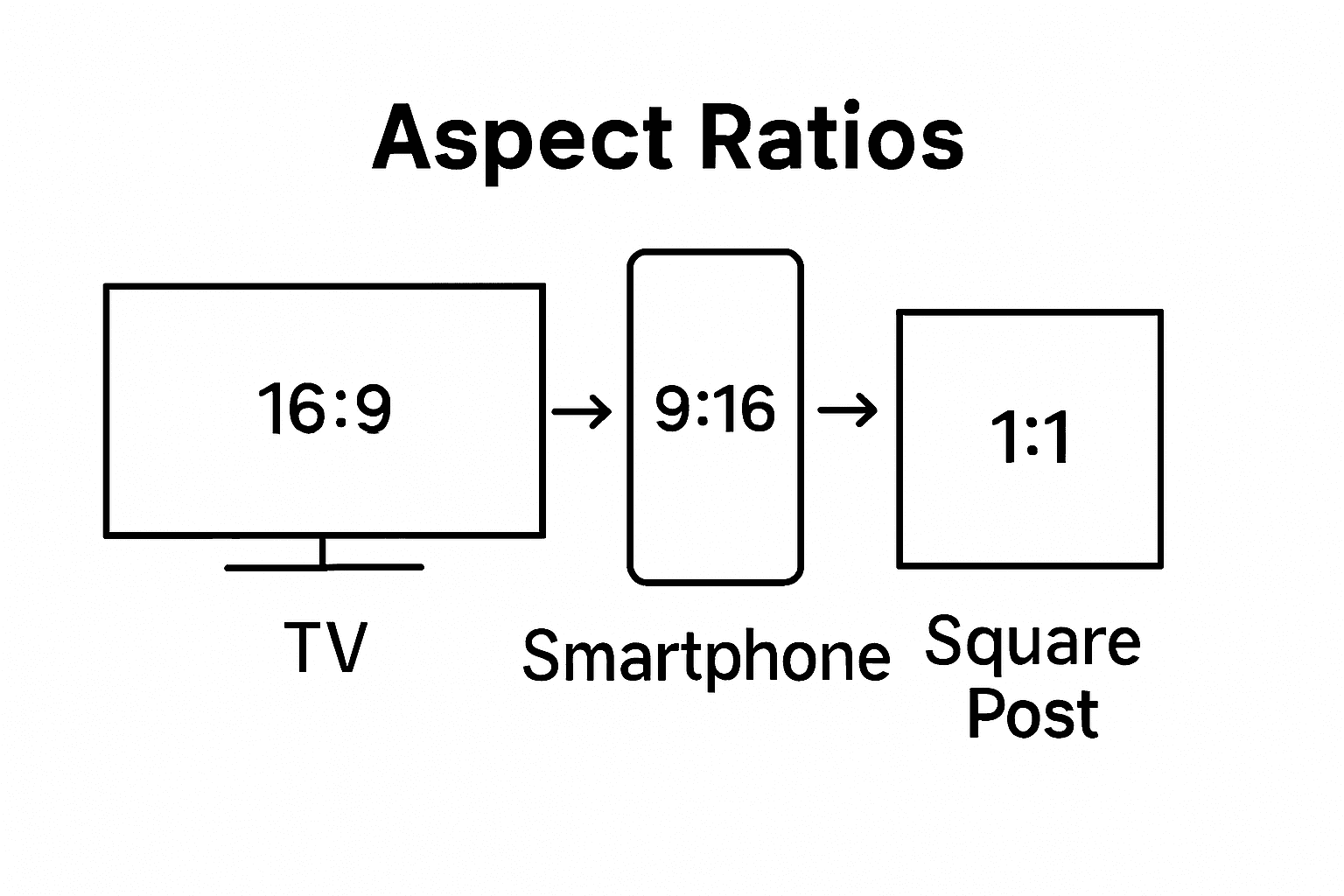
At its core, an aspect ratio is expressed as two numbers separated by a colon, representing the width and height dimensions. For example, a 16:9 aspect ratio means for every 16 units of width, there are 9 units of height. This standardized measurement helps content creators and designers ensure visual consistency across various display devices.
Common aspect ratios include:
- 16:9 (standard widescreen, used in most modern televisions and computer monitors)
- 4:3 (traditional television and computer display format)
- 1:1 (perfect square, popular in social media profile pictures and Instagram posts)
- 9:16 (vertical video format for mobile devices)
Why Aspect Ratios Matter in Visual Communication
Properly managing aspect ratios prevents visual distortion and ensures content appears as intended.
According to W3Schools Web Standards, maintaining correct aspect ratios is essential for preserving image quality and preventing unwanted cropping or stretching.
Videographers, designers, and content creators must carefully select aspect ratios based on their intended display platform. A video created for YouTube will have different requirements compared to content designed for Instagram Stories or traditional television broadcasts.
Understanding aspect ratios allows professionals to:
- Optimize visual content for specific platforms
- Maintain professional image quality
- Prevent unintended visual distortions
- Ensure seamless viewing experiences across devices
By mastering aspect ratios, creators can transform how audiences perceive and engage with visual media, making every pixel count in their storytelling and communication strategies.
How Aspect Ratios Impact Visual Media
Aspect ratios play a transformative role in shaping visual communication, influencing everything from cinematic experiences to social media content. Their impact extends far beyond simple mathematical proportions, fundamentally altering how viewers perceive and interact with visual narratives.
Psychological and Perceptual Dimensions
Different aspect ratios trigger unique psychological responses and visual experiences. A wide 16:9 format creates a panoramic, immersive feeling often used in cinematic productions, while a narrow 9:16 vertical format generates an intimate, personal connection typical in mobile content. According to MIT Media Lab Research, our brain processes visual information differently based on frame dimensions, making aspect ratios critical in emotional storytelling.
Key psychological impacts include:
- Expanding visual perception through wider formats
- Creating intimate viewer connections with vertical frames
- Directing audience attention through strategic framing
- Enhancing emotional engagement through dimensional choices
Technical Implications for Content Creation
Content creators must strategically navigate aspect ratio challenges across multiple platforms. Each digital ecosystem demands specific dimensional requirements that impact visual quality and viewer experience. Professional videographers and designers must understand how different platforms interpret and display content.
Technical considerations involve:
- Platform-specific resolution constraints
- Potential quality loss during format conversion
- Rendering performance across devices
- Bandwidth and streaming efficiency
Cross Platform Visual Adaptation
Modern visual communication requires flexible content that adapts seamlessly across diverse viewing environments. A single video might need multiple aspect ratio versions to maintain visual integrity on smartphones, tablets, desktops, and television screens. This adaptability ensures consistent messaging and professional presentation regardless of viewing context.

Successful cross platform strategies involve understanding each platform's unique dimensional requirements and creating content that maintains its core visual narrative across different aspect ratios. By mastering these technical nuances, creators can develop visually compelling media that resonates with audiences everywhere.
This table compares how different aspect ratios psychologically and technically affect the viewer experience and content creation process, making it easier to understand their practical impact.
| Aspect Ratio | Psychological Impact | Technical Consideration |
|---|---|---|
| 16:9 | Immersive, panoramic, cinematic feel | High definition standard, easy cross-platform adaption |
| 4:3 | Balanced, classic look | May appear dated, less mobile-friendly |
| 1:1 | Symmetrical, focused | Optimal for square social layouts |
| 9:16 | Intimate, mobile-focused | Requires vertical shooting/editing |
| 21:9 | Expansive, epic, theatrical | Needs ultra-wide screens |
| 2.35:1 | Dramatic, widescreen storytelling | Specialized equipment needed |
Common Aspect Ratios and Their Uses
Aspect ratios are not just technical specifications but strategic tools that enable precise visual communication across various media platforms. Understanding the nuanced applications of different aspect ratios empowers creators to craft compelling visual narratives with maximum impact.
Traditional Media and Cinematic Formats
Historically, aspect ratios have evolved alongside technological advancements in visual media. The classic 4:3 format dominated television and early computer displays, providing a balanced rectangular view. According to Filmmaker Magazine, cinematic aspect ratios like 21:9 and 2.35:1 emerged to create immersive widescreen experiences that dramatically expanded storytelling possibilities.
Key traditional media aspect ratios include:
- 4:3 (standard definition television)
- 16:9 (high definition television)
- 21:9 (ultrawide cinema)
- 2.35:1 (anamorphic widescreen)
Digital and Social Media Adaptations
The digital landscape has dramatically transformed aspect ratio usage. Social media platforms demand specific dimensions that optimize user engagement and content visibility. Square (1:1) and vertical (9:16) formats have become dominant in mobile-first content strategies, allowing creators to design visually striking media tailored to smartphone viewing habits.
Digital platform aspect ratio preferences:
- Instagram: 1:1 and 4:5 for feed posts
- TikTok: 9:16 for vertical videos
- YouTube: 16:9 for standard videos
- LinkedIn: 1:1 and 16:9 for professional content
Emerging Technologies and Future Trends
Emergent display technologies continue to push aspect ratio boundaries. Extended reality (XR) environments, augmented reality interfaces, and multi screen experiences are creating new dimensional challenges for visual designers. Adaptive aspect ratios that dynamically adjust to user devices and viewing contexts represent the cutting edge of visual communication technology.
Creators who master these nuanced aspect ratio strategies can develop more engaging, flexible, and platform optimized visual content.
The table below organizes common aspect ratios alongside their primary uses and typical platforms, helping you quickly compare which format fits your needs.
| Aspect Ratio | Description | Typical Uses | Common Platforms |
|---|---|---|---|
| 16:9 | Standard widescreen | Modern TVs, computer monitors, video | YouTube, HDTV, desktops |
| 4:3 | Traditional rectangle | Standard definition TV, presentations | Older TV, some monitors |
| 1:1 | Perfect square | Social media images, profile pictures | Instagram, Facebook |
| 9:16 | Vertical video, tall rectangle | Mobile video, stories | TikTok, Instagram Stories |
| 21:9 | Ultra-wide | Cinematic film, immersive experiences | Cinema screens, gaming |
| 2.35:1 | Anamorphic widescreen | Movies, cinematic widescreen | Major motion pictures |
| 4:5 | Tall rectangle | Social media feeds | Instagram Feed, Facebook |
The Role of Aspect Ratios in Different Platforms
Aspect ratios serve as critical communication bridges across diverse digital platforms, translating visual content to maintain integrity and engagement. Each platform demands unique dimensional specifications that significantly impact content presentation and viewer experience.
Platform Specific Content Requirements
Digital platforms operate with distinct technical parameters that shape how visual content is displayed and consumed. According to YouTube Support Guidelines, platforms automatically adjust video presentation to accommodate varying aspect ratios, ensuring seamless viewing experiences across devices.
Platform specific aspect ratio considerations include:
- Native video display capabilities
- Automatic content scaling mechanisms
- User interface design constraints
- Performance optimization strategies
Marketing and Engagement Implications
Marketers and content creators must strategically design visual assets that align with platform expectations. Different social media channels prioritize specific aspect ratios to maximize user engagement and visual appeal. Understanding these nuanced requirements allows professionals to craft targeted content that performs optimally across various digital environments.
Key engagement factors influenced by aspect ratios:
- Thumbnail visibility and attractiveness
- Auto play and scroll behavior
- User interaction rates
- Content discoverability algorithms
Technical Adaptation Strategies
Successful visual communication requires flexible content design that can smoothly transition between platforms. Professional creators develop multi format versions of their visual assets, ensuring consistent messaging and visual quality regardless of display context. This adaptive approach allows seamless content distribution across social media, streaming services, websites, and mobile applications.
By mastering platform specific aspect ratio strategies, content creators can develop visually compelling media that resonates powerfully with audiences, transcending technological boundaries and maximizing digital communication potential.
Choosing the Right Aspect Ratio for Your Projects
Selecting the appropriate aspect ratio requires strategic consideration of project goals, target audience, and platform requirements. This decision transcends technical specifications, directly impacting visual storytelling and audience engagement.
Analyzing Project Objectives
The nature of your content fundamentally influences aspect ratio selection. According to Adobe Creative Professional Guidelines, different visual narratives demand unique dimensional approaches that optimize viewer perception and emotional resonance.
Key project objective considerations include:
- Intended storytelling style
- Target audience viewing preferences
- Emotional impact of visual framing
- Content genre and communication goals
Technical Platform Compatibility
Each digital platform presents unique dimensional constraints that creators must navigate strategically. Professional content designers must understand platform specific requirements to ensure optimal visual presentation and maximize audience reach.
Critical technical compatibility factors:
- Device display characteristics
- Bandwidth and streaming performance
- User interface integration
- Cross platform accessibility
Strategic Decision Making Framework
Developing a systematic approach to aspect ratio selection involves balancing creative vision with technical pragmatism. Creators should conduct comprehensive audience research, prototype multiple dimensional configurations, and test content performance across different platforms.
Successful aspect ratio selection transforms technical constraints into creative opportunities. By understanding the nuanced relationship between dimensional choices and viewer experience, professionals can craft visually compelling narratives that transcend traditional media boundaries, creating immersive and engaging content experiences that resonate powerfully across diverse digital landscapes.
Professional-Grade Aspect Ratios, Zero Guesswork
Are you frustrated by content that looks perfect in one aspect ratio but gets cropped, stretched, or distorted when shared across platforms? Understanding aspect ratios is essential for delivering polished, professional videos everywhere—the very challenge explored in "Understanding Aspect Ratios: Key Concepts Explained." Many creators face the pain of technical complexity and wasted time reformatting visuals for YouTube, Instagram, or TikTok, not to mention the pressure to ensure every project meets high-quality standards for every device.

Imagine skipping those headaches with every new project. At Palmedor.ai, our AI-powered platform automatically handles aspect ratios, scene management, and output customization for any format. Just describe your idea or upload images—the system creates content ready for social, cinematic, or custom requirements, all while preserving your visual intent.
Take control now and let your creativity lead while Palmedor handles the technical details. Explore our main site for flexible plans and see how easy professional video production can become. Get started today for perfectly formatted videos in every aspect ratio you need.
Frequently Asked Questions
What is an aspect ratio?
An aspect ratio is the proportional relationship between the width and height of visual content, expressed as two numbers separated by a colon (e.g., 16:9).
Why are aspect ratios important in visual communication?
Aspect ratios ensure that images and videos are displayed as intended, preventing visual distortion and maintaining professional image quality.
What are some common aspect ratios used in media?
Common aspect ratios include 16:9 (widescreen), 4:3 (traditional television), 1:1 (square for social media), and 9:16 (vertical for mobile content).
How do I choose the right aspect ratio for my project?
Choosing the right aspect ratio depends on your project objectives, target audience preferences, and the specific requirements of the platform where the content will be displayed.