7 Essential Tips from Top Video Companies for Brands
Discover 7 practical tips from top video companies to help marketing professionals and social managers create efficient, high-quality video content.
7 Essential Tips from Top Video Companies for Brands

Over 82 percent of American marketers now rely on Artificial Intelligence when producing video content for global campaigns. For small and mid-sized brands, competing on visual storytelling demands speed, efficiency, and cost control. Modern AI-powered solutions are changing the way social media managers create high-quality videos that engage diverse audiences across platforms. This approach unlocks advanced capabilities once limited to major European and Asian brands, offering smarter ways to bring creative visions to life with fewer resources.
Table of Contents
- 1. Understand The Powerful Role Of AI In Video Creation
- 2. Choose The Best Video Company For Your Brand Needs
- 3. Leverage Smart Presets For Quick Content Production
- 4. Streamline Scene Management For Consistent Results
- 5. Optimize Output Formats For Multiple Platforms
- 6. Use Script Generation Tools For Clear Messaging
- 7. Utilize Flexible Pricing Plans For Any Project Size
Quick Summary
| Key Message | Explanation |
|---|---|
| 1. AI Transforms Video Creation | AI technologies simplify video production, enabling creators to transform ideas into high-quality content quickly and easily. |
| 2. Choose the Right Video Partner | Evaluate potential video companies based on expertise, experience, and alignment with your brand's goals to ensure effective collaboration. |
| 3. Utilize Smart Presets for Efficiency | Implement smart presets to streamline video production, reduce time spent on repetitive tasks, and maintain high-quality standards. |
| 4. Optimize for Multiple Platforms | Adapt video content formats to meet the technical requirements of various platforms, ensuring visibility and engagement on each channel. |
| 5. Explore Flexible Pricing Models | Understand pricing structures in video production to match your project's budget and scope while maximizing creative potential. |
1. Understand the Powerful Role of AI in Video Creation
Artificial Intelligence is radically transforming video creation from a complex technical process into an accessible, dynamic storytelling tool. Modern AI technologies are breaking down traditional barriers between creative vision and actual production, enabling creators to transform simple ideas into professional visual narratives with unprecedented speed and precision.
The integration of AI in video production represents a quantum leap in creative technology. Generative AI models are now capable of enabling new forms of character creation and artistic styles, fundamentally reshaping how visual content gets developed. These advanced systems can analyze vast datasets, understand contextual nuances, and generate sophisticated video elements that previously required extensive human intervention.
For marketing professionals and content creators, this means unprecedented creative flexibility. AI can now assist in script generation, scene composition, character design, and even predictive editing. By leveraging machine learning algorithms, creators can rapidly prototype concepts, experiment with different visual approaches, and produce high quality content without extensive technical expertise.
The practical applications are extraordinary. Imagine describing a scene concept and watching an AI system instantly generate a storyboard, select appropriate camera angles, and draft preliminary visual assets. This isn't future technology it's happening right now. Research indicates that AI technologies are enhancing workflow efficiency across film, television, and digital media production, democratizing the creative process.
Key Benefits of AI in Video Creation:
- Rapid concept prototyping
- Reduced production time
- Lower technical barriers to entry
- Enhanced creative experimentation
- More consistent output quality
Pro tip: Start small by experimenting with AI video generation tools using simple, clear prompts to understand their capabilities and gradually build your skills.
2. Choose the Best Video Company for Your Brand Needs
Selecting the right video production partner can make or break your brand's visual storytelling strategy. Your choice will directly impact the quality, effectiveness, and strategic alignment of your video content across marketing channels.
Critical Evaluation Factors for video companies include technical capabilities, creative expertise, industry understanding, and alignment with your brand's specific communication goals. Not all video production services are created equal marketing professionals need a systematic approach to identifying the most suitable partner.
Start by assessing your core video requirements. Are you seeking social media content, brand documentaries, product demonstrations, or promotional materials? Each video type demands different technical skills and creative approaches. Look for companies with proven experience in your specific industry and content category.
Key Selection Criteria:
- Demonstrated portfolio of relevant work
- Technical production capabilities
- Creative storytelling approach
- Understanding of your brand voice
- Transparent pricing structures
- Ability to scale content production
When evaluating potential video production partners, request comprehensive case studies and conduct in depth consultations. Pay attention to their communication style, responsiveness, and willingness to understand your unique brand narrative. A great video company will act as a collaborative partner who can translate your vision into compelling visual storytelling.
Recommended Evaluation Process:
- Review their existing portfolio
- Schedule initial discovery conversations
- Request detailed project proposals
- Check client testimonials and references
- Assess technical and creative alignment
Pro tip: Request a small pilot project to test the video company's capabilities before committing to a long term partnership.
3. Leverage Smart Presets for Quick Content Production
Smart presets represent a revolutionary approach to streamlining video content creation for time sensitive marketing professionals. These predefined templates and configuration settings can dramatically reduce production time while maintaining high quality visual standards.
What Are Smart Presets? They are essentially predeveloped configuration packages that allow creators to apply sophisticated design elements, color grading, transitions, and stylistic treatments with a single click. Think of them as professional shortcuts that encapsulate complex creative decisions into easily deployable packages.
For marketing teams and content creators, smart presets offer incredible workflow optimization. Instead of manually adjusting every video element from scratch, you can leverage professionally designed templates that align with current design trends and brand aesthetics. This approach eliminates repetitive technical work and allows creators to focus on strategic storytelling and content innovation.
Key Benefits of Using Smart Presets:
- Consistent brand visual identity
- Reduced production time
- Professional quality output
- Lower technical skill requirements
- Faster content iteration
Strategic Implementation Techniques:
- Build a custom preset library
- Develop brand specific templates
- Create modular content frameworks
- Establish repeatable production workflows
- Continuously update and refine presets
Successful implementation requires thoughtful selection and periodic refinement. Smart presets are not about generic solutions but creating tailored frameworks that reflect your unique brand voice and communication objectives.
Pro tip: Develop a systematic approach to documenting and organizing your smart presets to ensure team wide accessibility and consistent brand representation.
4. Streamline Scene Management for Consistent Results
Scene management represents the critical backbone of efficient video production, transforming raw creative concepts into polished visual narratives. Effective scene management goes beyond simple technical organization it is about creating a strategic workflow that maximizes creative potential while minimizing production complexity.
What Effective Scene Management Looks Like involves creating a systematic approach to organizing visual elements, tracking narrative progression, and maintaining consistent quality across all video segments. For marketing professionals and content creators, this means developing a structured yet flexible framework that allows for creative exploration without sacrificing production efficiency.
Successful scene management requires understanding the intricate relationships between individual scenes and the overall narrative arc. Think of it like conducting an orchestra where each section must harmonize perfectly while maintaining its unique character. By implementing smart scene management strategies, you can dramatically reduce production time and increase the overall quality of your video content.
Key Scene Management Strategies:
- Create comprehensive storyboard templates
- Develop clear scene transition protocols
- Establish consistent visual language
- Build reusable scene component libraries
- Implement standardized review processes
Strategic Scene Management Process:
- Define narrative objectives
- Map scene relationships
- Design modular scene templates
- Create approval workflows
- Implement version control systems
Practical Implementation Techniques: Start by documenting your current scene creation process. Identify bottlenecks, repetitive tasks, and areas where creativity gets bogged down by technical constraints. Then systematically develop templates and workflows that preserve creative flexibility while introducing structural efficiency.
Pro tip: Invest time in creating a comprehensive scene management guide that serves as a living document for your team, enabling consistent and efficient video production.
5. Optimize Output Formats for Multiple Platforms
In the fragmented digital media landscape, creating a single video format is no longer sufficient. Modern brands must strategically adapt their visual content to perform seamlessly across diverse digital platforms with unique technical requirements.
Platform Specific Optimization means understanding the nuanced technical specifications of each digital channel. Video content requires careful adaptation for different platform requirements including resolution, aspect ratio, and compression standards. What works perfectly on YouTube might appear distorted on TikTok or fail to load on mobile devices.
Critical Platform Considerations:
- YouTube: Horizontal 16:9 landscape format
- Instagram: Square 1:1 and vertical 9:16 formats
- TikTok: Pure vertical 9:16 content
- LinkedIn: Professional horizontal formats
- Twitter: Shorter clips with quick engagement
Understanding technical export strategies helps creators maintain visual quality across different digital environments. This means mastering resolution scaling, codec selection, and compression techniques that preserve image integrity while meeting platform size limitations.
Practical Optimization Workflow:
- Map target platform requirements
- Design flexible video templates
- Create batch export configurations
- Implement quality control checks
- Monitor platform performance metrics
Successful video distribution requires thinking beyond a single export strategy. Brands must develop adaptive content frameworks that can quickly transform a core video asset into multiple platform ready formats.
Pro tip: Develop a standardized export checklist that includes specific resolution, file size, and codec requirements for each target platform to streamline your content distribution process.
6. Use Script Generation Tools for Clear Messaging
In the rapidly evolving world of content creation, script generation tools represent a powerful strategy for producing consistent, targeted messaging across multiple video platforms. These innovative AI powered solutions transform creative ideation into structured narrative frameworks with remarkable precision.
Modern AI script generation tools offer comprehensive features for developing clear and compelling video narratives, enabling marketing professionals to craft messages that resonate across different audience segments. By leveraging advanced language models, these tools can generate scripts that maintain brand voice while adapting to specific communication objectives.
Key Script Generation Capabilities:
- Prompt based scripting
- Tone and style customization
- SEO optimization
- Multilingual output generation
- Structured narrative templates
- Rapid content iteration
Strategic Implementation Approach: Start by identifying your core messaging objectives. Input detailed brand guidelines, target audience parameters, and communication goals into the script generation tool. Review the initial output critically, treating the AI generated script as a sophisticated first draft that requires human refinement and strategic optimization.
Effective Scripting Workflow:
- Define communication objectives
- Input brand guidelines
- Generate initial script draft
- Manually review and refine
- Align with brand voice
- Conduct final editing
Successful script generation requires a collaborative approach between artificial intelligence and human creativity. These tools are not replacements for strategic thinking but powerful accelerators of the creative process.
Pro tip: Always maintain a human touch by personally reviewing and customizing AI generated scripts to ensure authentic brand representation and emotional resonance.
7. Utilize Flexible Pricing Plans for Any Project Size
Navigating video production costs can feel like solving a complex puzzle. Modern video platforms understand that brands need scalable solutions that adapt to their unique budget constraints and project requirements.
Understanding the nuanced pricing drivers in video production helps brands make strategic investment decisions. Project costs are influenced by multiple factors including content complexity, animation detail, production length, and specific creative requirements.
Strategic Pricing Considerations:
- Modular content systems
- Scalable production approaches
- Customizable service packages
- Transparent cost breakdowns
- Volume based pricing options
- Flexible editing and revision structures
Effective Budget Management Strategies:
- Assess total project scope
- Identify core content requirements
- Select appropriate service tier
- Negotiate custom package options
- Plan for potential future expansions
Successful brands approach video production pricing as a strategic investment rather than a pure expense. By understanding available pricing models and service flexibility, you can develop high quality content without financial strain.
Project Size Matching Approach: Small businesses might leverage basic packages with limited features. Medium sized organizations can select intermediate tiers with more customization. Enterprise level brands can access comprehensive solutions with maximum flexibility and advanced capabilities.
Pro tip: Request detailed pricing breakdowns and explore bundled service options that provide maximum creative flexibility while maintaining predictable budget constraints.
Below is a comprehensive table summarizing the key strategies and benefits of using AI and modern techniques for video creation, as discussed throughout the article.
| Aspect | Key Functions | Benefits |
|---|---|---|
| AI in Video Creation | Transforms ideas into professional narratives. Facilitates script generation, scene composition, and predictive editing. | Reduces production time and costs. Enables creative experimentation and flexibility. |
| Selecting Video Companies | Evaluate technical capabilities, creative expertise, and industry experience for alignment. | Ensures strategic and effective video content tailored to brand goals. |
| Smart Presets | Provides predeveloped templates for design elements and color grading. | Optimizes workflows and maintains professional quality output. |
| Scene Management | Implements structured workflows that organize visual elements and maintain narrative consistency. | Enhances production efficiency and ensures high-quality storytelling. |
| Platform Optimization | Adapts video formats to specifications of digital platforms like YouTube and TikTok. | Maintains content integrity and maximizes audience engagement across channels. |
Unlock Effortless Professional Video Creation with Palmedor.ai
The article highlights the challenges brands face in navigating AI-powered video production, smart presets, scene management, script generation, and platform-specific output formats. If you want to reduce production time, maintain consistent brand storytelling, and create high-quality videos from simple prompts, Palmedor.ai offers exactly the tools and flexible pricing to overcome these hurdles.
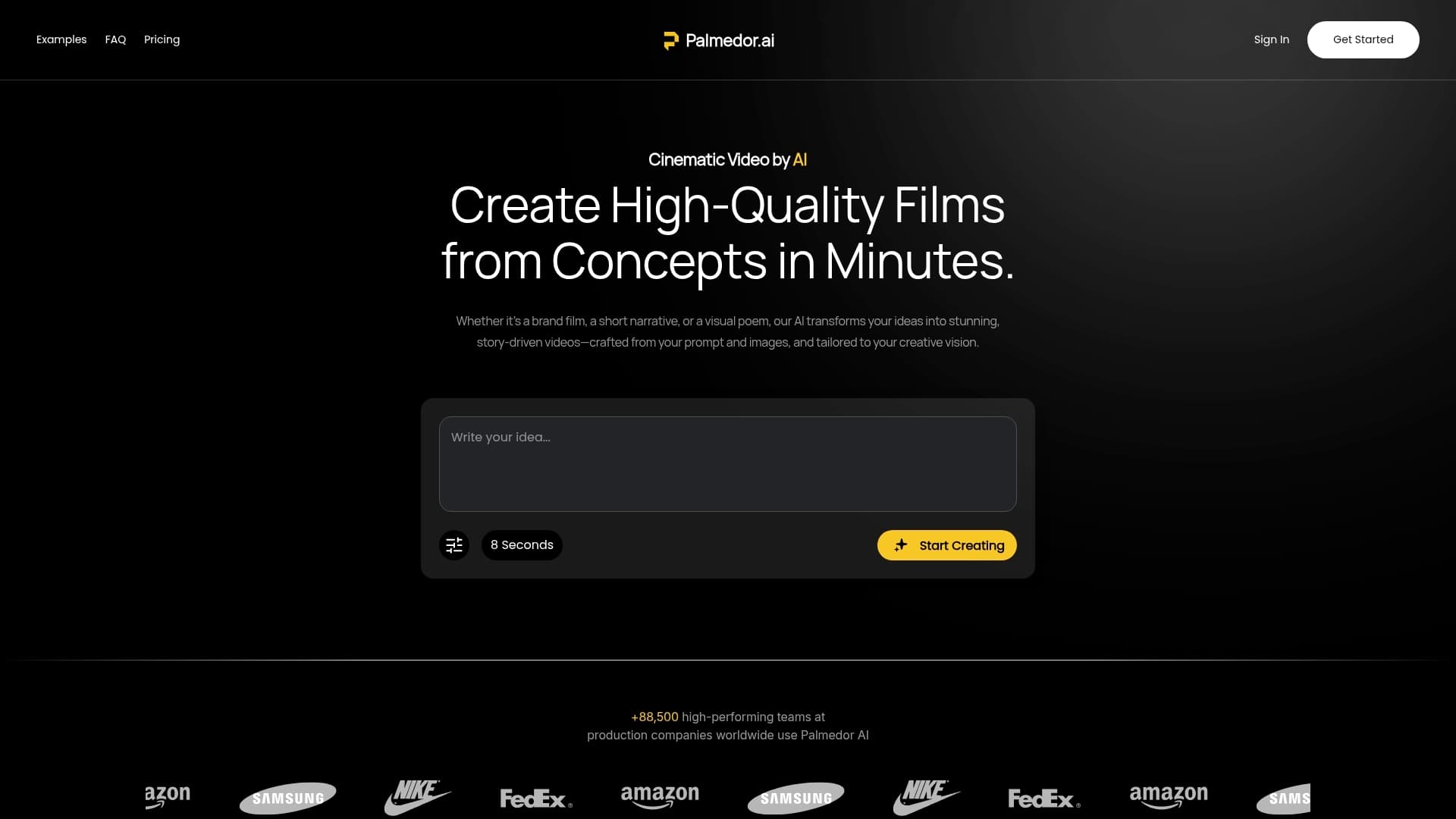
Experience how our advanced AI platform transforms your ideas into cinematic videos without the need for technical expertise. Whether you need expert script generation, seamless scene management, or customized exports for multiple platforms, Palmedor.ai empowers you to streamline your creative workflow today. Don’t wait to elevate your brand’s video content—visit Palmedor.ai now and start creating professional-grade videos with ease. Explore how our solution aligns with your needs at Palmedor.ai and dive deeper into the future of AI-driven video production.
Frequently Asked Questions
How can I select the right video production company for my brand?
Choosing the right video production company involves assessing their portfolio and understanding their creative approach. Start by reviewing examples of their previous work that align with your specific video needs and communication goals.
What are smart presets in video production, and how can they help my brand?
Smart presets are predefined templates that streamline the video creation process by applying design elements and effects with a single click. Utilize smart presets to create consistent videos more quickly, reducing production time by up to 50% for repeated content.
How do I optimize my video content for different platforms?
Optimize your video content by adjusting factors like resolution and aspect ratio to meet the requirements of each platform you target, like YouTube or Instagram. Map out the specifications for each platform and create flexible templates that can adapt your core video for various formats.
What role does script generation play in video production for brands?
Script generation tools help create structured and compelling narratives for your videos that resonate with different audience segments. Use these tools to draft initial scripts, ensuring that your messaging is clear while saving time in the brainstorming phase.
How can I effectively manage costs during video production?
Manage video production costs by selecting a service tier that matches your project scope and exploring customizable packages. Create a list of essential services needed and negotiate flexible options that allow for scaling your budget as needed.
What are best practices for scene management in video production?
Effective scene management means organizing your visual elements and maintaining consistency across your video segments. Implement strategies such as creating comprehensive storyboard templates and establishing review processes to enhance the quality of your videos.