Story Brand Video Production for Marketing Impact
Story brand video production empowers marketing teams with AI-driven workflows. Learn about types, process, pitfalls, and best alternatives.
Story Brand Video Production for Marketing Impact

Most american tech startups today need brand videos that feel authentic yet launch fast. With content demands accelerating, finding ways to craft compelling stories without massive production teams matters more than ever. The rise of AI-driven solutions has made it possible for marketing groups to create polished story brand videos in days, not months, saving up to 60 percent in production time. This guide breaks down the creative methods and smart tools you can use to produce standout visuals that connect with your audience and champion your brand’s unique story.
Table of Contents
- Defining Story Brand Video Production Today
- Key Types of Brand Story Videos
- Steps in Modern Video Production Workflow
- Essential AI-Driven Features and Benefits
- Common Pitfalls and Alternatives Compared
Key Takeaways
| Point | Details |
|---|---|
| Importance of Storytelling | Story brand video production focuses on creating authentic emotional connections through compelling narratives rather than just product promotion. |
| Structured Workflow Stages | The modern video production process includes distinct stages: development, pre-production, production, post-production, and distribution, each vital for creating effective content. |
| AI-Driven Innovations | Integrating artificial intelligence in video production streamlines processes, enhances creativity, and allows smaller teams to produce high-quality visual stories efficiently. |
| Avoiding Common Pitfalls | To ensure success, brands should focus on authenticity, clarity, technical quality, and adaptive strategies that resonate with their target audiences. |
Defining Story Brand Video Production Today
Story brand video production represents a strategic approach to visual storytelling that transforms how companies communicate their core identity and values. Brand video production is more than traditional marketing - it's a sophisticated narrative technique designed to forge authentic emotional connections with target audiences.
At its core, story brand video production involves crafting compelling visual narratives that go beyond simple product promotion. These videos aim to communicate a brand's mission, values, and unique positioning through carefully constructed scenes, dialogue, and visual metaphors. The process requires deep understanding of both storytelling principles and brand strategy, blending creative cinematography with strategic messaging.
Modern story brand videos typically follow a structured approach that includes several critical stages:
- Discovery and Strategy: Understanding brand essence and target audience
- Scriptwriting: Developing a narrative arc that resonates emotionally
- Storyboarding: Visualizing scene sequences and narrative flow
- Production: Capturing high-quality footage that supports the story
- Post-Production: Editing and refining the visual and audio elements
- Distribution: Strategically sharing across relevant marketing channels
Pro tip: Invest time in understanding your brand's authentic narrative before attempting to produce a story brand video, as genuine storytelling always trumps polished but hollow production.
Key Types of Brand Story Videos
Brand story videos represent a powerful marketing tool with diverse formats, each serving a unique strategic purpose in communicating a company's narrative. While the specific approaches may vary, the primary goal remains consistent: creating meaningful connections with audiences through authentic visual storytelling.
The most prevalent types of brand story videos include:
- Origin Story Videos: Showcasing the company's founding, mission, and core values
- Customer Testimonial Videos: Highlighting real experiences and success stories
- Founder Narrative Videos: Presenting personal insights and leadership perspectives
- Company Culture Videos: Revealing internal dynamics and workplace environment
- Product Journey Videos: Exploring product development and innovation processes
- Social Impact Videos: Demonstrating the brand's commitment to broader societal goals
Each video type requires a nuanced approach that balances emotional resonance with strategic messaging. The most effective brand story videos transcend traditional promotional content by creating genuine human connections. They leverage storytelling techniques that transform corporate narratives into compelling, relatable experiences that resonate deeply with target audiences.
Successful brand story videos typically incorporate several key narrative elements: authentic emotional tone, clear visual storytelling, strategic messaging, and a compelling human element that invites viewer engagement and connection. By carefully selecting the appropriate video format and crafting a genuine narrative, brands can transform their marketing approach from transactional to truly meaningful.

Here's a summary of key brand story video types and their unique strategic uses:
| Video Type | Strategic Purpose | Best For |
|---|---|---|
| Origin Story | Showcasing founding and values | Brand introduction |
| Customer Testimonial | Building credibility and trust | Social proof |
| Founder Narrative | Sharing leadership vision | Establishing authority |
| Company Culture | Highlighting workplace dynamics | Recruitment and engagement |
| Product Journey | Exploring innovation process | Launch or product education |
| Social Impact | Demonstrating societal commitment | Community relations |
Pro tip: Select your brand story video type based on your most compelling organizational narrative and the specific emotional response you want to evoke from your target audience.
Steps in Modern Video Production Workflow
The modern video production workflow has evolved into a sophisticated, multi-stage process that requires strategic planning and seamless collaboration. Video production workflows encompass a comprehensive approach that transforms complex creative projects into structured, manageable processes designed to maximize efficiency and quality.
The typical workflow is divided into five critical stages, each with specific objectives and deliverables:
- Development Stage
- Conceptualizing the core video narrative
- Defining project objectives and target audience
- Initial creative brainstorming
- Budget and resource allocation
- Pre-Production Stage
- Detailed script development
- Storyboard creation
- Location scouting
- Casting and talent selection
- Equipment and crew planning
- Production Stage
- Actual video shooting
- Capturing primary and supplemental footage
- Managing on-set logistics
- Ensuring technical and creative quality standards
- Post-Production Stage
- Video editing
- Sound design and mixing
- Color grading
- Visual effects and graphics integration
- Final cut refinement
- Distribution Stage
- Selecting appropriate marketing channels
- Formatting videos for different platforms
- Implementing SEO and metadata strategies
- Tracking performance metrics
Successful video production requires more than technical skills - it demands a holistic understanding of storytelling, audience engagement, and strategic communication. Each stage builds upon the previous one, creating a cumulative approach that transforms raw creative concepts into compelling visual narratives.
Pro tip: Develop a comprehensive project management checklist for each workflow stage to ensure no critical details are overlooked during the production process.
Essential AI-Driven Features and Benefits
Artificial intelligence is revolutionizing video production by transforming complex creative processes into streamlined, intelligent workflows. AI technologies in video production are dramatically reshaping how marketing teams and content creators approach visual storytelling, offering unprecedented efficiency and creative potential.
The most transformative AI-driven features in modern video production include:
-
Automated Scriptwriting
- Generating narrative structures
- Analyzing audience engagement patterns
- Creating context-aware dialogue suggestions
-
Intelligent Asset Management
- Recommending relevant visual and audio resources
- Organizing and tagging media files
- Predicting optimal content combinations
-
Advanced Editing Capabilities
- Automatic scene selection
- Intelligent color grading
- Seamless audio mixing and synchronization
-
Personalization Technologies
- Generating localized content variations
- Adapting visual narratives for different audience segments
- Creating dynamic, responsive video experiences
These AI-powered features represent more than technological improvements - they are fundamentally transforming the creative landscape. By automating repetitive tasks and providing intelligent recommendations, AI enables content creators to focus on high-level strategic and creative decision-making, ultimately producing more engaging and impactful visual narratives.
The integration of artificial intelligence into video production workflows represents a paradigm shift, democratizing professional-grade content creation and enabling smaller teams to compete with larger production resources. AI technologies are breaking down traditional barriers, making sophisticated video production more accessible and efficient across multiple industries.
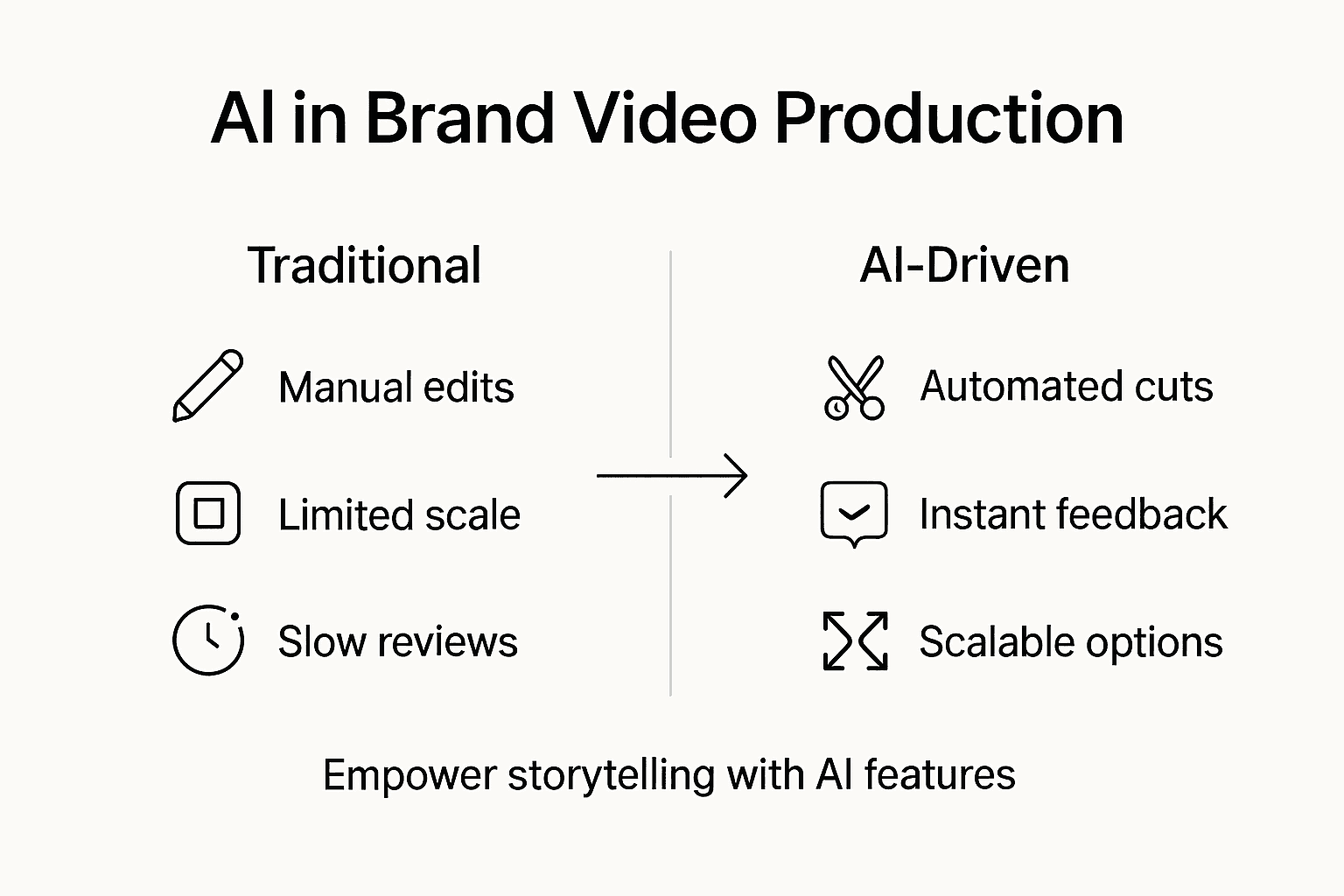
Compare how AI-driven features change the video production process:
| Production Aspect | Traditional Approach | AI-Enhanced Approach |
|---|---|---|
| Scriptwriting | Manual, time-consuming drafts | Automated, data-informed generation |
| Asset Management | Manual sorting, slow retrieval | Smart tagging, quick recommendations |
| Editing | Labor-intensive, technical skills | Automated cuts, intelligent edits |
| Personalization | Generic, mass audience | Dynamic, audience-tailored content |
Pro tip: Experiment with multiple AI-generated variations of your video concept to discover unexpected creative directions and optimize your storytelling approach.
Common Pitfalls and Alternatives Compared
Brand story video production involves navigating complex creative and technical challenges that can derail even the most well-intentioned projects. Understanding potential pitfalls and their strategic alternatives is crucial for marketing teams seeking to create compelling visual narratives.
Common challenges and their corresponding solutions include:
- Authenticity Deficit
- Pitfall: Producing overly polished, inauthentic videos
- Alternative: Embrace genuine, unscripted moments
- Strategy: Prioritize real employee and customer experiences
- Narrative Complexity
- Pitfall: Overcomplicated storytelling
- Alternative: Develop clear, focused narrative arcs
- Strategy: Distill brand message to core emotional insights
- Technical Limitations
- Pitfall: Poor production quality
- Alternative: Leverage AI-powered production tools
- Strategy: Use advanced editing and generation technologies
- Budget Constraints
- Pitfall: Limited resources restricting creative vision
- Alternative: Modular production approaches
- Strategy: Create adaptable content frameworks
- Platform Inconsistency
- Pitfall: One-size-fits-all content
- Alternative: Platform-specific content optimization
- Strategy: Develop adaptive video formats
Successful brand storytelling requires a nuanced approach that balances technical execution with genuine emotional resonance. Marketing teams must move beyond traditional production models, embracing flexible, technology-driven strategies that prioritize audience connection over rigid formalistic approaches.
The most effective brand stories emerge when organizations view video production not as a technical exercise, but as a dynamic storytelling opportunity. This means being willing to experiment, adapt, and continuously refine narrative strategies based on audience feedback and emerging technological capabilities.
Pro tip: Conduct periodic audience feedback sessions to validate your video storytelling approach and identify potential narrative blind spots.
Elevate Your Brand Storytelling with AI-Powered Video Creation
The article highlights the challenges of producing authentic, emotionally resonant story brand videos while managing complex workflows and budget limitations. If you seek to overcome these pain points by simplifying narrative development, streamlining production stages, and enhancing personalization without sacrificing quality, discover how Palmedor.ai transforms this process. Our AI-driven platform offers advanced features like automated script generation, scene management, and smart presets to create cinematic videos that truly connect with your audience.
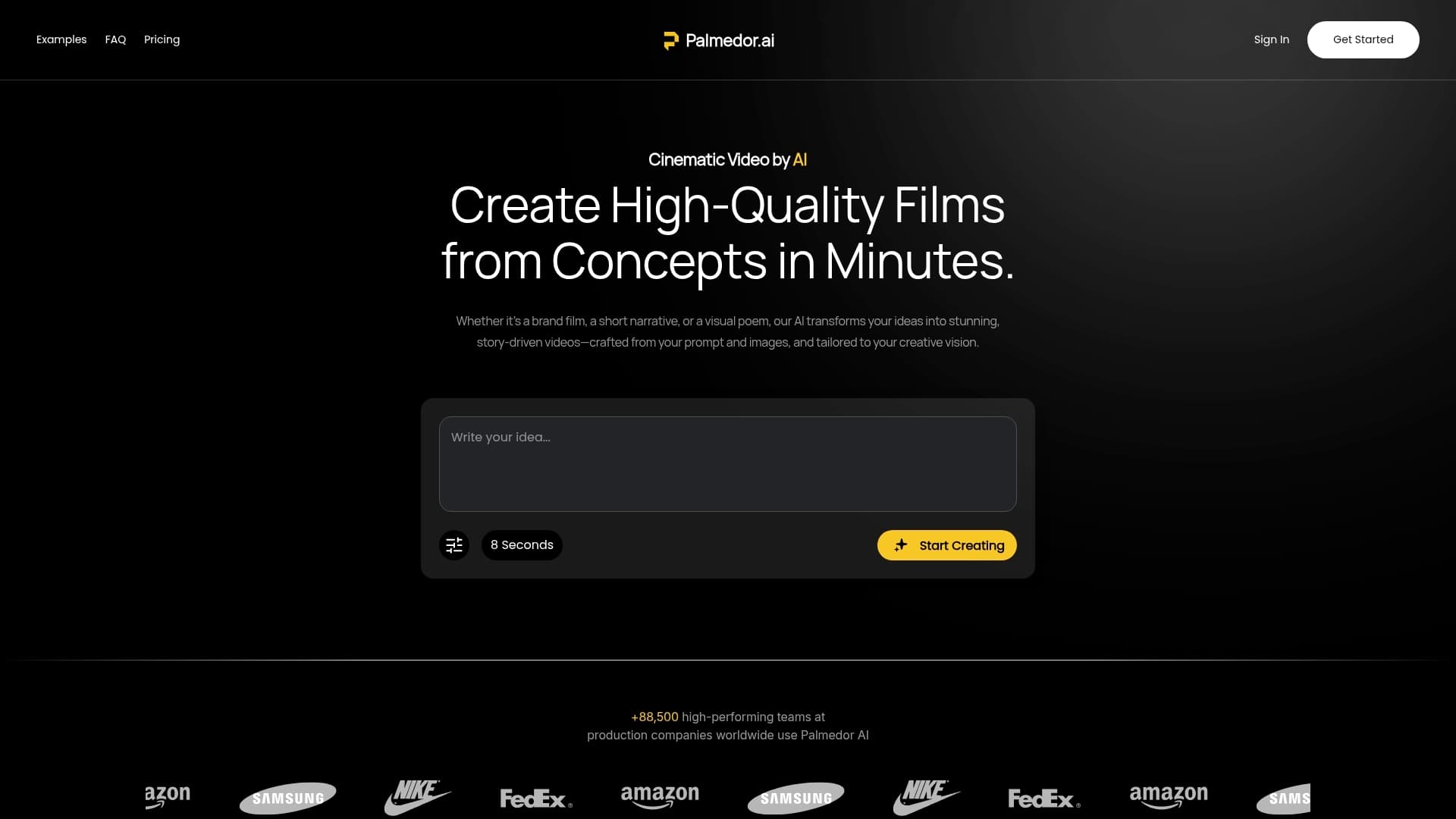
Take control of your brand story video production today with Palmedor.ai. Harness the power of intelligent automation to craft compelling narratives and produce professional-grade content quickly and effortlessly. Explore how our platform can empower your marketing impact by visiting https://palmedorai.com and start turning your ideas into dynamic films now.
Frequently Asked Questions
What is story brand video production?
Story brand video production is a strategic approach to visual storytelling that communicates a brand's core identity and values. It focuses on creating compelling narratives that forge emotional connections with target audiences, moving beyond simple product promotion.
What are the key types of brand story videos?
The key types of brand story videos include origin story videos, customer testimonial videos, founder narrative videos, company culture videos, product journey videos, and social impact videos. Each type serves a unique purpose in conveying a brand's narrative.
What is the typical workflow for modern video production?
The typical workflow for modern video production includes five stages: Development, Pre-Production, Production, Post-Production, and Distribution. Each stage has specific objectives that contribute to creating high-quality and engaging video content.
How does AI enhance video production?
AI enhances video production by automating processes such as scriptwriting and editing, managing assets intelligently, and personalizing content for audience segments. This allows content creators to focus on strategic and creative decision-making, leading to more impactful visual narratives.