Social Video Best Practices: Driving Engagement and Quality
Social video best practices for creators cover platform differences, video formats, brand consistency, engagement tips, and common mistakes to avoid.
Social Video Best Practices: Driving Engagement and Quality

Over half of American internet users watch social videos every single day, making these short, engaging clips a driving force for modern digital communication. As audiences scroll quickly through feeds, brands need creative strategies to make a real impact with visual storytelling built for social platforms. Mastering the format, purpose, and audience preferences behind social video gives creators and businesses a powerful edge in today’s crowded online space.
Table of Contents
- Social Video Explained: Format And Purpose
- Key Types Of Social Video Content
- Platform-Specific Requirements And Trends
- Audience Engagement Strategies For Social Videos
- Maintaining Brand Consistency Across Videos
- Common Pitfalls In Social Video Production
Key Takeaways
| Point | Details |
|---|---|
| Engagement through Storytelling | Craft social videos that evoke emotions and tell compelling stories to enhance viewer retention and connection. |
| Platform Optimization | Adapt video content to meet the specific requirements and audience expectations of each social media platform for better reach and engagement. |
| Consistency in Branding | Maintain uniform visual and narrative elements to build trust and recognition across all video content. |
| Avoid Common Pitfalls | Address technical and creative mistakes proactively to ensure high-quality and impactful social video production. |
Social Video Explained: Format and Purpose
Social video represents a dynamic digital communication strategy designed to engage audiences through strategically crafted video content across social media platforms. Social video marketing integrates visual storytelling with interactive digital experiences, enabling brands and creators to connect directly with viewers through compelling multimedia narratives.
At its core, social video serves multiple strategic purposes: brand awareness, audience engagement, information dissemination, and emotional connection. Unlike traditional video content, social videos are typically shorter, more authentic, and optimized for mobile consumption. They leverage platform-specific features like autoplay, vertical formatting, and quick-load capabilities to maximize viewer retention and encourage sharing.
The format of social videos varies widely, ranging from quick 15-second clips to more elaborate 2-3 minute storytelling pieces. Successful social videos typically share common characteristics: brevity, visual impact, clear messaging, and strong emotional resonance. Creators must consider platform-specific requirements, audience preferences, and technical constraints when developing content. Key formats include:
- Tutorial and How-To Videos: Practical, instructional content
- Behind-the-Scenes Glimpses: Authentic, humanizing content
- Product Demonstrations: Showcasing features and benefits
- User-Generated Content: Community-driven narratives
- Interview and Expert Insights: Credibility-building content
Pro Video Creation Tip: Design your social video with mobile viewers in mind, prioritizing strong visuals, clear audio, and subtitles to ensure engagement even when viewers are watching without sound.
Key Types of Social Video Content
Social video content represents a diverse ecosystem of digital communication, spanning multiple formats designed to engage, entertain, and inform audiences. Social media content encompasses a wide range of video styles that serve different strategic objectives, from brand storytelling to community building and direct audience interaction.

The landscape of social video content is rich and dynamic, drawing inspiration from user creativity and platform-specific trends. Research on short video trends reveals fascinating patterns, including popular genres like comedy, romance, pranks, and personal narratives that capture viewers' attention through unique audio-visual experiences. These videos often leverage innovative techniques such as reaction content, lip-synching, self-shot footage, and spontaneous performance styles.
Key types of social video content include:
- Educational Videos: Instructional content that provides value through knowledge sharing
- Entertainment Clips: Short-form comedy, music, and performance videos
- Personal Vlogs: Narrative-driven content showcasing individual experiences
- Product Reviews: Authentic consumer perspectives on brands and services
- Live Streaming: Real-time engagement through direct broadcasting
- Testimonial Videos: Customer stories and brand endorsements
- Behind-the-Scenes Footage: Authentic glimpses into processes and personalities
Pro Content Strategy Tip: Diversify your video content portfolio by experimenting with different formats and analyzing audience engagement metrics to understand what resonates most with your specific viewer demographic.
Platform-Specific Requirements and Trends
The landscape of social video is continuously evolving, with each platform developing unique characteristics and content strategies. YouTube's introduction of Shorts represents a prime example of platform-specific innovation, demonstrating how social media networks are adapting to changing viewer preferences and consumption habits. These platform-specific formats dramatically influence content creation, requiring creators to develop nuanced strategies tailored to each digital environment.
Native video formats have transformed how content is distributed and consumed across social platforms. Each platform maintains distinct technical specifications, algorithmic preferences, and audience expectations that creators must carefully navigate. For instance, vertical video performs differently on TikTok compared to horizontal formats on YouTube, and Instagram Reels have unique engagement metrics that differ from standard Instagram video posts.
Key platform-specific considerations include:
-
TikTok:
- 15-60 second vertical videos
- High-energy, trend-driven content
- Strong emphasis on music and visual effects
-
YouTube:
- Supports multiple video lengths
- Robust monetization options
- Detailed analytics and search optimization
-
Instagram:
- Vertical and square video formats
- Strong visual aesthetic requirements
- Integration with Stories and Reels
-
LinkedIn:
- Professional, educational content
- Longer professional narrative videos
- Business and career-focused storytelling
Pro Platform Strategy Tip: Create a flexible content template that can be easily adapted across different platforms, ensuring core messaging remains consistent while technical specifications are precisely tailored to each network's requirements.
Here's a summary comparison of leading social platforms for video content:
| Platform | Ideal Video Length | Core Audience | Distinctive Feature |
|---|---|---|---|
| TikTok | 15–60 seconds | Gen Z, Millennials | Viral trends and music effects |
| YouTube | 1–10 minutes (varied) | All ages, creators | Long-form and Shorts support |
| 15–90 seconds (Reels) | Young professionals | Integrated Stories and Reels | |
| 60 seconds–5 minutes | Professionals/B2B | Career-focused narratives |
Audience Engagement Strategies for Social Videos
Successful social video strategies require a nuanced understanding of audience psychology and platform dynamics. Research on social media content interactions reveals that engagement is not a monolithic concept, but a complex interplay between content type, emotional resonance, and platform-specific features. Creators must craft videos that not only capture attention but also encourage active participation from viewers.
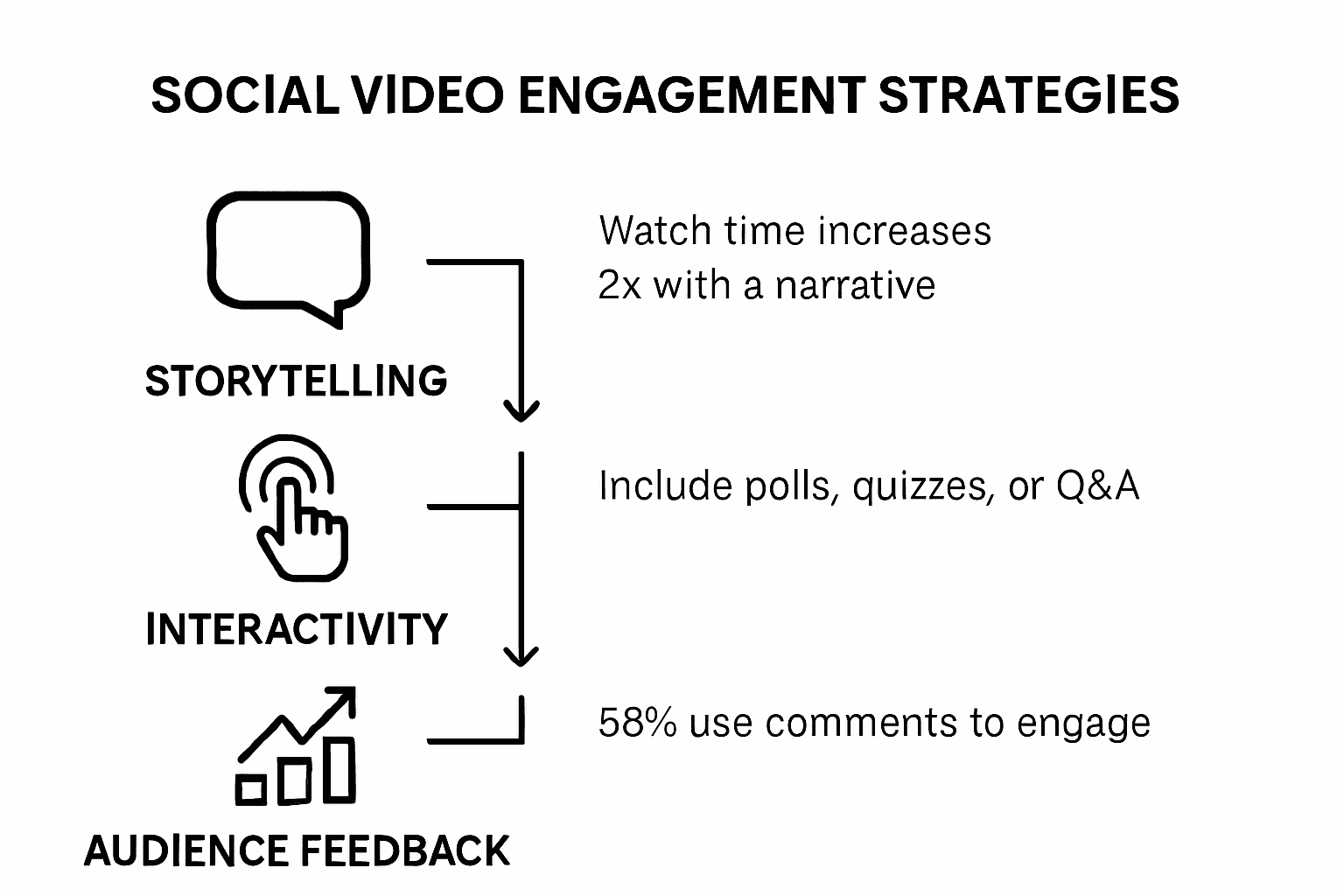
Engagement strategies can be categorized into three primary approaches: emotional connection, interactive elements, and strategic content design. Emotional videos that tell compelling stories tend to generate higher viewer retention, while those incorporating interactive elements like polls, comments, and challenges can transform passive viewers into active community members. The key is creating content that feels personal, authentic, and designed specifically for the target audience's preferences and expectations.
Effective engagement techniques include:
-
Storytelling with Purpose:
- Create narrative arcs with clear emotional trajectories
- Use relatable characters and scenarios
- Develop content that resonates with viewers' experiences
-
Interactive Design:
- Incorporate direct audience participation mechanisms
- Use call-to-action prompts within videos
- Design content that encourages sharing and commentary
-
Technical Optimization:
- Ensure quick, captivating first 3 seconds
- Use captions for accessibility
- Optimize video for silent viewing
- Match platform-specific algorithmic preferences
-
Emotional Triggers:
- Leverage humor, surprise, or inspiration
- Create content that provokes genuine emotional response
- Build narratives that feel personally relevant
Pro Engagement Tip: Develop a consistent audience feedback loop by regularly analyzing video metrics, comments, and sharing patterns to continuously refine your content strategy and deepen viewer connection.
Maintaining Brand Consistency Across Videos
Brand consistency represents the strategic backbone of effective social video content, transforming disconnected videos into a cohesive narrative that resonates with audiences. Video content presentation strategies underscore the critical importance of maintaining a uniform visual and messaging approach across all digital platforms. This consistency builds trust, reinforces brand identity, and creates a memorable viewer experience that distinguishes a brand from its competitors.
Academic video presentation models demonstrate how consistent branding can make complex information more accessible and engaging. The key is developing a recognizable visual and tonal language that transcends individual video content. This involves carefully crafted elements that work together to create a unified brand voice, regardless of the specific platform or video type.
Key components of brand consistency include:
-
Visual Identity:
- Consistent color palette
- Uniform logo placement
- Matching typography and graphic design elements
- Synchronized visual filters or editing styles
-
Narrative Tone:
- Consistent brand personality
- Aligned messaging framework
- Predictable emotional resonance
- Uniform communication style
-
Technical Execution:
- Standardized video production quality
- Consistent audio and sound design
- Similar video length and pacing
- Recurring visual motifs or transitions
-
Content Strategy:
- Aligned thematic approaches
- Complementary content series
- Interconnected storytelling
- Predictable content cadence
Pro Branding Tip: Create a comprehensive brand video style guide that documents your visual, narrative, and technical requirements, ensuring every team member can reproduce your brand's unique video identity with precision and consistency.
Common Pitfalls in Social Video Production
Social video production is a nuanced art that requires careful navigation of technical, creative, and strategic challenges. Research on micro-video creativity highlights the delicate balance between aesthetic value and novelty, revealing that many creators stumble by overlooking critical aspects of content development. Understanding these common pitfalls can help video producers create more engaging and impactful social media content.
The most frequent mistakes in social video production stem from a combination of technical limitations, misunderstood audience expectations, and strategic shortsightedness. Creators often fall into predictable traps that undermine their content's potential, ranging from poor technical execution to misaligned creative approaches. Recognizing and proactively addressing these challenges is crucial for developing compelling social video content that resonates with viewers.
Key pitfalls to avoid include:
-
Technical Shortcomings:
- Poor audio quality
- Inconsistent lighting
- Shaky camera work
- Inappropriate video resolution
- Ineffective editing techniques
-
Content Strategy Errors:
- Lack of clear narrative focus
- Overproduced or inauthentic messaging
- Ignoring platform-specific requirements
- Failing to understand target audience
- Inconsistent brand representation
-
Creative Missteps:
- Copying trending content without originality
- Neglecting emotional engagement
- Overlooking storytelling fundamentals
- Forced or artificial humor
- Misaligned content with brand identity
-
Distribution Mistakes:
- Incorrect video formatting
- Poor timing of content release
- Inconsistent posting schedule
- Neglecting audience interaction
- Misunderstanding algorithmic preferences
Pro Production Tip: Develop a comprehensive pre-production checklist that addresses technical, creative, and strategic considerations, ensuring each video meets both your brand standards and audience expectations before final production.
To help guide your production, here's a quick reference to common video pitfalls and their impact:
| Pitfall | Viewer Impact | Preventive Action |
|---|---|---|
| Poor audio quality | Reduces engagement | Use external microphones |
| Inconsistent branding | Confuses audience | Follow a unified video style guide |
| Ignoring platform specs | Low algorithm reach | Adapt videos to platform formats |
| Lacking narrative focus | Viewers lose interest | Script strong storylines |
Elevate Your Social Video Content with AI-Powered Creation
Struggling to produce engaging and professional-grade social videos while maintaining brand consistency and meeting platform-specific requirements Social video creators often face challenges like ensuring storytelling focus optimizing formats and creating emotionally resonant content. Palmedor.ai addresses these pain points by transforming your ideas into cinematic videos with script generation, smart presets, and output customization that fit perfectly with trending formats like TikTok Shorts or Instagram Reels.

Take control of your social video production today and experience how easy it can be to create high-quality content that drives audience engagement and strengthens your brand. Visit Palmedor.ai now to explore how you can develop compelling social clips and narrative videos with minimal effort. Discover the full potential of your concepts by starting your journey on our landing page and get inspired by examples and blogs offered on Palmedor.ai. Don’t let technical or creative hurdles hold you back from social video success.
Frequently Asked Questions
What are the key characteristics of effective social videos?
Effective social videos are typically brief, visually impactful, and convey clear messaging. They often evoke strong emotional responses and are optimized for mobile viewing, incorporating elements like subtitles for accessibility.
How can I improve audience engagement with my social videos?
To enhance engagement, focus on storytelling with purpose, incorporate interactive elements, and utilize emotional triggers. Tailoring the content to resonate with your audience's experiences and preferences can also foster greater participation.
What types of video formats work best on social media platforms?
Popular formats include tutorial and how-to videos, behind-the-scenes glimpses, product demonstrations, user-generated content, and live streaming. Each format serves different strategic purposes, such as education, entertainment, or community building.
How can I ensure brand consistency across my social video content?
Maintain brand consistency by using a standardized visual identity, uniform narrative tone, and consistent technical execution. Developing a brand video style guide can help ensure all team members adhere to these principles.