Short Form Video Marketing: Driving Engagement for Tech Brands
Short form video marketing boosts brand visibility on social media. Learn types, platform strategies, production tips, and key pitfalls for tech startups.
Short Form Video Marketing: Driving Engagement for Tech Brands

Launching a software update is tough enough without also figuring out the fastest way to capture attention on TikTok or Instagram Reels. For many tech brand managers, making short videos that actually engage users can feel overwhelming, especially when video budgets and production skills are limited. Understanding short form video marketing helps you reach mobile audiences with authentic content that drives interaction and fits your team’s resources.
Table of Contents
- Defining Short Form Video Marketing Concepts
- Key Types And Platform-Specific Variations
- Critical Features That Drive Engagement
- Short Form Video Creation Workflow Explained
- Common Pitfalls And How To Avoid Them
Key Takeaways
| Point | Details |
|---|---|
| Short Form Video Marketing Focus | This marketing approach emphasizes brief, impactful content for mobile audiences, leveraging platforms like TikTok, Instagram Reels, and YouTube Shorts. |
| Authenticity and Engagement | Successful videos resonate with viewers through genuine storytelling, encouraging shares and participation rather than polished sales pitches. |
| Platform-Specific Strategies | Each platform has unique audience preferences and algorithmic rewards; therefore, tailor content accordingly to maximize reach and engagement. |
| Continuous Analysis and Adaptation | Regularly monitor engagement metrics and adapt strategies based on performance insights and algorithm changes to remain effective in short form video marketing. |
Defining Short Form Video Marketing Concepts
Short form video marketing refers to a focused approach to brand communication using brief video content, typically under 60 seconds, designed specifically for mobile audiences who consume media on platforms like TikTok, Instagram Reels, and YouTube Shorts. Unlike traditional marketing videos that build narratives over minutes, these compressed formats demand immediate impact. You capture attention within the first second, deliver your message, and prompt action all before viewers swipe away. This compressed timeline forces creative clarity: every frame, every transition, every sound decision matters because you have virtually no room for filler.
What distinguishes short form video marketing from standard video content is its emphasis on authentic, trend sensitive messaging that leverages platform algorithms to amplify reach. The mechanics work differently than traditional advertising. Instead of pushing polished, produced content through paid channels, short form videos thrive when they feel genuine and relatable. Tech brand managers often struggle with this transition because polished product demos clash with what algorithms actually promote. Platforms reward content that keeps viewers watching, rewatching, and sharing. Short-form video strategies emphasize authentic, trend-responsive content that resonates with mobile-first audiences through visual storytelling rather than traditional selling techniques. This means your tech product announcement succeeds not through feature lists but through showing someone actually solving a problem with your tool.
The core value proposition of short form video marketing sits at the intersection of three forces: consumer behavior, platform mechanics, and production efficiency. Your audience now has shorter attention spans, yes, but that's only part of the story. They also have decision making power concentrated into milliseconds. They trust peer recommendations and authentic demonstrations over corporate messaging. They share what genuinely interests them, not what corporations tell them to care about. Short-form video marketing generates consumer engagement and drives purchase intention when the content feels less like advertising and more like discovering something worth sharing. For tech brands, this translates to showing your software solving real workflows, your app handling edge cases, your solution making someone's day easier. Couple this with the fact that video production for short form content requires far less budget, time, and specialized expertise than traditional commercial production, and you've got a format that works economically and psychologically.
Pro tip: When defining your short form video strategy, commit to one primary platform first and understand its specific algorithm before expanding to others. Each platform rewards different content patterns, so mastering TikTok's algorithm differs from optimizing for YouTube Shorts, which differs from Instagram Reels. Master one ecosystem before fragmenting your efforts.
Key Types and Platform-Specific Variations
Short form video content breaks down into distinct categories, each serving different marketing objectives and performing differently across platforms. Branded content represents videos your company creates directly, showcasing products, features, or company culture in ways that feel native to each platform. Influencer videos leverage creators with existing audiences to authenticate your message through their credibility and reach. User-generated content puts the spotlight on customers using your product, creating social proof that resonates far more than corporate messaging ever could. Viral challenge content frames your brand around trending formats or hashtag campaigns that invite participation. The choice between these types depends on your audience, resources, and platform strategy. A startup with limited budget might focus on user-generated content and authentic influencer partnerships, while an established tech brand might produce polished branded content alongside challenge campaigns to maximize reach.
Each platform demands different execution strategies. TikTok rewards raw, experimental, trend-driven content with rapid posting frequency and willingness to test formats continuously. The platform's algorithm favors novelty and engagement speed, meaning a 15-second comedy sketch about your software's learning curve might outperform a perfectly polished 60-second product demo. Instagram Reels occupies a middle ground between TikTok's casualness and traditional Instagram polish, attracting slightly older audiences and rewarding visually cohesive content that maintains brand aesthetics. YouTube Shorts works best for educational snippets, quick tutorials, and content that drives viewers toward longer-form videos on your channel. Different platforms reward distinct content types based on length limits, style preferences, and audience demographics, meaning your tech brand's "how to optimize your API" content might succeed as a YouTube Shorts series but flop entirely on TikTok without significant reformatting. The timing matters too. TikTok content cycles through trends in days; Instagram content maintains relevance for weeks. This means your content calendar, posting frequency, and refresh strategy must align with each platform's internal timeline.
Understanding engagement metrics and algorithmic impacts across platforms helps you allocate your production resources strategically. A tech brand manager with one video production resource should identify which platform delivers your highest engagement rates and audience growth, then concentrate efforts there before expanding. Consider these platform distinctions:
- TikTok favors immediate watch-through rates, trending sounds, and participatory challenges; your software company succeeds here by showing quick wins and relatable problems your tool solves
- Instagram Reels rewards visual consistency and brand voice maintenance; your brand's design language matters more here than on TikTok
- YouTube Shorts drives viewers into your main channel; treat them as entry points to longer educational content rather than standalone content
- Facebook Reels captures older demographics and typically underperforms compared to TikTok and Instagram for tech brands, making it a secondary focus
The intersection of content type and platform choice creates your actual strategy. A viral challenge works on TikTok and Instagram because both platforms surface hashtags and encourage participation. That same challenge on YouTube Shorts fails because the platform doesn't emphasize challenge participation. Influencer content succeeds everywhere but requires different influencer selections for each platform. A TikTok creator with 500,000 followers operates in a completely different space from an Instagram creator with similar follower counts; their audiences consume differently, engage differently, and convert differently.
Your production approach should reflect platform priorities. Don't create one polished video and repurpose it across all platforms with minor adjustments. That approach kills what makes short form content effective. Instead, identify your core message, then create platform-native versions that respect each ecosystem's norms. Your TikTok version might embrace trending sounds and quick cuts. Your YouTube Shorts version might include text overlays and cleaner transitions that guide viewers toward your main channel. Your Instagram Reels version might lean into your brand colors and visual identity more heavily.
Pro tip: Analyze which content types generate the highest watch completion rates on each platform for your specific audience, then double down on that format while testing variations monthly. Don't chase every trend across every platform; instead, become the expert in the one content type and platform combination that drives results for your tech brand.
Here is a comparison of platform-specific priorities for short form video marketing:
| Platform | Priority Content Features | Audience Profile | Best Use Case |
|---|---|---|---|
| TikTok | Trends, rapid pacing, novelty | Gen Z, young adults | Viral challenges, demos |
| Instagram Reels | Visual cohesion, brand voice | Millennials, professionals | Branded/lifestyle content |
| YouTube Shorts | Educational, clean transitions | Broad, info-seeking users | Quick tutorials, teasers |
| Facebook Reels | Simplicity, relatability | Older demographics | Secondary campaign boost |
Critical Features That Drive Engagement
Not all short form videos perform equally. The difference between content that gets ignored and content that generates thousands of shares comes down to specific, measurable features that capture attention and hold it. Compelling storytelling forms the foundation. Your video needs a narrative arc, even if it plays out in 15 seconds. Show a problem, demonstrate your solution, reveal the outcome. A fintech startup doesn't just show their app interface; they show someone frustrated with their current banking experience, switch to the app, and achieve their goal in seconds. This story structure activates viewer emotion and creates momentum that keeps people watching instead of swiping away. Emotional appeal works alongside storytelling by creating an immediate connection. Humor, relatability, surprise, or inspiration all trigger emotional responses that make viewers want to share content with their networks. A developer tool company might create a video showing the exact frustration of debugging legacy code, then the relief of solving it with their platform. That emotional resonance matters more than feature specifications.
Content matching audience interests and information relevance drive consumer attention, which means your video content must align directly with what your specific audience cares about at the moment they encounter it. A video about API rate limiting makes sense to a backend engineer but confuses a product manager. Match your content to your audience segment, then distribute it where that segment spends time. The information itself must matter. Don't waste viewer attention explaining what everyone already knows. Instead, teach something new or show something unexpected. A SaaS company might create a video revealing a productivity hack that uses their tool in an unconventional way, or expose a common mistake their tool prevents. Relevance also encompasses timing and context. Posting a video about debugging at 2am reaches night shift developers. Posting a launch announcement when competitors post theirs gets buried. Strategic timing amplifies reach.

Visual and Audio Technical Elements
Beyond narrative structure, specific technical features shape how viewers perceive and engage with your video. Visual and audio characteristics like shot frequency, image complexity, video orientation, and speech rate significantly impact engagement on platforms like TikTok. These elements work together:
- Shot frequency determines pacing. Rapid cuts every half-second maintain energy and prevent mental fatigue in short form content. Slower cuts bore viewers and cause drop-off
- Image complexity balances visual interest with cognitive load. Too many effects and transitions distract from your message; too plain and viewers ignore you
- Video orientation matters more than you think. Vertical video performs better on mobile because it fills the entire screen without black bars, making viewers feel immersed
- Speech rate affects comprehension and retention. Fast speech conveys urgency and matches platform energy; slow speech loses mobile-first audiences who expect rapid delivery
- Audio spectral characteristics include music choice, sound design, and voiceover quality. Trending sounds boost algorithmic reach while quality audio prevents viewer frustration
Consider how these elements interact in a real scenario. Your tech brand creates a tutorial about your product. High shot frequency keeps viewers engaged. Simple, clean visuals prevent information overload. Vertical video fills their screen. Your voiceover speaks at conversational pace, not rushed. Trending background music drives algorithmic visibility. Each element serves a purpose rather than existing for aesthetic reasons.
The timing of when you publish matters as much as what you publish. Post when your audience actively scrolls their feeds. Post when trending sounds peak in popularity. Post when competitors don't dominate the platform. This contextual awareness prevents your excellent content from launching into empty air where nobody sees it. Your video could contain perfect storytelling and emotional appeal, but if zero people encounter it, engagement stays zero.
Pro tip: Record multiple versions of the same core content with different shot frequencies, audio selections, and pacing speeds, then test them on your smallest audience segment first to identify which technical combination drives the highest watch-through rate before distributing the winning version widely.
Here is a summary of technical elements and their impact on short form video engagement:
| Element | Description | Engagement Impact |
|---|---|---|
| Shot Frequency | Number of cuts per minute | Faster pacing increases retention |
| Image Complexity | Visual detail vs simplicity | Balanced visuals draw attention |
| Video Orientation | Vertical vs horizontal | Vertical video boosts immersion |
| Speech Rate | Speed of spoken language | Fast delivery sustains interest |
| Audio Choice | Music or trending sounds | Relevant audio amplifies reach |
Short Form Video Creation Workflow Explained
Creating short form video content that actually converts requires a structured approach, not random filming. The workflow breaks into five distinct phases, each building on the previous one. Pre-production planning sets your entire trajectory. You identify your core message, define your target viewer, and determine which platform you are prioritizing. This phase answers critical questions: What problem does my tech product solve? Who experiences that problem most acutely? What would convince them to try my solution? A marketing professional working with limited resources should spend time here rather than jumping straight to filming. Clarity at this stage prevents wasted production time and failed content. Next comes scripting, where you translate your message into 15 to 60 second dialogue or visual sequences. Your script should be concise, punchy, and read naturally when spoken aloud. Avoid corporate jargon entirely. Write like you are explaining to a friend, not presenting to a boardroom. "Your API integrations used to take weeks. Now they take hours." beats "We have streamlined the API integration workflow with advanced optimization protocols." The script also guides your shooting process, preventing rambling footage that wastes editing time later.
From Concept to Final Product
Shooting happens with mobile-first optimization in mind. You don't need cinema cameras or professional studios. Your smartphone camera and natural lighting create more authentic content than elaborate setups. Capture multiple angles of the same moment, shoot 50 percent more footage than you think you need, and plan for vertical video orientation from the start. When you are filming, show your product in action within someone's workflow, not isolated on a table. Show your tool solving a real problem in real context. This authenticity matters more to viewers than production value. The shooting and editing phases focus on rapid pacing and eye-catching visuals while maintaining brand alignment, meaning your edit style should match your brand voice and platform norms. A SaaS company might use quick cuts and trending audio, while an enterprise software company might use cleaner transitions and professional voiceover.
Post-production editing is where amateurs fail and professionals succeed. Import your footage and arrange it on a timeline following your script. Cut aggressively. Remove every moment that doesn't serve your message. Trim silence between spoken words. Replace slow pans with quick cuts. Add text overlays to emphasize key points and make content accessible to viewers watching without sound. Incorporate trending audio tracks because algorithms reward content using popular sounds, but only choose music that makes sense for your message. A frustration followed by a happy resolution pairs well with uplifting music. A debugging nightmare works with tense, rapid sound design. Color correction should happen in this phase too. Make your footage visually consistent. If one shot looks washed out and another looks saturated, viewers notice the jarring transition.
Platform specific optimization prevents your excellent content from failing due to technical mistakes. The workflow integrates marketing strategy with creative production through storyboarding, leveraging trending audio, incorporating calls to action, and using analytics tools for continuous refinement. Format your video for each platform's specifications. TikTok wants vertical video at 1080x1920 pixels. YouTube Shorts accepts various formats but prefers specific dimensions. Instagram Reels has different guidelines. Test your video on the platform before publishing to ensure text remains readable and transitions display correctly. Write a compelling caption that makes someone stop scrolling. Include a clear call to action. Don't assume viewers will figure out what you want them to do next. Tell them explicitly: "Try it free for 30 days," "Watch the full tutorial on our channel," "Learn more in the link below."
Distribution and analysis closes the loop. Publish at strategic times when your audience actively scrolls. Monitor engagement metrics within the first few hours because early performance signals algorithmic reach. Track which videos drive actual traffic to your website or product sign ups, not just which ones get likes. This data informs your next content cycle. Did tutorials outperform humor? Lean into tutorials. Did your audience engage more with behind the scenes content? Produce more of it. Your second month of content should be noticeably better than your first because you learned from actual audience responses, not guesses.
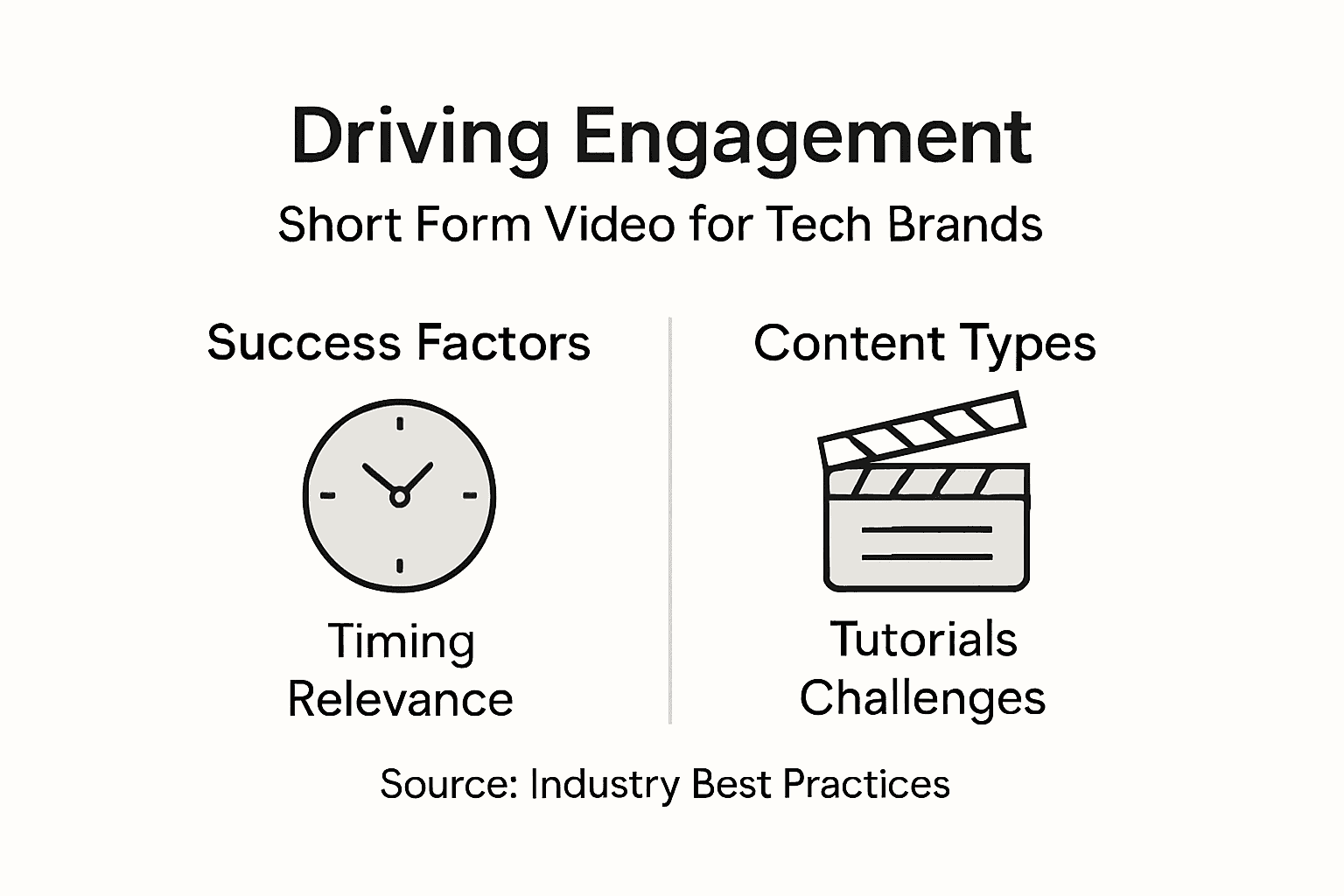
Pro tip: Create a simple content template for your team that includes script structure, shot list, and editing checklist so every video follows your brand standards without requiring approval from multiple stakeholders, saving hours of revision cycles.
Common Pitfalls and How to Avoid Them
Most tech brands fail at short form video marketing not because they lack resources or talent, but because they repeat predictable mistakes. The first and most damaging pitfall is misalignment between content and audience. You create videos about features that impress engineers while your actual buyers are product managers caring about implementation speed. You make jokes about debugging that resonate with your team but confuse your target customer. This happens because teams film content from an internal perspective rather than audience perspective. The fix requires deliberate audience research before production starts. Document exactly who you are trying to reach. What keeps them awake at night? What solutions have they tried before? What language do they use when describing their problems? Then create content that speaks directly to those documented needs, not to your company's interests. A video about your platform's scalability means nothing to a startup trying to solve their current bottleneck. A video about solving bottlenecks in three specific scenarios means everything.
The second major mistake is poor timing combined with infrequent posting. You create one excellent video, post it once, and wonder why engagement dies after a week. Short form platforms reward consistent creators because algorithms track posting frequency and favor accounts that feed the feed regularly. Post sporadically and the algorithm buries your content. Post daily and the algorithm surfaces your videos to more viewers. This doesn't mean producing daily content becomes your only job, but it does mean building a content calendar and committing to it. Additionally, posting at the wrong time wastes your best content. If your audience scrolls TikTok at 6pm after work, posting at 3am reaches nobody. You need to understand platform-specific timing patterns for your specific audience. Lack of content alignment with target audience, poor posting timing, and failure to monitor analytics lead to diminishing returns, meaning intentional strategy beats hoping for viral success.
Authenticity Versus Control and Algorithm Shifts
A third pitfall emerges when brands prioritize brand control over creator authenticity. You hire an influencer with 100,000 followers, then send them a corporate script with approved talking points and brand guidelines covering every pixel of the frame. They film it, and the content performs terribly because audiences sense the inauthenticity. Influencers work because they have built trust with their followers. That trust evaporates when content feels corporate. The solution is counterintuitive: loosen your grip. Brief your influencers on your message goals, show them your product, then let them create in their style. Yes, they might emphasize things you wouldn't prioritize. Yes, they might use language that feels informal. That's exactly why their audiences trust them. Balancing brand control with creator authenticity while staying agile with platform algorithm changes requires continuous research and dynamic content calendars, meaning rigid strategies fail but flexible approaches adapt.
Algorithms change constantly. Features you relied on last month disappear. New formats emerge. Platforms shift their recommendation criteria. Many brands respond by sticking with what worked last quarter, watching engagement plummet, then blaming the platform. The winning approach is different: monitor algorithmic changes actively. Follow platform creator blogs and updates. Analyze your own performance weekly. Notice which video types get more reach. Test new formats monthly before committing heavily. A tech brand that mastered Instagram Reels in 2023 can't assume the same approach works in 2024 without testing. Content saturation also causes fatigue. If every tech brand uploads the same "day in the life of a developer" video, audiences tune out because they have seen the same content hundreds of times. Stand out by exploring angles competitors ignore. If everyone shows successes, show common failures and how you prevent them. If everyone uses trending sounds, use unexpected audio that catches attention through novelty. The pitfall is following trends so closely that your brand becomes indistinguishable from dozens of competitors.
Tracking the wrong metrics also wastes effort. You obsess over likes and comments because they feel tangible, but they might not predict actual business results. A video with 500 likes that drives zero traffic to your website wastes time. A video with 50 likes that converts viewers into product trials justifies the investment. Setting clear objectives and continuously monitoring engagement insights prevents wasting resources on content that fails to drive business outcomes. Define what success looks like before publishing. Is it website traffic? Email signups? Product trial activations? Product purchases? Then track those metrics religiously. If your content generates engagement but not conversions, adjust your calls to action or content focus until metrics align with business goals.
Pro tip: Build a monthly content performance dashboard tracking watch completion rates, audience demographics, referral sources, and conversion metrics, then schedule quarterly strategy reviews where you eliminate content types underperforming your benchmarks and double down on categories driving measurable business results.
Elevate Your Short Form Video Marketing with AI-Powered Tools
Struggling to keep up with the fast-paced demands of short form video content that engages and converts Your audience craves authentic, trend-driven videos that communicate your tech brand's unique value in seconds but producing these videos consistently can be overwhelming. With challenges like platform-specific formats, pacing, and storytelling clarity, it is easy to hit roadblocks in delivering creative and timely content that cuts through the noise.
Palmedor.ai offers a pioneering solution tailored to these challenges by transforming your ideas into professional-grade short videos effortlessly whether you need quick tutorials, viral challenges, or authentic product demos. Our platform uses AI to handle everything from script generation to scene management and output customization aligned with TikTok, Instagram Reels, and YouTube Shorts standards. This means you can focus on crafting compelling narratives that resonate while we streamline the technical production hurdles.
Discover how smart presets, flexible formats, and intuitive editing at Palmedor.ai empower you to produce high-impact video content that captures attention instantly and drives engagement. Don’t let conflicting platform demands or technical complexity hold back your short form video marketing strategy. Visit Palmedor.ai to start creating captivating videos today and take control of your brand’s story across the digital landscape. Learn more and explore practical tips in our informative blogs designed to help you succeed in an evolving video ecosystem.
Frequently Asked Questions
What is short form video marketing?
Short form video marketing involves using brief video content, typically under 60 seconds, to communicate brand messages effectively to mobile audiences on platforms like TikTok, Instagram Reels, and YouTube Shorts.
How does short form video marketing differ from traditional video marketing?
Short form video marketing emphasizes authentic, relatable content rather than polished product presentations. It focuses on capturing attention quickly and driving engagement through storytelling and emotional connections.
What types of content are effective for short form video marketing?
Effective content types include branded videos, influencer collaborations, user-generated content, and viral challenges. Each serves different marketing objectives and varies in performance across platforms.
How can tech brands optimize their short form video content for different platforms?
Tech brands should tailor their content to align with each platform's unique characteristics, including video format, pacing, visuals, and audience preferences. Experimenting with different techniques and analyzing performance metrics is crucial for success.