Music Video Companies: Elevating Creative Production
Music video companies empower creators by streamlining AI-driven workflows, exploring types, production processes, legal factors, and cost comparisons.
Music Video Companies: Elevating Creative Production

Bold ideas and cutting-edge technology are reshaping how music videos come to life, especially as american and global creators now demand more efficient workflows. Independent filmmakers and creative agencies face the challenge of blending vision with speed while avoiding overwhelming complexity. With over 60 percent of new music videos benefiting from advanced AI-assisted production, innovative companies are making it easier than ever to turn artistic concepts into rich visual stories—no matter your technical background.
Table of Contents
- Defining Music Video Companies And Their Role
- Types Of Music Video Companies Worldwide
- Music Video Production Workflow And Technology
- Core Services: Concept, Filming, And Editing
- Legal Requirements And Copyright Compliance
- Budget, Pricing Models, And Key Alternatives
Key Takeaways
| Point | Details |
|---|---|
| Role of Music Video Companies | Music video companies transform musical experiences into visual narratives, enhancing artist branding and audience engagement. |
| Types of Music Video Companies | Companies range from boutique agencies focused on artistic storytelling to large production houses that emphasize commercial viability. |
| Production Workflow and Technology | The workflow involves pre-production, production, and post-production stages, utilizing advanced technologies for compelling visual storytelling. |
| Legal and Budget Considerations | Understanding copyright and licensing is essential, along with flexible pricing models that adapt to the project's needs and potential returns. |
Defining Music Video Companies and Their Role
Music video companies represent specialized creative organizations that transform musical experiences into compelling visual narratives. These professional teams are responsible for translating musical compositions into dynamic audiovisual content that captures audiences' imaginations and supports artists' brand storytelling. Producing multimedia representations of songs involves intricate planning, artistic vision, and technical expertise.
At their core, music video companies serve multiple critical functions within the contemporary entertainment ecosystem. They conceptualize, design, and execute visual stories that complement musical works, utilizing techniques ranging from live-action cinematography to complex animation and experimental visual art. These organizations work closely with musicians, record labels, and creative directors to develop narratives that enhance musical messaging and generate audience engagement. Supporting artists through innovative visual content has become increasingly important in a digital media landscape where visual presentation can significantly impact musical success.
The production process for music videos involves several sophisticated stages. Creative teams typically begin with collaborative concept development, where they discuss the song's emotional core, the artist's brand identity, and potential visual metaphors. This initial brainstorming phase leads to scriptwriting, storyboarding, location scouting, casting, and ultimately production. Modern music video companies must balance artistic integrity with commercial viability, creating content that resonates emotionally while also meeting marketing objectives.
Pro tip: When selecting a music video company, prioritize those with diverse portfolio experiences and proven ability to translate musical narratives into compelling visual stories.
Types of Music Video Companies Worldwide
The global music video production landscape encompasses a diverse array of organizational structures and creative approaches. Music video companies range from boutique creative agencies to large-scale multimedia enterprises, each offering unique capabilities and specialized services tailored to different market segments. These organizations are distinguished not just by their size, but by their strategic positioning within the complex entertainment ecosystem.
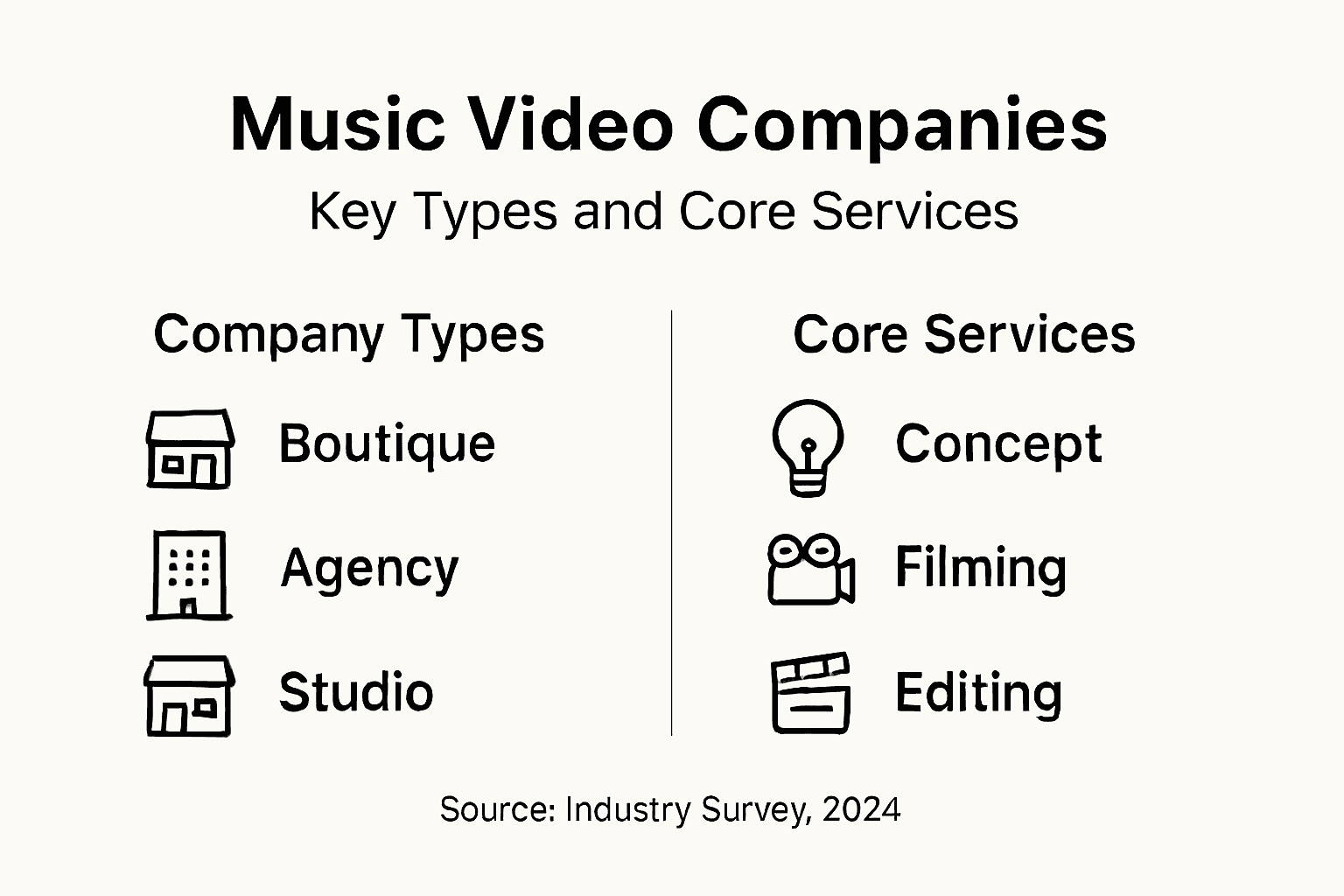
Three primary categories of music video companies emerge in the contemporary marketplace. First, independent boutique firms specialize in artistic storytelling, often working with emerging artists and experimental genres. These smaller companies pride themselves on innovative visual concepts and personalized creative direction. Second, full-service multimedia agencies provide comprehensive production solutions, integrating advanced technological resources with end-to-end creative development. Large production companies collaborate extensively with record labels to develop high-budget, strategically targeted video content.
Geographic and technological variations significantly influence music video company structures. North American firms tend to emphasize commercial marketability, while European companies often prioritize artistic experimentation. Asian markets demonstrate remarkable innovation in digital production techniques, frequently integrating cutting-edge visual technologies. Emerging markets like India and Brazil are developing unique hybrid models that combine traditional storytelling with rapidly evolving digital production capabilities.
Here's a quick comparison of the main types of music video companies worldwide:
| Company Type | Key Strengths | Typical Clients | Production Approach |
|---|---|---|---|
| Boutique Firms | Creative storytelling | Emerging artists | Highly personalized, experimental |
| Multimedia Agencies | Full-scale solutions | Major record labels | Technologically integrated, polished |
| Large Production Houses | Market reach & resources | Established acts | High-budget, commercially focused |
Pro tip: Research a music video company's portfolio and past collaborations to understand their creative range and technological capabilities before initiating a partnership.
Music Video Production Workflow and Technology
Music video production workflows represent complex, multi-stage processes that blend artistic creativity with advanced technological capabilities. These intricate journeys transform musical concepts into compelling visual narratives, involving sophisticated coordination across multiple creative and technical disciplines. Professional teams must navigate increasingly complex production landscapes that demand both artistic vision and technical proficiency.
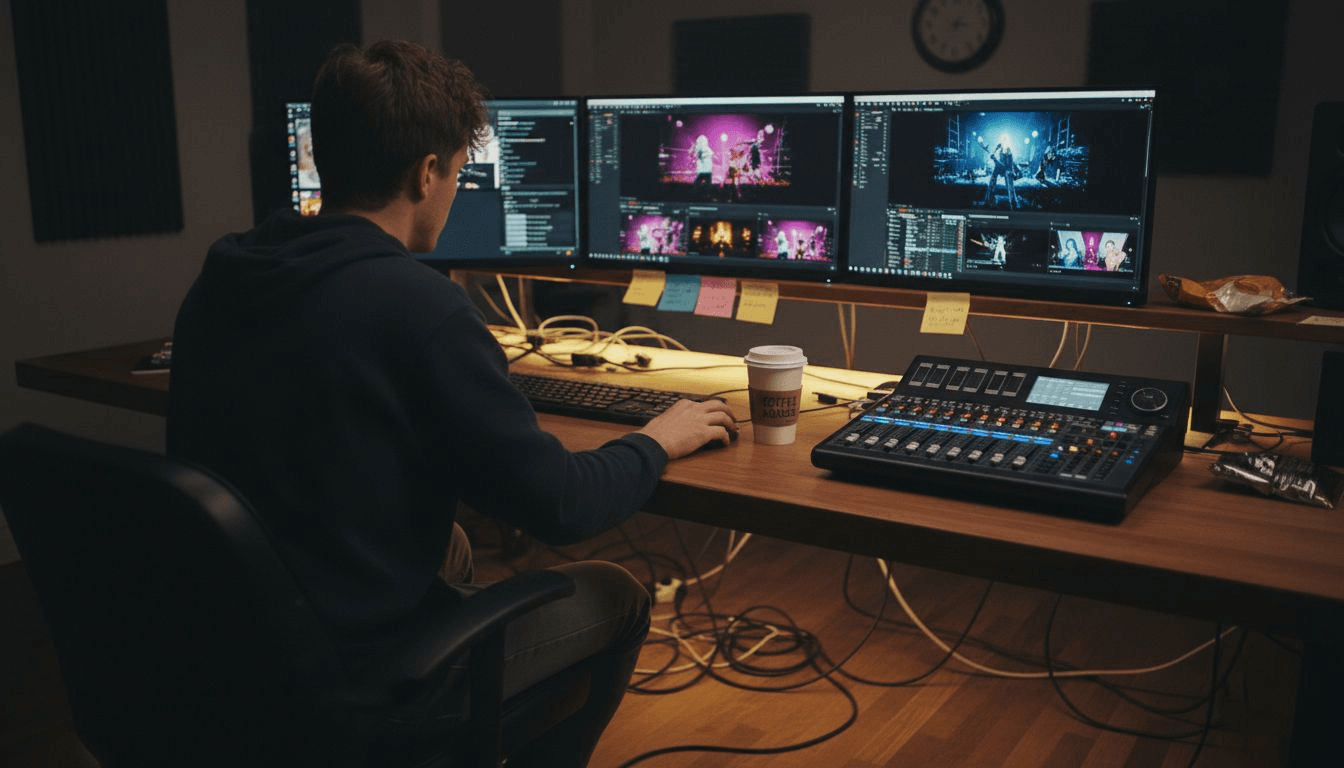
The production process typically unfolds through three critical stages. Pre-production involves comprehensive planning, including script development, storyboarding, location scouting, and talent casting. During the production phase, cinematographers and directors capture raw visual content using high-resolution cameras and specialized equipment. Advanced video production technologies enable filmmakers to create increasingly dynamic and immersive visual experiences, integrating cutting-edge techniques like virtual production, motion capture, and real-time rendering.
Post-production represents the most technologically sophisticated stage of music video creation. Editing teams utilize powerful digital workstations to assemble footage, applying color grading, visual effects, and sound design. Emerging technologies like artificial intelligence and machine learning are progressively transforming post-production workflows, enabling faster editing, automated color correction, and more efficient visual effects rendering. These technological innovations allow music video companies to produce increasingly complex visual narratives with greater speed and precision.
Pro tip: Invest in continuous technological training for your production team to stay ahead of rapidly evolving digital production tools and techniques.
Core Services: Concept, Filming, and Editing
Music video core services represent a comprehensive creative process that transforms musical ideas into visually compelling narratives. These services encompass three critical stages: conceptualization, filming, and editing, each requiring unique artistic and technical skills. Professional music video companies meticulously craft these stages to ensure that the visual representation authentically captures the emotional essence of the musical piece.
The concept development stage involves deep creative exploration, where directors and artists collaborate to translate musical themes into visual storytelling. This process requires understanding the song's emotional landscape, identifying potential narrative or abstract approaches, and developing a compelling visual strategy. Professional filming techniques then bring these concepts to life, utilizing advanced cinematography methods including specialized camera movements, lighting design, and strategic shot composition. Cinematographers must balance technical precision with artistic interpretation, creating visual sequences that resonate with the music's underlying emotional narrative.
Post-production editing represents the final transformative stage where raw footage is sculpted into a cohesive visual experience. Editing teams utilize sophisticated software to color grade footage, integrate visual effects, synchronize visual elements with musical rhythms, and create seamless transitions. Advanced digital tools enable editors to manipulate time, apply complex visual effects, and enhance the emotional impact of the original concept. This final stage is where technical skill and creative vision merge to produce a compelling music video that transcends simple visual documentation.
Pro tip: Always develop a comprehensive storyboard and shot list before filming to ensure efficient production and maintain your creative vision.
Legal Requirements and Copyright Compliance
Copyright law complexities fundamentally shape the music video production landscape, establishing critical guidelines for legal content creation. Music video companies must navigate intricate legal frameworks that protect intellectual property rights while enabling creative expression. Understanding these regulations is not just a legal obligation but a professional responsibility that ensures ethical and sustainable content production.
Two primary types of licenses are essential in music video production. Synchronization licenses grant permission to reproduce a musical composition within a visual format, while master use licenses enable the incorporation of specific sound recordings. Copyright law protections extend beyond simple usage rights, encompassing complex regulations about reproduction, distribution, public performance, and derivative work creation. Artists and production companies must carefully document and negotiate these permissions to avoid potential legal disputes and ensure fair compensation for original creators.
The legal landscape of music video production involves multiple stakeholders, including musicians, record labels, publishers, and visual artists. Each party maintains specific intellectual property rights that must be respectfully acknowledged and compensated. International copyright agreements further complicate this process, requiring production companies to understand global legal standards and cross-border intellectual property regulations. Potential consequences of copyright infringement can include significant financial penalties, legal injunctions, and reputational damage to the production company.
Below is a summary of the essential legal requirements in music video production:
| Legal Requirement | Purpose | Who Is Involved | Possible Outcome of Noncompliance |
|---|---|---|---|
| Synchronization License | Use music with video | Artists, publishers | Lawsuit or removal of video |
| Master Use License | Use specific audio recordings | Labels, copyright holders | Financial penalties |
| International Agreement | Cross-border production rights | Production companies | Blocked distribution |
Pro tip: Consult with an intellectual property attorney specializing in music and visual media to develop a comprehensive licensing strategy before beginning any music video production.
Budget, Pricing Models, and Key Alternatives
Music video production pricing has evolved dramatically, moving beyond traditional fixed-rate structures to more flexible, data-driven approaches. Modern music video companies now offer sophisticated pricing models that adapt to diverse client needs, technological capabilities, and project complexity. These innovative strategies enable both emerging artists and established brands to access high-quality video production services.
Typical pricing models include tiered service packages, which segment offerings based on production complexity, technological resources, and creative input. Subscription-based models have gained significant traction, allowing clients consistent access to production services with predictable monthly investments. Some companies also explore revenue-sharing agreements, where production costs are partially offset by potential future earnings from the music video's success. Alternative compensation systems are emerging, challenging traditional licensing frameworks and providing more dynamic financial arrangements for content creators.
Budget considerations extend beyond simple monetary transactions, encompassing technological investment, creative resources, and potential market reach. Pricing strategies now incorporate factors like anticipated social media engagement, potential viral potential, and cross-platform distribution opportunities. Advanced music video companies utilize data analytics to help clients understand potential return on investment, offering transparent pricing models that align creative vision with economic feasibility. These approaches recognize that a music video's value transcends its immediate production costs.
Pro tip: Request detailed project breakdowns and multiple pricing scenarios to understand the full range of production possibilities within your budget.
Transform Your Music Video Vision Into Reality with AI-Powered Creativity
Music video production demands a delicate balance between artistic storytelling and technical execution. This article highlights key challenges such as complex workflows, legal compliance, and the need for innovative visual concepts that resonate emotionally while staying commercially viable. You want to bring your ideas from concept to screen without getting bogged down by complicated processes or confusing technology.
Palmedor.ai is here to simplify that journey by offering an AI-powered video creation platform that empowers both professionals and creators to produce high-quality cinematic videos effortlessly. With features like script generation, scene management, and smart presets, you can focus on your artistic vision while Palmedor.ai handles the technical details of editing, rendering, and output customization. Whether you need to craft a brand film, a social media clip, or a narrative music video, our platform streamlines your production workflow and reduces the time and cost typically involved.

Ready to elevate your music video production with cutting-edge AI tools transforming your creative process? Visit Palmedor.ai today and explore how to turn your concepts into polished videos with minimal effort. Discover more about how AI can support your storytelling and optimize your production on the Palmedor.ai landing page. Dive deeper into smart video creation and start making your vision come alive now.
Frequently Asked Questions
What are the main functions of music video companies?
Music video companies are responsible for conceptualizing, designing, and producing visual content that complements musical works. They collaborate with artists and record labels to develop narratives that engage audiences and enhance brand storytelling.
What is the typical workflow for producing a music video?
The production of a music video typically involves three critical stages: pre-production (planning and concept development), production (filming using high-quality equipment), and post-production (editing and integrating visual effects to create a cohesive final product).
What types of music video companies exist?
There are three primary types of music video companies: independent boutique firms that focus on artistic storytelling, full-service multimedia agencies that provide comprehensive production solutions, and large production houses that work on high-budget projects with established artists.
What are the key legal requirements for music video production?
Music video production requires obtaining synchronization licenses for using musical compositions and master use licenses for specific sound recordings. Understanding these legalities is crucial to avoid copyright infringement and ensure fair compensation for the original creators.