Master Video Script Format for Professional Videos
Discover the essential video script format step-by-step. Learn to draft, structure, and finalize scripts for polished, professional video content every time.
Master Video Script Format for Professional Videos

Over 85 percent of American businesses now use video as a key part of their marketing strategy. Nailing your script can mean the difference between a forgettable clip and a compelling story that actually moves your audience. Whether you are a solo creator or part of a large team, learning step by step how to plan, structure, and polish your video script gives you the clarity and impact you need for real results.
Table of Contents
- Step 1: Define Your Video Objectives And Audience
- Step 2: Structure Scenes Using Proven Script Formats
- Step 3: Draft Effective Dialogue, Visuals, And Cues
- Step 4: Refine And Format The Script For Production
- Step 5: Review And Test Script Flow For Clarity
Quick Summary
| Key Point | Explanation |
|---|---|
| 1. Define clear video objectives | Establish specific goals for your video to guide creative decisions, such as increasing brand awareness or educating viewers. |
| 2. Understand your target audience | Create a detailed audience persona to tailor the video’s tone and style, enhancing engagement and connection. |
| 3. Choose the right script format | Use a suitable script format to clearly separate visual and audio elements, ensuring a cohesive production process. |
| 4. Craft authentic dialogue and visuals | Ensure that dialogue advances the story meaningfully and that visuals enhance the narrative's emotional core. |
| 5. Perform thorough script reviews | Conduct multiple read-throughs for clarity and flow, gathering feedback to refine the script before production begins. |
Step 1: Define Your Video Objectives and Audience
Before diving into video production, you need a crystal clear roadmap of what you want to accomplish and who you want to reach. Defining your video objectives and target audience is like creating a strategic blueprint that will guide every single creative decision moving forward.
Start by asking yourself some fundamental questions: What specific outcome do you want from this video? Are you trying to educate, entertain, sell a product, or inspire action? Developing a creative brief helps crystallize these goals. Break down your primary objective into concrete, measurable terms. If you're creating a marketing video, perhaps your goal is to increase brand awareness by 25% or generate 50 qualified leads. For an educational video, your objective might be explaining a complex concept in under three minutes with 90% viewer comprehension.
Next, get laser focused on your audience. Who exactly are they? What are their demographics, interests, pain points, and media consumption habits? The more specific you can be, the more precisely you can tailor your video's tone, language, and visual style. A video targeting tech entrepreneurs will look dramatically different from one aimed at high school students. Pro tip: Create a detailed audience persona that goes beyond basic statistics - imagine a real person who represents your ideal viewer. This approach transforms abstract targeting into a genuine human connection that drives your creative decisions.
Remember, a well defined objective and audience understanding are your north star in video creation. They transform your project from a shot in the dark to a strategic communication tool.
Step 2: Structure Scenes Using Proven Script Formats
Now that you understand your video objectives, it is time to transform your creative vision into a structured narrative blueprint. Developing a well formatted script provides the roadmap that will guide your entire production process with precision and clarity.
Start by choosing a script format that matches your video style. Professional video scripts typically follow split page or motion picture formats which separate visual and audio elements into distinct columns. This approach allows you to meticulously plan each scene by detailing camera angles, dialogue, sound effects, and visual descriptions simultaneously. For instance, the left column might describe camera movements and visual compositions while the right column captures corresponding audio and dialogue. This structured approach ensures every creative element is thoughtfully considered before filming begins.
When structuring your scenes, break down your narrative into clear sequential segments. Each scene should have a specific purpose that advances your storytelling or communicates a key message. Start by outlining the core action, describing characters movements, specifying camera perspectives, and noting critical dialogue or voice over elements. Think of your script as an architectural blueprint transforming abstract ideas into a tangible visual roadmap. Pro tip: Read your scene descriptions out loud to ensure they flow naturally and capture the emotional essence of your intended narrative.

Remember that a well structured script is your production team's most valuable communication tool. It bridges creative vision with practical execution and sets the foundation for a compelling visual story.
Step 3: Draft Effective Dialogue, Visuals, and Cues
With your script format established, it is time to breathe life into your video through carefully crafted dialogue, compelling visuals, and strategic narrative cues. This step transforms your structural blueprint into a rich, engaging storytelling experience that will captivate your audience from start to finish.
When drafting dialogue, focus on authenticity and purpose. Each line should reveal character, advance the story, or communicate a key message. Avoid exposition heavy conversations that sound unnatural. Read your dialogue out loud to test its rhythm and believability. Think about your characters unique voice their background, emotional state, and motivations. A tech entrepreneur will speak differently from a high school student. Consider the subtext beneath the words what is not being said can be just as powerful as the spoken dialogue.
For visual cues, think cinematically. Describe camera movements, lighting, and scene compositions that enhance the emotional core of your narrative. A wide shot might communicate isolation while a tight close up reveals intimate emotional nuance. Your visual descriptions should paint a vivid picture that guides your production team. Pro tip: Sketch rough storyboards or use visual references to help communicate complex visual concepts. These visual blueprints transform abstract ideas into concrete creative directions that everyone on your team can understand.
Remember that great video storytelling is a delicate balance between what is said, shown, and left to the viewers imagination. Your script is the roadmap that guides this creative journey.
Step 4: Refine and Format the Script for Production
With your initial draft complete, it is time to transform your raw script into a polished, professional document that communicates your creative vision with precision. Professional script formatting requires careful attention to standard templates and structural guidelines that ensure clarity and consistency across your production.
Utilizing split page or motion picture script formats allows you to meticulously organize visual and audio elements. In this refinement phase, focus on creating clean, readable sections that separate dialogue, action descriptions, camera directions, and technical cues. Ensure each scene has a clear header that includes the scene number, location, and time of day. Use consistent font and margins professional screenwriting software can help streamline this process. Pay special attention to scene transitions, making sure they flow logically and maintain the narrative momentum you established in earlier drafts.
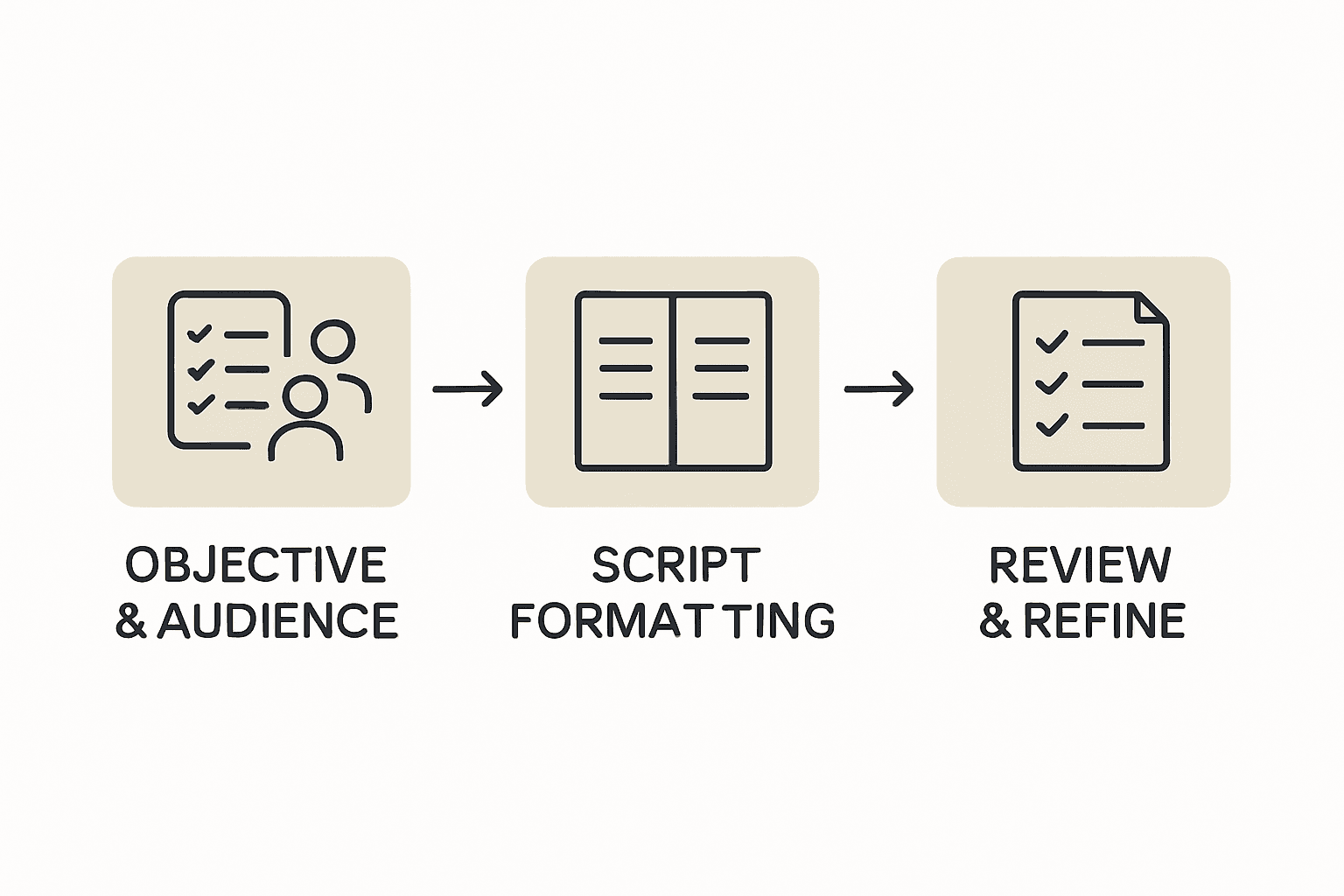
Read through your entire script multiple times, each pass focusing on a different aspect of refinement. First, check for narrative coherence and story flow. Next, evaluate dialogue authenticity and character voice. Then scrutinize technical specifications and camera directions. Pro tip: Have someone else read your script aloud to catch awkward phrasings or unclear instructions. This external perspective can reveal blind spots in your writing that you might have overlooked. Remember that a well formatted script is not just a technical document but a creative blueprint that communicates your vision to every member of your production team.
Your refined script is now ready to become the roadmap that transforms your creative concept into a compelling visual story.
Step 5: Review and Test Script Flow for Clarity
With your script refined, the critical process of evaluating its narrative and technical coherence begins. Ensuring clear communication between audio and visual components is fundamental to effective script design and will determine how smoothly your production moves from concept to execution.
Start by performing a comprehensive read through, focusing on narrative rhythm and logical progression. Approach this review from multiple perspectives imagine yourself as the director, cinematographer, actor, and ultimately the viewer. Check that each scene transitions smoothly, dialogue feels authentic, and visual descriptions provide enough detail without becoming restrictive. Pay close attention to pacing some scenes might need tightening while others require more breathing room. Listen for the emotional arc ask yourself if the script generates the intended response at each critical narrative moment.
Most professional creators recommend a staged review process. First, read the script silently to catch structural issues. Next, read it aloud to evaluate dialogue and narrative flow. Then gather a small group of trusted peers or potential audience members to provide external feedback. Pro tip: Record these read throughs so you can analyze subtle nuances in timing and emotional resonance. Each perspective will reveal potential improvements you might have overlooked. Remember that a great script is not just technically correct but emotionally compelling a blueprint that transforms written words into a living visual experience.
Your meticulously reviewed script is now ready to move from concept to actual production.
Elevate Your Professional Video Scripts with AI-Powered Precision
Crafting a well-structured, emotionally resonant video script requires clarity, organization, and a deep understanding of your audience. This article highlights the challenges of defining clear objectives, structuring scenes, and refining dialogue for maximum impact. If you find yourself overwhelmed by managing intricate script formats and technical cues, or if you want to ensure your story flows naturally while capturing your viewer's attention, Palmedor.ai offers the perfect solution.
Palmedor.ai is designed to simplify every step covered here. From generating polished scripts that separate visuals and dialogue with precision to smart scene management and customizable output formats, our AI-powered platform transforms your ideas into professional-grade videos without demanding extensive technical skills. Whether you're targeting brand awareness, engaging audiences, or telling a powerful narrative, our tool helps you refine your creative blueprint effortlessly. Learn more about how to structure your video scripts effectively and explore practical examples in our FAQs and blog resources that support your journey.
Ready to turn your script into stunning video content with ease and professionalism Engage with Palmedor.ai today at Palmedor.ai and start creating cinematic videos from simple prompts and images. Experience the future of video production NOW and make your storytelling vision a reality.
Frequently Asked Questions
How do I define the objectives for my video script?
To define the objectives for your video script, start by clearly outlining what you want to achieve—whether it’s educating, entertaining, or inspiring action. Break your main goal into measurable terms, such as increasing engagement or generating leads. Create a brief that summarizes these objectives to guide your script development.
What format should I use for a professional video script?
For a professional video script, consider using a split page or motion picture format. This structure allows you to align visual and audio elements effectively, enabling clear communication with your production team. Use this format to detail camera angles, dialogue, and sound in distinct columns to enhance organization.
How can I improve the dialogue within my video script?
To improve the dialogue in your video script, focus on crafting authentic lines that advance the story or reveal character. Read the dialogue aloud to ensure it feels natural, and think about the characters’ unique voices and backgrounds. Aim for concise exchanges that convey meaning without unnecessary exposition.
What are the essential components to include in a script format?
In your script format, include headers for each scene that specify the scene number, location, and time of day. Additionally, ensure there are clear sections for dialogue, action descriptions, and camera directions. Consistent formatting will enhance readability and clarity for your production team.
How can I test the flow of my script for clarity?
To test the flow of your script for clarity, perform a thorough read-through, focusing on narrative and logical progression. Try reading it aloud to gauge pacing and emotional impact, and consider gathering feedback from a small group for different perspectives. Make adjustments based on these insights to ensure the script effectively communicates your vision.