Interactive Video Creation Tools: Empowering Modern Storytelling
Interactive video creation tools explained: discover types, key features, workflow integration, action triggers, costs, and practical applications for creators.
Interactive Video Creation Tools: Empowering Modern Storytelling

More than 60 percent of American businesses now use interactive video to capture audience attention and drive engagement. In a digital world overflowing with static content, finding ways to stand out is tougher than ever for creators and teams. Interactive video creation tools offer new possibilities, turning passive viewers into active participants and allowing brands, educators, and storytellers to deliver meaningful, responsive experiences that keep viewers coming back.
Table of Contents
- Defining Interactive Video Creation Tools
- Major Types And Functionalities Compared
- How Interactive Elements Engage Audiences
- Workflow Integration For Creative Teams
- Costs, Scalability, And Common Pitfalls
Key Takeaways
| Point | Details |
|---|---|
| Interactive Video Tools Enhance Engagement | These tools transform passive viewing into an interactive experience, allowing viewers to engage actively with content, thereby increasing cognitive retention. |
| Diverse Categories Cater to Various Needs | Interactive video tools range from basic to advanced, offering tailored solutions for marketing, training, and storytelling, enhancing flexibility for creators. |
| Critical Workflow Integration is Essential | Effective planning and collaboration within creative teams are necessary to ensure successful interactive video production and maintain high-quality output. |
| Cost and Scalability Need Consideration | Organizations must carefully evaluate costs versus capabilities when selecting tools, balancing financial implications with performance and scalability challenges. |
Defining Interactive Video Creation Tools
Interactive video creation tools represent a transformative technology that empowers content creators to build dynamic, engaging visual experiences. These sophisticated platforms allow users to transform traditional linear video content into rich, multidimensional narratives where viewers can actively participate and influence storytelling. Unlike standard video production methods, interactive video tools introduce elements of choice, engagement, and personalized navigation.
At their core, these tools enable creators to embed interactive elements directly into video content. Advanced annotation technologies now permit seamless integration of buttons, menus, branching scenarios, and clickable zones that transform passive viewing into an immersive experience. For instance, a marketing video might allow viewers to explore product features by clicking specific regions, while an educational tutorial could offer multiple learning paths based on user selections.
Key features of modern interactive video creation tools typically include:
- Branching Narratives: Create multiple story paths and outcomes
- Hotspot Integration: Add clickable regions within video frames
- User Tracking: Analyze viewer interactions and engagement metrics
- Multilayer Editing: Combine video clips with interactive graphic overlays
- Cross Platform Compatibility: Ensure smooth playback across devices
The technological landscape for interactive video authoring continues to evolve, driven by growing demand for more engaging, personalized content experiences. These tools are no longer confined to specialized industries but have become essential for creators across marketing, education, entertainment, and corporate training sectors. By democratizing complex video production techniques, interactive video tools are reshaping how we conceive, create, and consume visual content in the digital age.
Major Types and Functionalities Compared
Interactive video creation tools exist across a spectrum of complexity and specialized functionality, catering to diverse content creation needs. These platforms range from simple annotation-based systems to sophisticated, multi-layered interactive experiences that transform traditional video storytelling. Understanding the key variations helps creators select the most appropriate tool for their specific project requirements.

Authoring tools for interactive content generally fall into three primary categories: basic, intermediate, and advanced interactive video platforms. Basic tools offer fundamental interactive features like simple clickable hotspots and linear branching scenarios. Intermediate platforms introduce more complex capabilities such as multilayer editing, user tracking, and sophisticated narrative branching. Advanced systems provide comprehensive solutions including real-time analytics, advanced personalization, and enterprise-grade integration capabilities.
Key types of interactive video creation tools include:
-
Learning and Training Tools
- Built-in assessment modules
- Detailed learner interaction tracking
- SCORM and xAPI compatibility
-
Marketing and Promotional Platforms
- Conversion-focused interactive elements
- Integrated viewer engagement metrics
- Personalized content path generation
-
Entertainment and Storytelling Systems
- Complex narrative branching
- Cinematic interactive experiences
- Multiple outcome scenarios
Open-source frameworks like H5P have also emerged, democratizing interactive content creation by providing flexible, accessible tools for creators with varying technical expertise. These platforms enable users to embed quizzes, interactive timelines, and dynamic elements without requiring extensive programming knowledge. By reducing technical barriers, such tools are expanding the potential for interactive video experiences across education, marketing, training, and entertainment sectors.
How Interactive Elements Engage Audiences
Interactive video elements fundamentally transform passive viewing into an active, participatory experience that captures and sustains audience attention. By introducing dynamic components that require viewer input, these tools create a more immersive and personalized content journey that goes far beyond traditional linear video consumption. The psychological impact is profound: when viewers are invited to make choices, answer questions, or explore content pathways, their cognitive engagement increases dramatically.
Embedding interactive questions within video content triggers multiple engagement mechanisms that enhance learning and retention. These interactive components prompt viewers to process information more deeply, reflect on content, and actively participate in their own knowledge acquisition. Learner participation rates significantly improve when viewers transition from passive observers to active contributors in the storytelling or learning process.
Key engagement strategies enabled by interactive video elements include:
-
Personalized Pathways
- Customize content based on viewer selections
- Create unique narrative experiences
- Adapt difficulty or complexity in real-time
-
Immediate Feedback Mechanisms
- Provide instant response to viewer interactions
- Offer performance assessments
- Generate dynamic learning insights
-
Emotional Connection Points
- Allow viewers to influence storylines
- Create sense of agency and involvement
- Increase content memorability
The science behind interactive video engagement is rooted in cognitive psychology and adult learning principles. By breaking the fourth wall of traditional media, these tools transform viewers from spectators into participants. The result is a more compelling, memorable experience that resonates on intellectual and emotional levels, whether the goal is education, marketing, entertainment, or professional training.
Workflow Integration for Creative Teams
Successful interactive video production requires strategic workflow integration that seamlessly connects creative vision with technical execution. Modern creative teams must develop adaptable processes that accommodate the complex, multidimensional nature of interactive storytelling. Effective workflow planning becomes critical for managing interactive video development, ensuring collaborative efficiency and maintaining high-quality output across diverse project types.
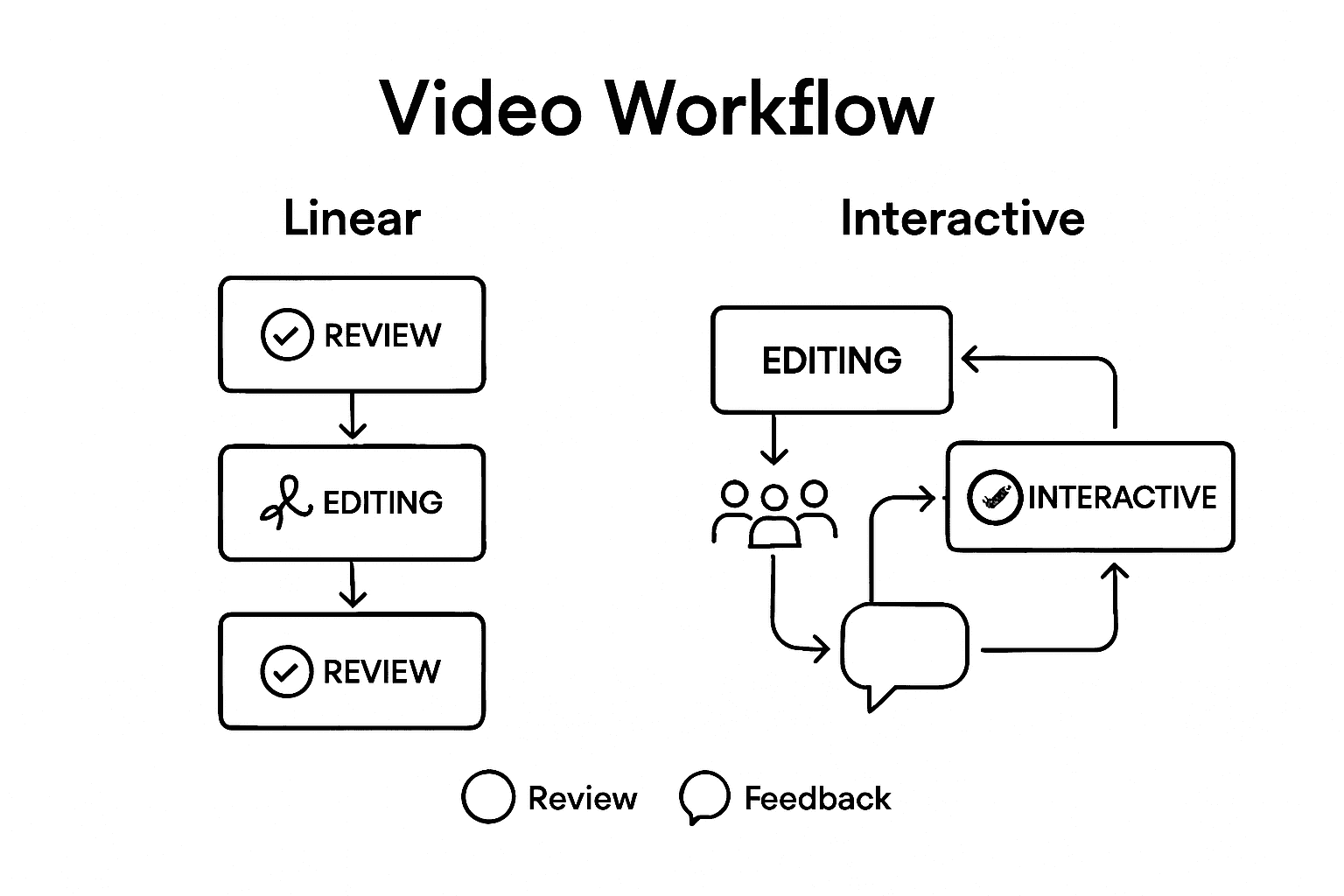
Interactive video tool integration demands careful consideration of existing technological ecosystems and team capabilities. Creative workflows must now account for additional layers of complexity, including interaction design, user experience mapping, and dynamic content generation. This requires cross-functional collaboration between videographers, interaction designers, scriptwriters, and technical specialists who can collectively transform linear narratives into engaging, responsive experiences.
Key workflow integration strategies include:
-
Pre-Production Planning
- Develop comprehensive interaction storyboards
- Map potential user pathways
- Define clear interaction objectives
- Establish technical and creative constraints
-
Collaborative Design Processes
- Create shared design repositories
- Implement version control systems
- Establish real-time feedback mechanisms
- Design modular content frameworks
-
Technical Synchronization
- Integrate project management tools
- Standardize file formats and assets
- Develop consistent interaction protocols
- Enable seamless cross-platform compatibility
The future of interactive video production lies in developing flexible, technology-agnostic workflows that prioritize creative flexibility and technical adaptability. By treating interactive elements as integral components of storytelling rather than afterthoughts, creative teams can unlock unprecedented levels of viewer engagement and narrative complexity. Success requires continuous learning, technological openness, and a willingness to reimagine traditional content creation paradigms.
Costs, Scalability, and Common Pitfalls
Interactive video creation represents a significant investment that requires careful financial and technological planning. Organizations must navigate complex considerations involving upfront costs, ongoing maintenance expenses, and potential scalability challenges. Comprehensive tool evaluation becomes critical for managing interactive video development costs, ensuring that technical capabilities align with budgetary constraints and strategic objectives.
The financial landscape of interactive video tools varies dramatically, with pricing models ranging from subscription-based platforms to enterprise-level solutions requiring substantial infrastructure investments. Cost-effective content creation tools can introduce unexpected scalability limitations that impact performance and user experience. Creative teams must balance economic considerations with technical requirements, understanding that the cheapest solution may not always provide the most robust or adaptable interactive video capabilities.
Key cost and scalability considerations include:
-
Financial Planning Factors
- Initial software licensing fees
- Training and implementation costs
- Ongoing maintenance expenses
- Hardware infrastructure requirements
-
Scalability Challenges
- Server and bandwidth limitations
- Content storage and management
- Performance under high user load
- Cross-platform compatibility
-
Common Implementation Pitfalls
- Underestimating technical complexity
- Inadequate user experience testing
- Poor interaction design
- Insufficient performance monitoring
Successful interactive video strategies demand a holistic approach that transcends simple cost calculations. Organizations must develop comprehensive evaluation frameworks that assess not just immediate financial implications, but long-term technological adaptability, potential return on investment, and alignment with broader creative and strategic objectives. The most effective interactive video solutions emerge from a nuanced understanding of technological capabilities, budgetary constraints, and evolving audience engagement expectations.
Elevate Your Interactive Video Storytelling with AI-Powered Precision
Creating captivating interactive videos requires mastering complex workflows, managing branching narratives, and embedding engaging interactive elements. The challenges of balancing creative vision with technical execution can leave many creators feeling overwhelmed or restricted. Palmedor.ai solves this by transforming your ideas into cinematic, high-quality videos through an intuitive AI-driven platform designed for seamless script generation, scene management, and output customization.
Experience the power of automating multilayer editing and dynamic content creation while maintaining full control over storytelling pathways and audience engagement strategies. Whether you aim to develop brand films, promotional clips, or immersive narrative experiences, Palmedor.ai empowers you to overcome scalability and complexity hurdles without expert technical knowledge.

Discover how to bring your interactive video projects to life effortlessly with Palmedor.ai and leverage smart presets and AI-assisted scene creation that adapt to your creative goals. Start your journey now and transform passive viewers into active participants by building visually stunning, personalized videos that captivate and convert more effectively. Visit Palmedor.ai to explore flexible pricing plans designed for creators of every scale and take the first step toward mastering modern storytelling.
Frequently Asked Questions
What are interactive video creation tools?
Interactive video creation tools are platforms that allow content creators to build engaging, dynamic video experiences. They enable users to transform traditional linear videos into interactive narratives where viewers can participate and influence the story.
What key features should I look for in an interactive video creation tool?
When selecting an interactive video creation tool, consider features such as branching narratives, hotspot integration, user tracking, multilayer editing, and cross-platform compatibility. These features enhance viewer engagement and enable personalized content experiences.
How do interactive elements improve audience engagement?
Interactive video elements engage audiences by turning passive viewing into an active experience. When viewers make choices or explore content pathways, their cognitive engagement increases, leading to better retention and a more memorable experience.
What are the common challenges when implementing interactive video creation tools?
Common challenges include underestimating technical complexity, inadequate user experience testing, poor interaction design, and insufficient performance monitoring. Organizations must plan for these factors to ensure successful implementation.