Understanding the Benefits of Improving Team Collaboration
Discover how improving team collaboration enhances creativity and productivity in creative agencies and media production, fostering successful teamwork.
Understanding the Benefits of Improving Team Collaboration

Team collaboration is the secret ingredient behind breakthrough ideas and high-performing projects. Research shows collaborative teams consistently outperform individual contributors in multiple performance measures. That sounds impressive already. Most people think it just means working well together. Actually, the real magic happens when teams swap ideas freely and turn unique viewpoints into something none of them could achieve alone.
Table of Contents
- What Is Team Collaboration And Its Significance?
- Why Improving Team Collaboration Matters For Creative Work
- How Team Collaboration Enhances Creativity And Productivity
- Key Concepts And Practices For Effective Team Collaboration
- Real-World Examples Of Successful Team Collaboration
Quick Summary
| Takeaway | Explanation |
|---|---|
| Team collaboration drives collective success. | Working together enhances the ability to achieve goals through shared skills and resources. |
| Effective collaboration requires intentional strategies. | Success comes from structured communication, mutual respect, and collective accountability among team members. |
| Diverse perspectives fuel creativity. | Interacting with various viewpoints allows teams to generate innovative solutions and overcome challenges effectively. |
| Communication is key for collaboration. | Transparent communication fosters an environment where team members feel valued and encouraged to share ideas freely. |
| Collaboration enhances productivity significantly. | By streamlining workflows and reducing redundancy, collaborative teams can achieve efficient, high-quality outcomes. |
What is Team Collaboration and Its Significance?
Team collaboration represents a strategic approach where individuals work together toward shared objectives, combining their unique skills, perspectives, and resources to achieve superior outcomes. Unlike individual work, collaboration transforms isolated efforts into interconnected, synergistic processes that amplify collective potential.
Understanding Collaborative Dynamics
Collaboration goes beyond simple teamwork. According to the National Institutes of Health, it involves intentional coordination where team members actively communicate, share knowledge, and support each other's efforts. The core elements of effective collaboration include:
- Transparent communication
- Mutual respect
- Shared accountability
- Complementary skill sets
- Collective problem solving
Successful collaboration requires more than just working in proximity. It demands intentional strategies that create an environment where individuals feel empowered to contribute meaningfully and trust their teammates.
The Strategic Value of Team Collaboration
Collaboration offers substantial organizational benefits that extend far beyond completing tasks. By integrating diverse perspectives, teams can generate more innovative solutions, reduce individual workload stress, and accelerate problem resolution. Research from the American Psychologist journal demonstrates that collaborative teams consistently outperform individual contributors across multiple performance metrics.
Team collaboration enables organizations to leverage collective intelligence, transforming potential individual limitations into strengths. When team members understand each other's capabilities and communicate effectively, they create a dynamic ecosystem where creativity and productivity flourish.
This table compares individual work and team collaboration, summarizing how their core characteristics translate into different outcomes based on the article.
| Aspect | Individual Work | Team Collaboration |
|---|---|---|
| Approach | Isolated effort | Synergistic, interconnected effort |
| Idea Generation | Limited by single perspective | Enhanced by diverse viewpoints |
| Problem Solving | Relies on one person’s knowledge | Benefits from collective intelligence |
| Innovation Potential | Often incremental | Higher due to cross-pollination of ideas |
| Productivity | Can be slower, more redundancy | Streamlined workflow, higher efficiency |
| Creative Blocks | Greater risk of stagnation | Reduced through mutual support and shared iteration |
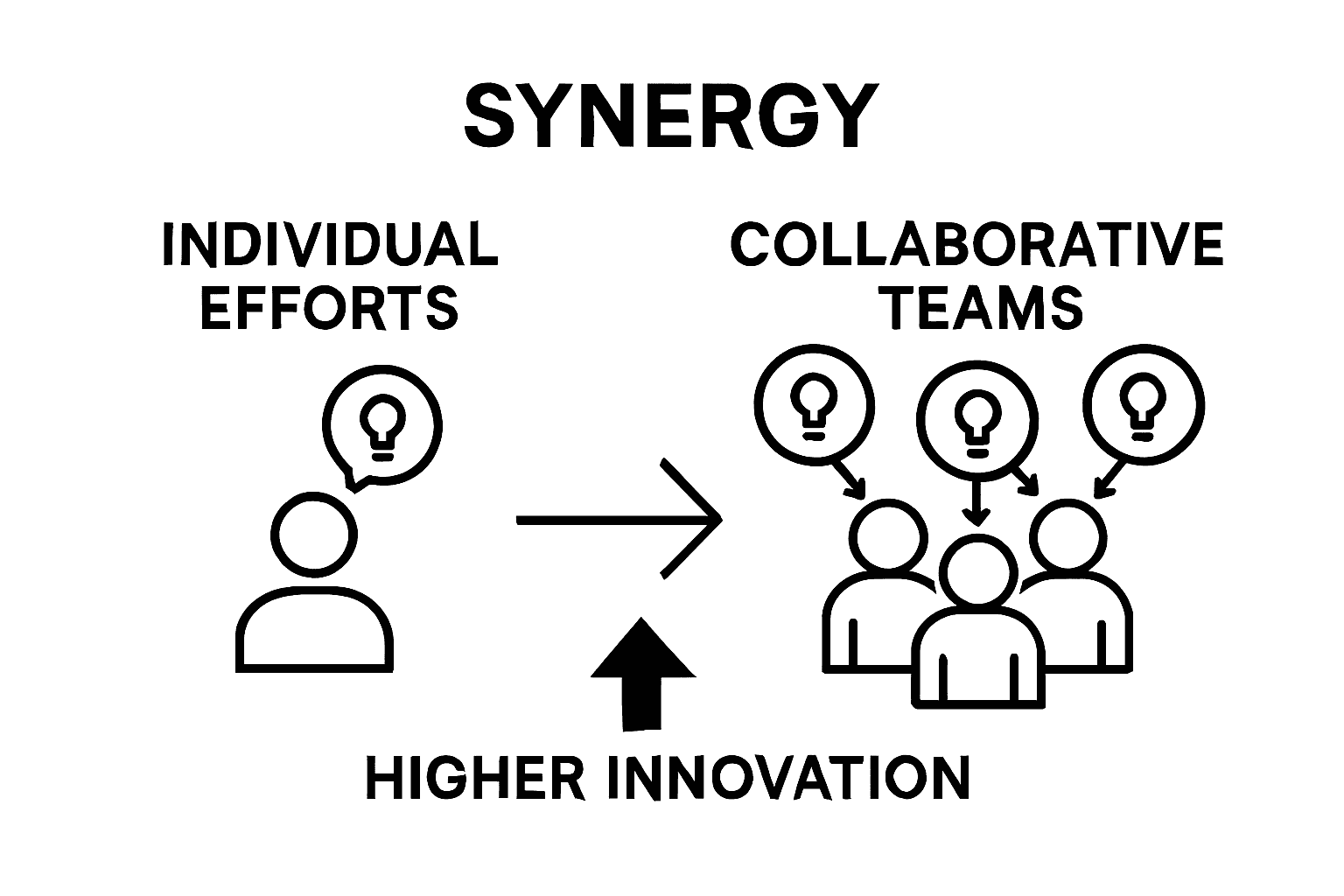
Why Improving Team Collaboration Matters for Creative Work
Creative work thrives on the dynamic exchange of ideas, perspectives, and collective imagination. Improving team collaboration transforms individual creativity into a powerful, synergistic force that can generate breakthrough innovations and groundbreaking solutions.
The Collaborative Foundation of Creative Excellence
Collaboration is not just a process but a catalyst for creative potential. According to research published in the Creativity Research Journal, collaborative environments provide unique advantages that individual work cannot replicate. These advantages include:
- Cross-pollination of diverse perspectives
- Rapid idea iteration and refinement
- Complementary skill integration
- Reduced individual creative blocks
- Enhanced problem solving capacity
When team members bring their unique experiences and expertise together, they create an ecosystem where creativity can flourish beyond individual limitations. Each contributor acts as a catalyst, stimulating and expanding the creative potential of the entire group.
Transforming Creative Challenges through Collaborative Strategies
Improving team collaboration directly addresses common creative challenges. Professional creative teams often encounter obstacles such as individual skill gaps, limited perspectives, and creative stagnation. Collaborative approaches mitigate these challenges by creating a supportive environment where ideas are continuously challenged, refined, and elevated.
Research demonstrates that well-coordinated teams can generate more innovative and sophisticated solutions compared to individual efforts. By establishing transparent communication channels, promoting mutual respect, and creating structures that encourage open idea exchange, organizations can unlock unprecedented levels of creative performance. The key lies not just in bringing talented individuals together, but in creating systemic approaches that enable those individuals to work seamlessly and inspirationally as a unified creative force.
How Team Collaboration Enhances Creativity and Productivity
Team collaboration serves as a powerful mechanism for amplifying both creative output and operational efficiency. By creating an environment where knowledge, skills, and perspectives intersect, organizations can unlock extraordinary potential that surpasses individual capabilities.
The Synergy of Collective Intelligence
Collaborative environments generate a unique creative multiplier effect where team members build upon each other's ideas. According to research published in the International Journal of Environmental Research and Public Health, collaborative teams demonstrate significant advantages in creative problem solving:
- Accelerated idea generation
- Broader perspective integration
- Reduced individual cognitive limitations
- Enhanced knowledge cross-pollination
- Faster solution development
When diverse talents converge, teams can tackle complex challenges more effectively than any single individual. This collective approach transforms individual insights into comprehensive, innovative solutions that address multifaceted problems.
Productivity Amplification through Collaborative Strategies
Team collaboration directly impacts productivity by creating streamlined communication channels and reducing redundant work. Effective collaboration allows team members to distribute tasks strategically, leverage individual strengths, and maintain continuous momentum on projects.
By establishing clear communication protocols, sharing real-time information, and creating transparent workflow systems, teams can significantly reduce time wastage and increase overall performance.
 The key is not just working together, but working together with purpose, alignment, and mutual understanding. Collaborative teams develop an intuitive rhythm where each member understands their role within the larger collective objective, resulting in more efficient and higher-quality outcomes.
Key Concepts and Practices for Effective Team Collaboration
Effective team collaboration requires more than good intentions. It demands a strategic approach that combines structured practices, interpersonal skills, and organizational support to create an environment where collective performance can thrive.
Foundational Collaboration Principles
Successful collaboration is built on core principles that transform individual efforts into coordinated team performance. According to research from the National Institutes of Health, the fundamental elements of effective collaboration include:
- Psychological safety: Creating an environment where team members feel comfortable sharing ideas
- Transparent communication: Establishing clear, open channels of information exchange
- Shared accountability: Developing mutual responsibility for team outcomes
- Flexible leadership: Enabling adaptive and distributed leadership approaches
- Mutual respect: Valuing diverse perspectives and individual contributions
These principles create a robust framework that enables teams to navigate complex challenges and leverage collective intelligence effectively.
The table below highlights the fundamental principles that underpin effective team collaboration, providing clear definitions for each concept discussed in the article.
| Collaboration Principle | Definition |
|---|---|
| Psychological Safety | An environment where team members feel comfortable sharing ideas without fear of criticism or ridicule. |
| Transparent Communication | Clear, open channels of information exchange among all team members. |
| Shared Accountability | Mutual responsibility among team members for the outcomes of the group. |
| Flexible Leadership | Adaptive leadership styles that allow leadership roles to shift based on team needs and context. |
| Mutual Respect | Valuing diverse perspectives and appreciating each individual’s contributions to the team. |
Practical Strategies for Collaborative Excellence
Implementing collaboration requires intentional practices that support team dynamics. Effective teams develop structured approaches that go beyond traditional working methods. This involves creating systematic communication protocols, establishing clear roles, and developing mechanisms for continuous feedback and adaptation.
The most successful collaborative teams view their interactions as a dynamic process of continuous learning and refinement. They invest time in understanding each other's strengths, developing shared mental models, and creating an environment where innovation can flourish. By prioritizing both interpersonal connections and structured workflow, teams can transform potential friction into a powerful source of creative and productive energy.
Real-World Examples of Successful Team Collaboration
Team collaboration transcends theoretical concepts, finding powerful expression in remarkable real-world achievements across diverse industries. These examples demonstrate how strategic collaboration can drive extraordinary outcomes and solve complex challenges.
Pioneering Collaborative Research Models
Academic and scientific domains provide compelling illustrations of collaborative potential. According to research exploring academic social networks, interdisciplinary teams that combine expertise from different institutions consistently outperform more traditional research configurations. These collaborative teams typically demonstrate:
- Enhanced knowledge integration
- Broader research perspectives
- More complex problem solving capabilities
- Increased publication and innovation rates
- More comprehensive research funding opportunities
Successful collaborative research teams break traditional institutional boundaries, creating dynamic networks that accelerate scientific discovery and technological innovation.
Cross-Functional Collaboration in Technology Development
Technology companies like Pixar and Google have institutionalized collaboration as a core organizational strategy. By creating environments that encourage cross-functional interaction, these organizations transform potential barriers into sources of creative synergy. Their collaborative models involve breaking down departmental silos, encouraging open communication, and valuing diverse perspectives.
These organizations recognize that true innovation emerges not from individual brilliance, but from the dynamic interaction of varied expertise. By establishing structures that facilitate meaningful exchange and mutual learning, they create ecosystems where collaborative intelligence becomes a sustainable competitive advantage. The most successful teams view collaboration not as a strategy, but as an ongoing cultural commitment to collective potential.
Transform Team Collaboration Into Cinematic Results
Are you ready to leave behind the struggle of fragmented workflows and creative bottlenecks? The article above highlights the challenges teams face, from limited idea sharing to missed opportunities in creative synergy. When your team is blocked by skill gaps or communication breakdowns, your best ideas stay on the drawing board. Now you can move beyond those hurdles.

Experience how Palmedor.ai makes seamless video creation the cornerstone of powerful team collaboration. Our AI-driven platform turns your team's diverse perspectives into cinematic videos. Upload images, describe your vision, and let our tools handle scriptwriting, scene building, and editing—even if your team is new to video production. Explore our easy prompts, customize formats, and see how every collaborator contributes to a finished film. Unleash your creativity together—visit Palmedor.ai today and start your next project. Do not let outdated processes hold your team back. See how effortless professional collaboration can be.
Frequently Asked Questions
What is team collaboration?
Team collaboration is a strategic approach where individuals work together towards shared objectives by integrating their unique skills, perspectives, and resources for enhanced outcomes.
Why is improving team collaboration important?
Improving team collaboration enhances creativity, productivity, and problem-solving abilities, resulting in more innovative solutions and reduced individual workload stress.
How does team collaboration impact productivity?
Team collaboration increases productivity by creating streamlined communication, reducing redundancies, and allowing team members to use their individual strengths effectively within the group.
What are some effective strategies for improving team collaboration?
Effective strategies include establishing clear communication channels, promoting mutual respect among team members, creating shared accountability, and encouraging flexibility in leadership roles.