How to Direct Actors for Engaging Performances
Discover how to direct actors effectively with this step-by-step guide that leads to captivating performances and successful productions.
How to Direct Actors for Engaging Performances
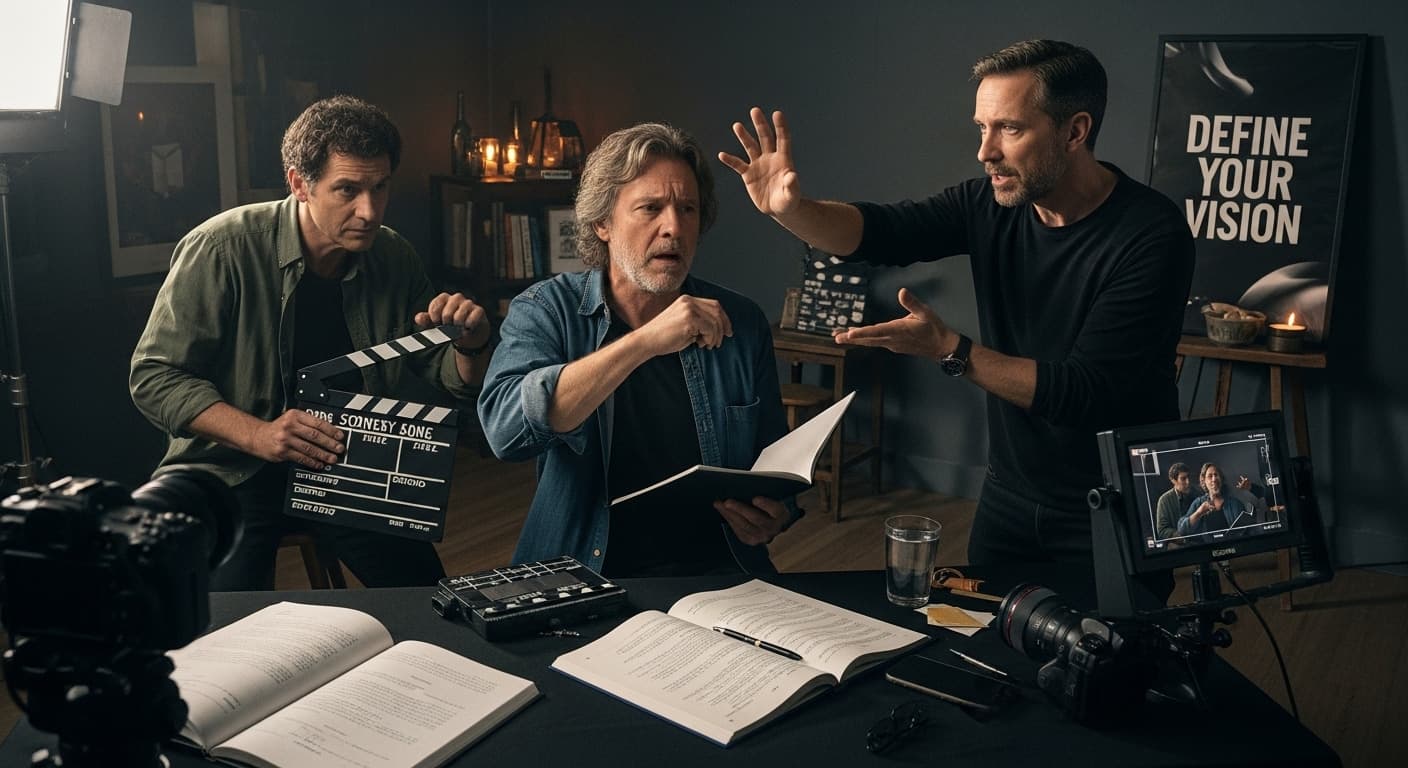
Directing actors sounds like an art reserved for a chosen few, filled with mysterious instincts and elusive talent. Yet, the success of any performance actually hinges on one simple thing: a director’s ability to define a clear vision upfront. Most people believe magic happens spontaneously on set. But the reality is the strongest performances start on paper, with a vision so detailed it becomes the blueprint for greatness.
Table of Contents
- Step 1: Define Your Vision And Objectives
- Step 2: Prepare Thorough Character Analysis
- Step 3: Communicate Clearly With Your Actors
- Step 4: Rehearse And Refine Performances
- Step 5: Provide Constructive Feedback
- Step 6: Review And Finalize Performances
Quick Summary
| Key Point | Explanation |
|---|---|
| 1. Define your vision and objectives | Clearly outline performance goals to guide all creative decisions effectively. |
| 2. Conduct thorough character analysis | Explore the character's emotional landscape to enhance authenticity in performances. |
| 3. Communicate clearly with actors | Use precise instructions and empathetic dialogue to unlock creative potential. |
| 4. Rehearse and refine performances | Create a safe environment for actors to explore and develop emotional depth. |
| 5. Provide constructive feedback | Offer specific, actionable insights that encourage artistic growth and understanding. |
Step 1: Define Your Vision and Objectives
Directing actors effectively starts with crystal clear vision and precise objectives. Before you step onto set or begin any creative collaboration, you need a comprehensive understanding of what you want to achieve with your performance. Your vision serves as the foundational blueprint for every creative decision that will follow.
Begin by developing a detailed mental image of the character and scene you want to create. This means going beyond surface level descriptions and diving deep into the emotional landscape of the narrative. Ask yourself critical questions about the character's motivations, internal conflicts, and transformative journey. What are their deepest fears? What drives their actions? Understanding these nuanced psychological elements will help you guide actors toward more authentic and compelling performances.
Crafting Your Performance Roadmap
Establishing a robust performance roadmap requires strategic planning and communication. Create a comprehensive document or creative brief that outlines key character attributes, emotional arcs, and specific scene objectives. This roadmap should include detailed notes about character backstory, psychological motivations, and the specific emotional progression you want the actor to portray. The more specific and clear your vision, the easier it becomes to communicate complex performance expectations.
Your roadmap should also include reference materials that can help actors understand the context and emotional terrain of their roles.
 This might include historical context, psychological profiles, visual mood boards, or specific behavioral references. By providing a rich contextual framework, you give actors the tools they need to build nuanced, layered performances that transcend simple line reading.
The most successful directors understand that defining vision is not about micromanaging every moment but about creating a supportive creative environment where actors can explore and discover authentic emotional truth. Your objective is to provide clear guidance while leaving room for the actor's unique interpretation and creative instincts.
Verify your vision by asking yourself: Can I articulate the core emotional journey of each character? Do I have a clear understanding of the scene's dramatic stakes? Can I communicate these elements clearly and concisely to my actors? If the answer is yes, you're ready to move forward with confidence and purpose.
Below is a checklist table to help directors verify each key stage of actor direction is completed before moving on. Review this table to ensure consistent, high-quality performances.
| Stage | Completion Criteria | Verification Question |
|---|---|---|
| Vision & Objectives | Core emotional journey and scene stakes articulated clearly | Can you clearly explain the vision to others? |
| Character Analysis | Actor articulates motivations and psychological drivers | Can the actor explain behavior through deep understanding? |
| Communication | Actor demonstrates understanding and can translate guidance into performance | Does the actor embody guidance authentically? |
| Rehearsal & Refinement | Actor maintains consistent, nuanced emotional states in rehearsal | Are choices intentional and serve the narrative? |
| Feedback | Actor demonstrates growth and incorporates specific notes into their performance | Do performances become more layered after feedback? |
| Review & Finalization | Emotional authenticity, narrative coherence, and technical precision are consistent across scenes | Does the performance serve overall story objectives? |
Step 2: Prepare Thorough Character Analysis
Character analysis transforms good acting into extraordinary performance. The depth of an actor's understanding determines the authenticity of their portrayal. As a director, your responsibility is to guide actors through a comprehensive exploration of their character's psychological landscape, moving far beyond surface level interpretations.
Begin by constructing a multi dimensional character profile that explores not just the written dialogue, but the unspoken emotional geography. Imagine the character's entire life history those unseen moments that shape their behaviors, fears, desires, and reactions. This means diving deep into their background experiences, traumatic events, cultural influences, and personal motivations that are not explicitly written in the script.
Mapping Emotional Complexity
Effective character analysis requires a systematic yet intuitive approach. Work with actors to develop a comprehensive character map that includes psychological triggers, relationship dynamics, and internal conflicts. Encourage actors to ask profound questions about their character's core wounds and fundamental beliefs. What experiences have shaped their worldview? What unconscious patterns drive their decision making?
Prepare a detailed character breakdown that includes not just demographic information, but a rich psychological profile. This might involve collaborative sessions where you and the actor explore the character's subconscious motivations. Role playing exercises can help actors physically and emotionally embody the character's complex inner world. By creating space for deep exploration, you enable actors to develop performances that feel genuine and multilayered.
The most transformative character analysis happens when actors move beyond intellectual understanding and connect emotionally with their character's journey. This means helping them discover the character's vulnerabilities, defense mechanisms, and hidden strengths. Your guidance should create a safe creative environment where actors feel empowered to take emotional risks and explore uncomfortable psychological territories.
Verify your character analysis by assessing whether the actor can articulate their character's motivations with emotional clarity. Can they explain the character's behavior not just through actions, but through deep psychological understanding? If the answer is yes, you have successfully completed a thorough character analysis that will form the foundation of a compelling performance.
Step 3: Communicate Clearly with Your Actors
Communication is the heartbeat of extraordinary performance.
Directors who master the art of clear, compassionate communication unlock their actors' most profound creative potential. Your role is not just to instruct, but to create a collaborative environment where actors feel safe to explore, take risks, and reveal vulnerable emotional landscapes.
Effective communication begins with active listening. Before offering direction, create space for actors to share their initial interpretations and emotional connections to the character. This approach demonstrates respect for their creative instincts and builds a foundation of trust. Pay attention not just to their words, but to the subtle emotional undertones that reveal their understanding of the character's inner world.
Translating Vision into Actionable Guidance
Transform abstract concepts into concrete, actionable directions that actors can immediately implement. Instead of vague instructions like "be more emotional," provide specific emotional context and behavioral cues. For instance, describe the character's internal psychological state, the specific emotional trigger driving a scene, or the subtle power dynamics influencing their interactions. Your goal is to give actors a clear emotional roadmap they can authentically navigate.
Develop a communication style that balances technical guidance with emotional intelligence. Use metaphors, personal anecdotes, or visual references that help actors connect intellectually and emotionally with their character's journey. Some actors respond better to physiological instructions creating a physical sensation that unlocks the emotional state. Others might need a detailed narrative context that helps them understand the character's motivations.
Recognize that each actor has a unique communication style and learning approach. Some thrive on detailed verbal instructions, while others prefer demonstration or experiential exploration. Flexibility in your communication method shows your commitment to helping each actor deliver their most authentic performance. Create an environment of mutual respect where actors feel empowered to ask questions, seek clarification, and offer their creative insights.
Verify your communication effectiveness by observing the actor's response. Can they articulate the character's emotional journey after your guidance? Do they demonstrate a deeper understanding of the scene's psychological subtext? If actors can translate your direction into nuanced, compelling performance, you have successfully communicated your vision.
Step 4: Rehearse and Refine Performances
Rehearsal is where raw talent transforms into extraordinary performance. The rehearsal process is a dynamic laboratory of creative exploration, where actors experiment, discover, and gradually sculpt their character's emotional landscape. This is not about perfecting lines, but about uncovering the profound psychological truth beneath the script.
Begin rehearsals by creating a safe, supportive environment that encourages risk taking and vulnerable exploration. Actors need psychological safety to push beyond their comfort zones and reveal authentic emotional depths. Set clear expectations about the collaborative nature of the process, emphasizing that mistakes are not failures but opportunities for deeper understanding.
Layered Rehearsal Techniques
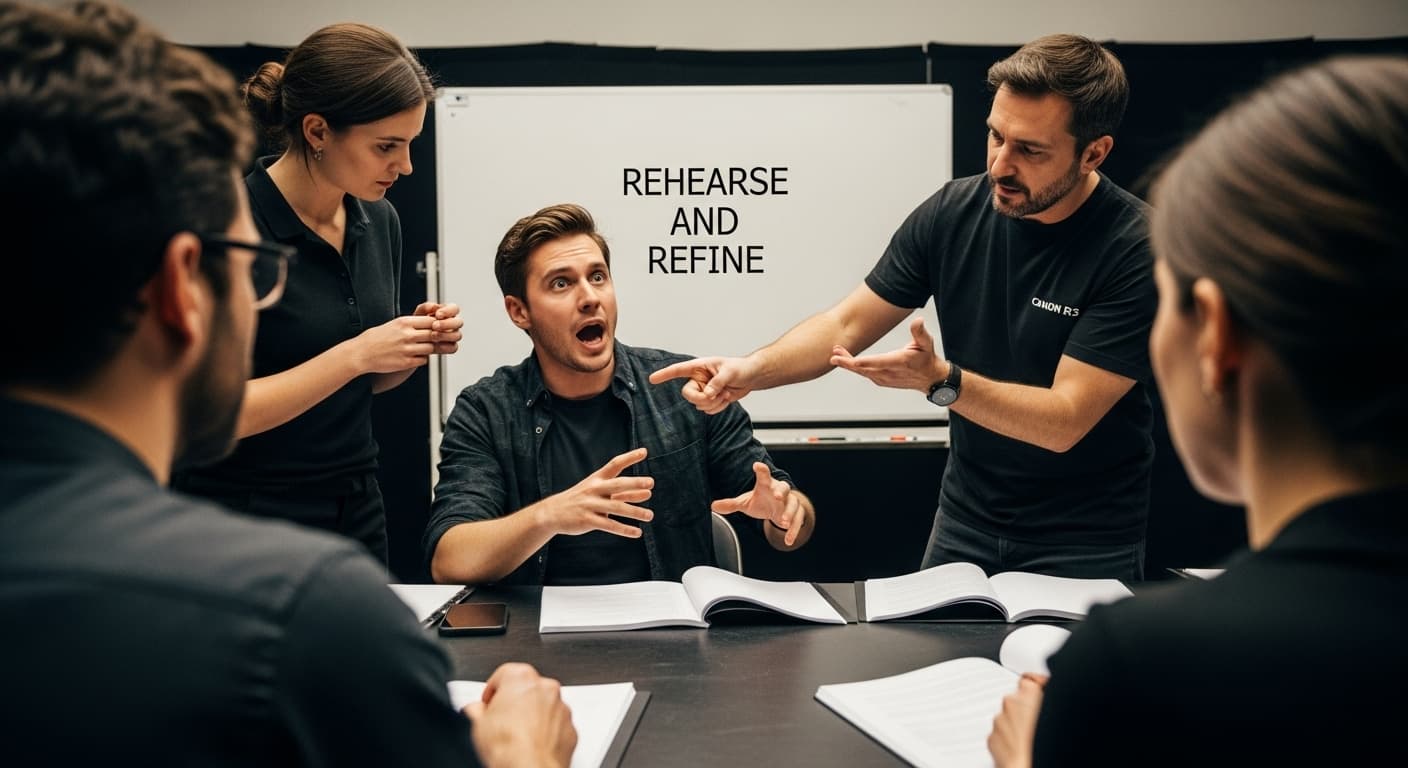
Develop a multi staged rehearsal approach that progressively deepens performance complexity. Start with table reads where actors explore script dynamics and character relationships without physical blocking. This allows for initial character interpretation and script understanding. Then transition to blocking rehearsals, where physical movement and spatial relationships are mapped out. Each rehearsal layer should peel back another emotional and technical dimension of the performance.
Implement targeted exercises that challenge actors to explore their character from multiple perspectives. This might include improvisation sessions where actors step outside the script and explore their character's potential reactions in hypothetical scenarios. Encourage actors to journal from their character's perspective, write unsent letters, or create detailed backstory narratives that are never shared but inform their performance.
Recognize that refinement is an iterative process. Some actors will need multiple approaches to unlock a character's emotional truth. Be prepared to adjust your rehearsal techniques based on individual actor needs. Some performers respond best to intellectual deconstruction, while others require more intuitive, experiential exploration.
Refer to the table below for an overview of different rehearsal techniques mentioned in this article and their purposes. Use this as a guide to layer and tailor your approach for each actor and scene.
| Rehearsal Technique | Description | Purpose |
|---|---|---|
| Table Reads | Actors explore script dynamics and character relationships without blocking | Initial interpretation, script and relationship discovery |
| Blocking Rehearsals | Map out physical movement and spatial relationships | Define stage/film movement, enhance scene realism |
| Improvisation Sessions | Actors explore character reactions in hypothetical, unscripted scenarios | Discover psychological depth, flexibility, emotional truth |
| Journaling/Unsent Letters | Actors write from the character's perspective | Build backstory, deepen internalization |
| Backstory Narratives | Create detailed histories that inform but do not appear directly in the script | Enrich motivation, enable layered performance |
Verify rehearsal progress by assessing the depth and consistency of actor performances. Can actors maintain character emotional states consistently? Do they demonstrate a nuanced understanding of scene objectives? Are they making bold, intentional choices that serve the narrative? If the answer is yes, you have successfully navigated the complex terrain of performance refinement.
Step 5: Provide Constructive Feedback
Constructive feedback is the strategic bridge between potential and extraordinary performance. Great directors transform critique into a powerful tool of artistic growth, creating an environment where actors view feedback as an opportunity for creative expansion rather than personal criticism.
Begin by establishing a foundational atmosphere of psychological safety. Actors are inherently vulnerable, and the manner in which feedback is delivered can either inspire breakthrough performances or create defensive barriers. Your communication must balance honest assessment with genuine respect for the actor's creative process. This means approaching each feedback session with empathy, recognizing the emotional investment actors have in their character's portrayal.
Crafting Nuanced Performance Guidance
Develop a feedback approach that is specific, actionable, and forward looking. Generic statements like "that didn't work" provide no constructive value. Instead, articulate precise observations that connect directly to the character's emotional journey. For example, instead of saying "you seem disconnected," you might offer "I noticed your character's internal conflict isn't fully emerging in this moment. What might be blocking your character's true emotional response?"
Framework your feedback as collaborative exploration rather than authoritative correction. Invite actors to participate in the analysis of their performance. Ask probing questions that help them discover insights independently. Encourage actors to reflect on their emotional choices and understand the psychological mechanisms driving their character's behavior. This approach transforms feedback from a top down directive into a mutually engaging creative process.
Recognize that different actors require different feedback styles. Some performers thrive on direct, technical guidance, while others need more nuanced, metaphorical direction. Pay attention to each actor's unique communication style and emotional sensitivity. Your ability to adapt your feedback approach demonstrates your skill as a director who understands the complex art of performance creation.
Verify the effectiveness of your feedback by observing subsequent performance iterations. Do actors demonstrate a deeper understanding of their character after your guidance? Can they articulate the emotional shifts you've suggested? If actors return with more layered, intentional performances that reveal greater psychological depth, you have successfully transformed critique into a catalyst for artistic growth.
Step 6: Review and Finalize Performances
The review and finalization process is the critical moment where individual performance elements coalesce into a cohesive artistic vision. This final stage transforms isolated character interpretations into a harmonious narrative experience, requiring meticulous attention and strategic refinement.
Begin the review process by creating distance from the immediate creative work. Schedule comprehensive performance review sessions where actors can watch their own performances objectively. This approach allows performers to critically examine their work from an external perspective, identifying nuanced emotional layers and potential areas of improvement that might have been invisible during the initial performance.
Holistic Performance Integration
Approach performance review as a collaborative diagnostic process. Invite actors to participate actively in their own assessment, encouraging them to articulate their understanding of the character's journey and emotional progression. Create a supportive environment where critical analysis feels like a shared creative exploration rather than a judgmental evaluation. Your goal is to help actors recognize their strengths while gently guiding them toward more refined, authentic performances.
Develop a systematic review framework that examines performance from multiple perspectives. This means evaluating not just individual actor choices, but how these choices interact within the broader narrative context. Consider the subtle emotional dynamics between characters, the psychological consistency of character behaviors, and the overall dramatic arc. Pay special attention to moments of emotional transition, ensuring that character development feels organic and believable.
Recognize that performance finalization is an iterative process requiring patience and nuanced judgment. Some performance elements might require multiple refinement passes, while others might need minimal adjustment. Be prepared to make surgical, precise modifications that enhance the overall narrative without disrupting the authentic emotional core of the performance. Your role is to guide actors toward their most truthful and compelling interpretation without imposing rigid, mechanical constraints.
Verify performance readiness by assessing three critical dimensions: emotional authenticity, narrative coherence, and technical precision. Can actors maintain consistent character psychology across different scenes? Does the performance serve the broader narrative objectives? Are the emotional transitions smooth and believable? If you can confidently answer yes to these questions, you have successfully navigated the complex journey of performance creation.
Transform Actor Direction Into Seamless Cinematic Video Creation
If spending hours planning performances and refining emotional nuance sounds familiar, you already know that directing actors for compelling performances requires clear vision, deep character analysis, and constant fine-tuning. Yet, after mastering these essentials, many directors and creators still wrestle with translating their carefully built emotional arcs into polished video outputs. The challenge of bringing psychological depth, layered rehearsal, and collaborative feedback into a finished visual product can be overwhelming without the right tools.

This is where Palmedor.ai bridges the gap. Imagine turning your actor direction strategies into high-quality cinematic scenes with just a prompt or a reference image. Let your creative vision guide the AI-powered platform as it handles script generation, scene management, and smart preset selection, giving you space to focus on storytelling. Ready to simplify your workflow and bring your directing skills to life on screen? Visit our main site, explore our FAQs, or browse the blog for expert tips. Start now to turn your vision into a finished film without the technical barriers.
Frequently Asked Questions
What is the first step in directing actors for engaging performances?
The first step is to define your vision and objectives clearly. A comprehensive understanding of what you want to achieve with the performance serves as the foundation for all creative decisions.
How can I help actors deepen their character analysis?
Encourage actors to create multi-dimensional character profiles that explore their character's life history, emotional triggers, and motivations. Engaging in collaborative sessions and role-playing exercises can significantly enhance their understanding.
What techniques can I use for effective communication with actors?
Mastering clear and compassionate communication is vital. Use active listening, translate abstract concepts into concrete directions, and tailor your approach to each actor’s unique style of learning and expression.
How do I provide constructive feedback to actors?
Establish a psychologically safe atmosphere for feedback. Be specific and actionable, focusing on observations that connect to the character's emotional journey, and foster a collaborative exploration of their performances.