Film Video Company: Everything You Need to Know
Comprehensive guide to film video companies: types, how AI-driven platforms like Palmedor.ai work, core features, use cases, pricing, and workflow tips.
Film Video Company: Everything You Need to Know

Over 60 percent of organizations now rely on specialized film video companies to bring their ideas to life through powerful visual content. In a world where storytelling drives brand success and audience engagement, understanding how these companies operate is essential. Whether you are a business leader, creative professional, or entrepreneur, learning about their core roles, evolving technology, and project management can help you make confident decisions when producing high-quality videos that set you apart.
Table of Contents
- Defining Film Video Companies And Core Roles
- Types Of Film Video Companies And Specializations
- AI-Powered Video Creation Platforms Explained
- Workflow, Project Management, And Output Formats
- Pricing Models And Cost Considerations
- Choosing The Right Partner And Avoiding Pitfalls
Key Takeaways
| Point | Details |
|---|---|
| Understanding Core Roles | Film producers orchestrate the entire filmmaking process, managing everything from script development to budget and personnel. |
| Diverse Specializations | Film video companies encompass various specializations such as directing, cinematography, corporate production, and documentary filmmaking. |
| AI-Powered Innovations | AI-driven platforms are revolutionizing video production by automating editing and content creation, making high-quality production more accessible. |
| Effective Project Management | Comprehensive planning and management across all project phases are essential for successful video production and timely delivery. |
Defining Film Video Companies and Core Roles
Film video companies are dynamic creative enterprises responsible for transforming raw concepts into compelling visual narratives. According to Wikipedia, a production company is an entity that oversees the comprehensive creation of media content, managing critical stages from initial development through final distribution.
Film Producers sit at the heart of these organizations, serving as the strategic architects who guide projects from inception to completion. Wikipedia explains that film producers supervise the entire filmmaking process, which involves complex responsibilities like:
- Selecting and developing compelling scripts
- Coordinating writing and creative teams
- Managing directorial and editing processes
- Ensuring projects remain on schedule and within budget
- Arranging critical project financing
- Hiring key personnel across different production departments
These companies operate through specialized teams that each contribute unique skills to the video creation workflow. Typical core roles include creative directors who conceptualize visual stories, cinematographers who capture stunning imagery, editors who craft narrative flow, and technical specialists who manage post-production processes. While traditional film companies relied on extensive human resources, modern video production increasingly integrates advanced technologies like AI-powered platforms that can streamline complex creative workflows.
Understanding the intricate ecosystem of film video companies reveals a sophisticated blend of artistic vision and strategic project management. Whether creating brand films, documentaries, commercial content, or narrative features, these organizations transform abstract ideas into powerful visual experiences that connect, communicate, and inspire audiences across diverse mediums.
Types of Film Video Companies and Specializations
Film video companies represent a diverse ecosystem with multiple specialization areas that cater to different creative and commercial needs. According to Big Future, professionals in this industry can specialize across several critical domains including directing, cinematography, producing, post-production, and production design.
Corporate Video Production has emerged as a significant sector within film video companies. Skeem highlights the diverse range of corporate film types, which include:
- Motion design videos
- 2D and 3D animation projects
- Explanatory and instructional videos
- Testimonial and interview-based content
- Direct advertising and promotional videos
Beyond corporate contexts, film video companies can be categorized into specialized niches such as entertainment production, documentary filmmaking, commercial advertising, digital content creation, and brand storytelling. Each niche requires unique technical skills, creative approaches, and understanding of audience engagement strategies.
 Smaller boutique agencies often focus on specific genres or styles, while larger production houses maintain broader capabilities across multiple video formats.
The modern landscape of film video companies increasingly integrates technological innovations like AI-powered platforms, which enable more efficient content creation. These technological advancements are transforming traditional production workflows, allowing companies to produce high-quality visual content with greater speed, precision, and creative flexibility. Whether creating narrative films, brand stories, or technical demonstrations, these specialized companies continue to push the boundaries of visual communication and storytelling.
AI-Powered Video Creation Platforms Explained
AI-powered video creation platforms represent a groundbreaking technological advancement in digital content production. According to First, these platforms utilize artificial intelligence to automate critical aspects of video production, including editing, special effects generation, and even complete content creation, dramatically streamlining traditional workflows.
Machine Learning Algorithms are the core technological foundation of these innovative platforms. First highlights that these sophisticated systems can analyze video footage, intelligently suggest optimal edits, and autonomously enhance both visual and audio elements, enabling creators to produce high-quality videos with minimal manual intervention.
The capabilities of AI-powered video creation platforms extend far beyond simple automation. These advanced systems can now:
- Generate script drafts based on user prompts
- Create storyboards and scene compositions
- Select and integrate appropriate background music
- Perform intelligent color grading and visual effects
- Adjust video pacing and narrative flow
- Render content in multiple formats and aspect ratios
As technological innovation continues to reshape creative industries, AI-powered video platforms are democratizing content production. These tools are breaking down traditional barriers to entry, allowing individual creators, small businesses, and large corporations to produce professional-grade visual content quickly and cost-effectively. By combining sophisticated algorithms with intuitive user interfaces, these platforms are transforming how visual stories are conceived, developed, and shared across diverse digital landscapes.
Workflow, Project Management, and Output Formats
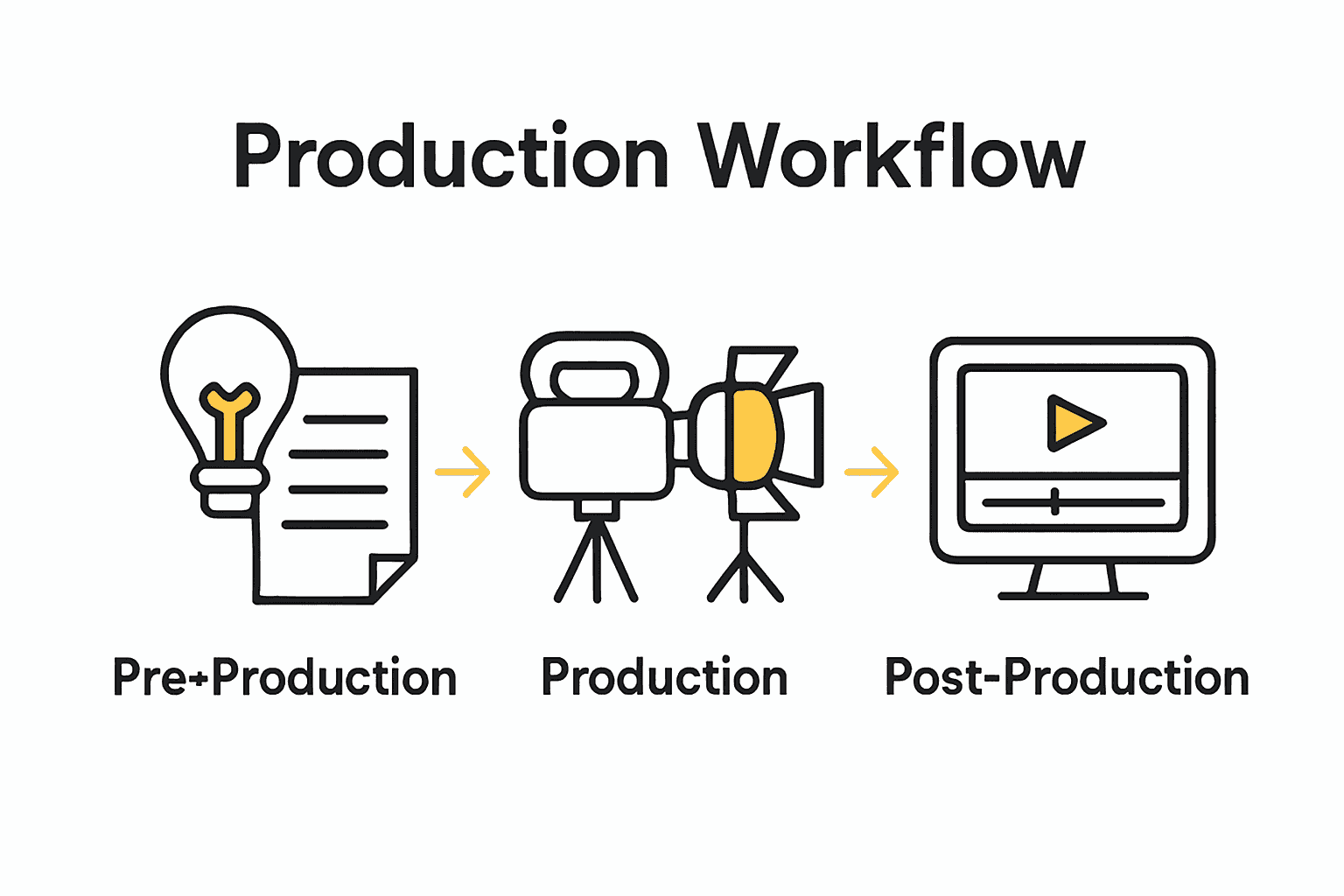
Workflow management is the critical backbone of successful video production, requiring strategic coordination and precise planning. According to First, effective workflow involves meticulous planning that spans from pre-production through post-production, ensuring each project phase is executed efficiently to meet specific goals and deadlines.
Project Management in film and video production demands comprehensive coordination across multiple dimensions. First emphasizes the importance of managing various departments, controlling budgets, and maintaining strict timeline adherence. Key workflow stages typically include:
- Pre-production: Concept development, scriptwriting, storyboarding
- Production: Actual filming, capturing primary visual content
- Post-production: Editing, visual effects, sound design
- Distribution: Preparing and releasing content across platforms
Modern video production workflows leverage sophisticated digital tools that enable seamless collaboration and output flexibility. Output formats have dramatically expanded beyond traditional film reels, now encompassing a wide range of digital file types optimized for different platforms. Creators can now generate content adaptable to:
- Social media platforms (vertical, square, horizontal formats)
- Streaming services
- Mobile device specifications
- Web-based distribution channels
- Television broadcast requirements
- Large screen and cinema presentations
The evolution of digital technologies has transformed project management from a linear, sequential process to a dynamic, interconnected ecosystem. Advanced platforms now offer real-time collaboration, cloud-based asset management, and intelligent workflow automation, allowing teams to work more efficiently and creatively than ever before. By integrating AI-powered tools, machine learning algorithms, and comprehensive project management software, video production teams can streamline complex workflows, reduce production times, and maintain consistently high-quality output across diverse creative projects.
Pricing Models and Cost Considerations
Pricing models in film and video production represent a complex landscape of financial strategies tailored to diverse project requirements. According to First, these models vary significantly, encompassing fixed rates, hourly charges, and project-based fees, each uniquely influenced by factors such as project complexity, duration, and specific resource requirements.
Cost Considerations form a critical component of video production financial planning. First highlights that comprehensive budgeting must account for multiple expense categories, including:
- Equipment rentals and purchases
- Location and shooting fees
- Talent and crew compensation
- Post-production editing expenses
- Sound design and music licensing
- Distribution and marketing costs
- Technical infrastructure and software subscriptions
Modern video production pricing typically follows several strategic models:
- Hourly Rate Model: Charging per hour of work, ideal for smaller projects with uncertain scopes
- Fixed Price Contract: Predetermined total cost for complete project delivery
- Value-Based Pricing: Fees determined by potential project impact and client value
- Tiered Pricing: Different service levels with corresponding price points
- Subscription-Based: Recurring monthly fees for continuous content creation
The emergence of AI-powered video creation platforms has significantly disrupted traditional pricing structures, offering more flexible and cost-effective solutions. These innovative platforms enable creators to produce high-quality content at substantially reduced costs, often eliminating expensive equipment rentals, extensive crew requirements, and prolonged production timelines. By leveraging advanced technological tools, video production can now be more accessible, scalable, and economically viable for businesses and individual creators across various budget ranges.
Choosing the Right Partner and Avoiding Pitfalls
Selecting the ideal video production partner requires strategic evaluation and careful consideration. According to First, the selection process involves thoroughly assessing a potential partner's portfolio, evaluating their experience in specific genres, and ensuring their creative vision comprehensively aligns with the project's core objectives.
Partner Selection Criteria play a crucial role in determining project success. Key factors to consider include:
- Demonstrated expertise in your specific content category
- Quality and consistency of previous work
- Technical capabilities and equipment standards
- Creative flexibility and innovation approach
- Cultural and communication compatibility
- Proven track record of meeting deadlines
- References and client testimonials
To mitigate potential risks, First emphasizes the critical importance of establishing clear communication channels and defining roles and responsibilities upfront. Potential pitfalls to avoid during the partner selection and collaboration process include:
- Ambiguous project scope and expectations
- Inadequate budget planning
- Misaligned creative visions
- Poor communication protocols
- Insufficient legal and contractual protections
- Unrealistic timeline projections
The digital era has transformed partner selection, with AI-powered platforms offering unprecedented transparency and capabilities. Modern creators can now leverage advanced tools to preview potential collaborations, assess creative compatibility, and simulate project outcomes before committing significant resources. By combining thorough due diligence with technological insights, businesses and individual creators can forge successful partnerships that transform creative visions into compelling visual narratives.
Transform Your Film Video Production with AI Innovation
Navigating the complex landscape of film video companies involves juggling creative vision, project management, and tight budgets. You want compelling scripts, seamless workflows, and professional-grade videos without getting overwhelmed by technical details or skyrocketing costs. This article highlights challenges like maintaining creative flexibility, coordinating production phases, and selecting the right partners to deliver impactful visual stories.
Palmedor.ai is designed to solve these exact challenges with an AI-powered video creation platform that puts cinematic-quality production at your fingertips. Whether you need script generation, scene creation, or customizable output formats, Palmedor.ai automates the heavy lifting so you can focus on storytelling. Our solution offers flexible pricing to fit projects from quick social clips to full brand films, cutting down production time and expanding creative possibilities.
Explore how technology can streamline your video production workflow by visiting the Palmedor.ai landing page and discover practical insights in our informational blogs. Ready to bring your film concept to life with ease and professionalism?

Start creating high-quality videos today on Palmedor.ai. Unlock smarter workflows, save costs, and deliver compelling visuals that engage your audience now.
Frequently Asked Questions
What are the core roles within a film video company?
Film video companies typically have key roles such as film producers, creative directors, cinematographers, editors, and technical specialists. Each role contributes unique skills to the video production process, from concept development to post-production.
What types of content can film video companies produce?
Film video companies can produce a wide range of content including narrative films, brand films, corporate videos, documentaries, commercials, digital content, and animation projects. Each type requires specific expertise and creative approaches tailored to the target audience.
How do AI-powered video creation platforms change traditional video production?
AI-powered video creation platforms automate various aspects of video production, such as editing and visual effects, streamlining workflows. They enable creators to generate scripts, create storyboards, and enhance audio-visual elements with minimal manual effort, making high-quality content more accessible.
What should I consider when choosing a video production partner?
When selecting a video production partner, consider their expertise in your content category, quality of previous work, technical capabilities, creative flexibility, and communication compatibility. Establishing clear expectations and roles upfront is crucial to avoid potential pitfalls in the collaboration process.