7 Essential Tips for Working with Promotional Video Companies
Discover 7 essential strategies for collaborating with promotional video companies to boost your marketing content using efficient, AI-driven video solutions.
7 Essential Tips for Working with Promotional Video Companies

Planning a promotional video campaign can quickly become overwhelming without the right strategy. Without clear goals or a solid production process, your team risks wasted time, misaligned messaging, and disappointing results. Every step, from choosing creative partners to adapting for global audiences, can decide the success or failure of your marketing efforts.
This list breaks down the essential steps professionals use to turn ambitious video ideas into effective campaigns. You will discover practical approaches that align your creative vision with business goals, avoid costly miscommunication, and help your brand connect with viewers worldwide. Keep reading to unlock actionable methods you can put into practice for your next campaign.
Table of Contents
- 1. Understand Your Campaign Goals Clearly
- 2. Choose An AI-Powered Video Partner
- 3. Prepare Detailed Creative Briefs For Teams
- 4. Leverage Script Generation Tools For Clarity
- 5. Utilize Smart Presets For Brand Consistency
- 6. Customize Video Outputs For Global Audiences
- 7. Streamline Workflow With Scene Management
Quick Summary
| Takeaway | Explanation |
|---|---|
| 1. Clearly Define Campaign Goals | Specific, measurable objectives guide successful video marketing and align with overall strategies. |
| 2. Choose an Effective AI Video Partner | Select a platform that understands your brand voice and efficiently produces quality content. |
| 3. Prepare Comprehensive Creative Briefs | A detailed brief aligns team members and sets clear expectations for video projects. |
| 4. Utilize AI for Script Generation | AI tools enhance script clarity and creativity, but human refinement is essential for authenticity. |
| 5. Implement Smart Presets for Consistency | Use templates to maintain brand integrity across various video formats and platforms. |
1. Understand Your Campaign Goals Clearly
Successful video marketing begins with crystal clear campaign objectives. Without well defined goals, your promotional video project risks becoming an expensive experiment that fails to deliver meaningful results.
Defining specific goals is more than a preliminary step its the strategic foundation that guides every aspect of your video production. When you precisely define video marketing objectives, you create a roadmap that connects creative vision with business outcomes. These objectives might include increasing brand awareness, generating leads, explaining product features, or driving customer engagement.
To develop effective campaign goals, start by asking targeted questions about your desired outcomes. What specific business metric do you want to improve? Are you aiming to boost website traffic, increase sales conversions, or build stronger customer trust? Each goal requires a different video strategy and measurement approach.
Consider breaking down your goals into measurable components. For instance, instead of a vague objective like "increase brand visibility," specify "generate 500 new website leads through video content within 90 days." This precision allows you to track progress and evaluate the video project's true impact.
Remember that goals should align with your broader marketing strategy. Your promotional video should not exist in isolation but serve as an integrated component of your overall communication plan. By connecting video objectives to larger business initiatives, you maximize the potential for meaningful results.
Pro tip: Create a one-page brief that clearly outlines your campaign goals, target audience, key performance indicators, and success metrics before beginning video production.
2. Choose an AI-Powered Video Partner
In the rapidly evolving world of digital marketing, selecting the right AI-powered video partner can transform your content creation strategy from mundane to magnificent. The right technology partner bridges the gap between your creative vision and professional video production.
AI video platforms represent more than just a technological tool they are strategic collaborators that can dramatically reduce production time and costs. When evaluating potential partners, look beyond surface level features and assess their ability to understand your unique brand voice and marketing objectives.
Key considerations in selecting an AI video partner include technological capabilities, customization options, output quality, and integration potential. You want a platform that offers intelligent scene generation, script development, and adaptive editing tools that can interpret your creative brief with precision.
Consider platforms that provide comprehensive workflow solutions. This means looking for features like intelligent preset management, seamless output customization, and the ability to generate content across multiple formats. A robust AI video partner should feel like an extension of your creative team rather than just a software solution.
Demonstrate due diligence by requesting sample projects, understanding their technology stack, and reviewing case studies that showcase versatility across different industries and content types. Pay special attention to platforms that offer granular control while simultaneously providing intelligent automation.
Pro tip: Request a detailed demo and test project from potential AI video partners to evaluate their actual performance against your specific marketing requirements.
3. Prepare Detailed Creative Briefs for Teams
A comprehensive creative brief serves as the strategic blueprint for your entire video production process. Without a clear roadmap, your project risks becoming a directionless endeavor that wastes time and resources.
A well crafted brief does more than outline basic requirements. It aligns creative vision with business goals, providing a unified framework that guides every team member toward a consistent outcome.
Effective creative briefs should include several critical components. Start by clearly defining your project objectives. What specific business goal does this video serve? Are you aiming to increase brand awareness, explain a complex product feature, or drive customer engagement?
Next, articulate your target audience in granular detail. Understanding demographic characteristics, pain points, and communication preferences allows your creative team to craft messaging that resonates deeply. Include specific audience insights such as age range, professional background, typical challenges, and preferred communication styles.
Describe your desired visual aesthetic and brand guidelines with precision. Provide visual references, color palettes, tone descriptions, and examples that illustrate your creative expectations. The more specific your guidance, the more likely your team will deliver exactly what you envision.
Include technical specifications and practical constraints. Outline video length, required formats, distribution channels, and any specific technical requirements. These details prevent misunderstandings and ensure your final product meets all operational needs.
Pro tip: Create a one page brief template that your team can quickly customize, ensuring consistent communication and reducing project initialization time.
4. Leverage Script Generation Tools for Clarity
Artificial intelligence has revolutionized script development, transforming how marketing teams conceptualize and craft compelling video narratives. Modern script generation tools offer unprecedented efficiency and creative potential for professional content creators.
AI script generation represents more than just technological convenience its a strategic approach to developing precise, targeted messaging. These intelligent tools analyze your brand voice, target audience, and specific communication objectives to produce nuanced scripts that resonate with viewers.
When evaluating script generation platforms, focus on tools that offer customizable outputs. The best solutions provide flexible templates that can be easily modified to match your specific brand guidelines and communication style. Look for platforms that allow granular control over tone, technical complexity, and emotional resonance.
Understand that AI script tools are collaborative partners, not replacement for human creativity. They excel at generating initial drafts, providing structural frameworks, and offering innovative language suggestions. Your role is to refine, personalize, and inject authentic brand personality into the generated content.
Pay special attention to script generation tools that offer multilingual capabilities, industry specific language models, and integration with your existing content management systems. The most advanced platforms can adapt script complexity based on target audience demographics and communication channels.
Pro tip: Experiment with multiple AI script generation tools and create a comparative spreadsheet tracking their strengths, limitations, and alignment with your specific brand communication requirements.
5. Utilize Smart Presets for Brand Consistency
Smart presets are the secret weapon for marketing teams seeking to create visually cohesive and instantly recognizable video content. These powerful configuration templates enable rapid content production while maintaining strict brand integrity across multiple platforms.
Brand consistency goes far beyond superficial visual elements. Intelligent preset systems allow you to encode your brand DNA into every aspect of video production from color palettes and typography to transition styles and audio treatments.
Think of smart presets as your brand's digital style guide transformed into actionable templates. They function as comprehensive rules that automatically apply your unique visual language across different video formats and communication channels. This approach eliminates manual adjustments and reduces the potential for brand messaging inconsistencies.
When implementing smart preset systems, focus on creating flexible templates that can adapt to various content types while preserving core brand characteristics. Consider developing presets for different scenarios such as product demonstrations, customer testimonials, social media shorts, and corporate presentations.
Advanced AI video platforms now offer machine learning capabilities that can analyze your existing brand content and automatically generate intelligent preset recommendations. These systems can detect nuanced visual patterns and suggest configurations that align perfectly with your established visual communication strategy.
Pro tip: Develop a comprehensive preset library with clear documentation, enabling your entire creative team to quickly understand and apply brand specific video styling guidelines.
6. Customize Video Outputs for Global Audiences
In our interconnected world, creating video content that resonates across diverse cultural landscapes is no longer optional its a strategic imperative. Global marketing demands nuanced approaches that speak directly to regional preferences and communication styles.
Cultural adaptation goes far beyond simple language translation. Tailoring content for international audiences requires deep understanding of regional communication norms, visual preferences, and contextual sensitivities.
Consider developing multiple video variants that adjust not just language but also visual elements. This might involve changing color schemes that have different cultural meanings, modifying gesture representations, or reimagining narrative structures that align with local storytelling traditions.
Advanced AI video platforms now offer intelligent localization tools that can automatically generate region specific versions. These systems analyze cultural nuances and can recommend strategic modifications to ensure your message remains authentic and engaging across different markets.
Pay special attention to subtle communication differences. What works in North American marketing might feel too direct in Asian markets or too reserved in Latin American contexts. Successful global video strategies require a flexible approach that respects cultural communication subtleties.
Pro tip: Create a comprehensive cultural adaptation checklist that includes visual, linguistic, and narrative considerations for each target market before beginning video production.
7. Streamline Workflow with Scene Management
Scene management represents the strategic backbone of efficient video production, transforming complex creative processes into seamless, organized workflows. Modern AI video platforms offer intelligent tools that dramatically simplify content creation and editing.
Intelligent scene management goes beyond basic organization. Advanced editing tools now provide automated scene detection that can analyze video content, identify natural transitions, and create structured editing frameworks with minimal manual intervention.
Effective scene management involves creating clear hierarchical structures that enable quick navigation and modification. This means developing consistent naming conventions, establishing logical asset repositories, and implementing smart tagging systems that allow rapid retrieval of specific video elements.
AI powered scene management platforms can automatically generate metadata, suggest optimal editing points, and provide intelligent recommendations for scene sequencing. These technologies reduce manual labor while maintaining creative control, allowing your team to focus on storytelling rather than technical logistics.
Consider implementing a standardized scene management protocol across your organization. This might involve creating template structures, developing consistent labeling systems, and training team members on efficient workflow techniques that leverage AI driven management tools.
Pro tip: Develop a comprehensive scene management template with clear naming conventions, asset categorization rules, and metadata tracking to ensure consistent organization across all video projects.
Below is a comprehensive table summarizing the key strategies and insights discussed in the article about effective video marketing.
| Topic | Key Details | Recommendations |
|---|---|---|
| Campaign Goals | Define clear and measurable goals to guide video production. | Align goals with broader marketing strategies; create a detailed brief. |
| AI-Powered Video Partnerships | Choosing a suitable AI video platform enhances production efficiency and creative alignment. | Evaluate technological capabilities, customization, integration potential, and quality. |
| Creative Briefs | A comprehensive creative brief ensures alignment between the team's efforts and business objectives. | Include objectives, audience details, visuals, technical requirements, and communication styles. |
| Script Development Tools | AI-based tools provide efficient and targeted script generation. | Focus on customizable outputs and integrate tools into creative processes. |
| Smart Presets | Templates ensure visual consistency and brand integrity across videos. | Create dynamic presets covering color palettes, typography, and transitions. |
| Customization for Global Audiences | Tailor videos to suit regional and cultural preferences by adapting narratives and visual elements. | Use localization tools and address cultural nuances for a global reach. |
| Scene Management | Streamlined workflows improve production efficiency and organization. | Implement naming conventions, metadata tagging, and structured storage. |
This table encapsulates the strategic fundamentals of video marketing as presented in the article, emphasizing the importance of planning, utilizing technological tools, and maintaining a cohesive brand identity for better outcomes.
Elevate Your Video Marketing with AI-Driven Precision and Efficiency
Working with promotional video companies often challenges marketers with unclear goals, inconsistent brand visuals, and time-consuming workflows. This article highlights the need to define precise campaign objectives, streamline scene management, and maintain brand consistency using smart presets. If you are seeking to overcome these pain points and transform your video content strategies with an AI-powered partner, Palmedor.ai offers the innovative solutions designed to revolutionize your process.
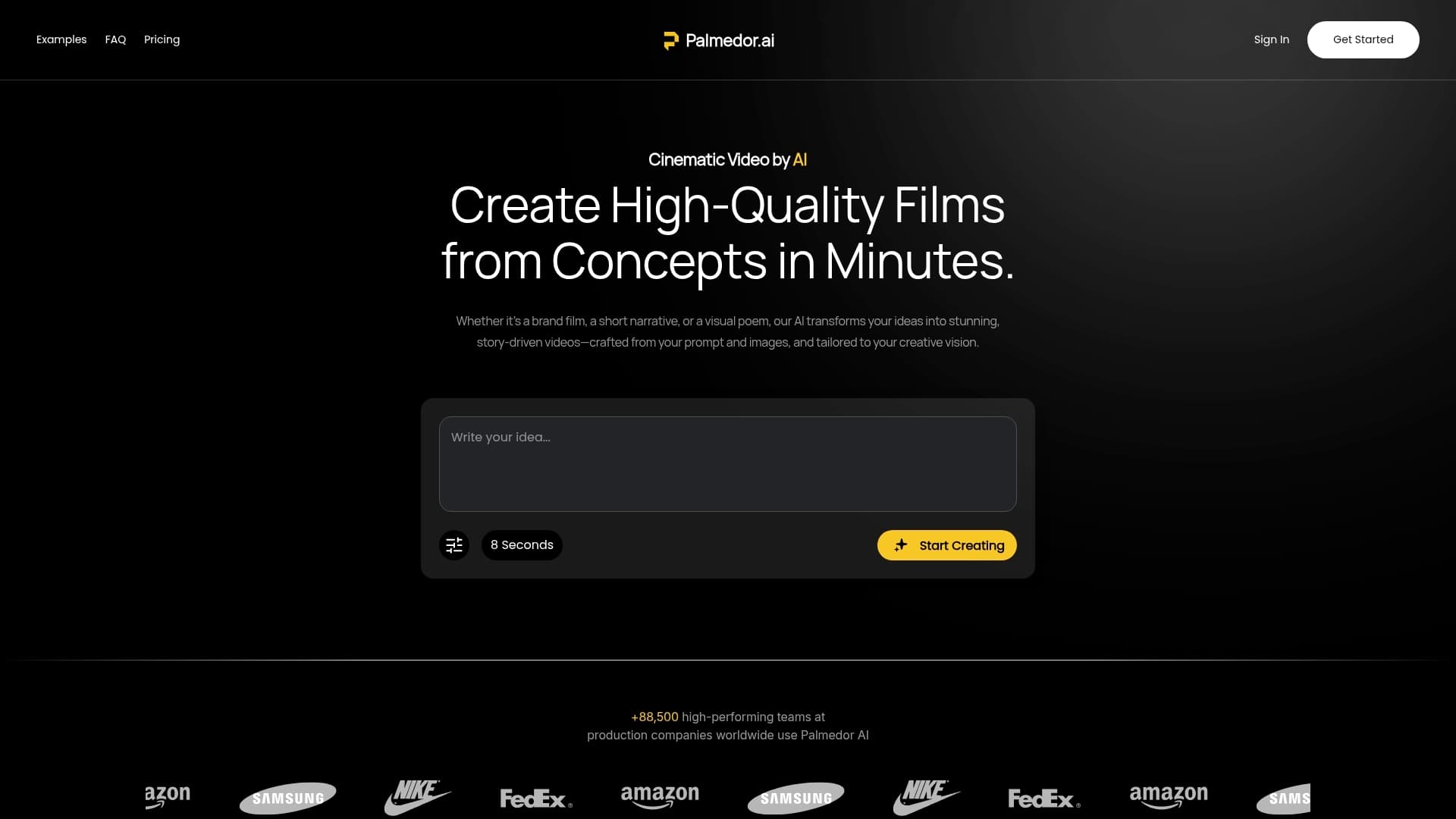
Discover how our platform simplifies script generation, automates intelligent scene management, and ensures brand integrity through customizable presets. Whether you aim to create brand films, social clips, or global content variants, Palmedor.ai empowers creators to produce cinematic videos efficiently, without deep technical skills. Start crafting compelling promotional videos today at Palmedor.ai and see the difference clarity and AI collaboration bring to your campaigns.
Frequently Asked Questions
What are the key components of a successful creative brief for promotional videos?
A successful creative brief should include your project objectives, target audience details, desired visual style, and specific technical requirements. Clearly outline these components to ensure everyone on your team is aligned and can approach production with a unified vision.
How can I determine the ideal promotional video partner for my campaign?
Evaluate potential promotional video partners based on their technological capabilities, customization options, and the quality of their output. Take time to request demos and sample projects to assess their performance against your specific marketing needs.
What steps can I take to ensure brand consistency across different video outputs?
Utilize smart presets that encapsulate your brand guidelines, such as color palettes and typography. Develop a comprehensive preset library with clear documentation so that your team can apply brand-specific video styling consistently across all content types.
How can I effectively measure the success of my promotional video campaign?
Set specific, measurable goals for your video campaign, like generating a certain number of leads or increasing website visits by a percentage within a timeframe. Regularly track these metrics to evaluate your campaign's performance against your original objectives.
What should I consider when customizing video content for global audiences?
Focus on cultural adaptation by modifying both language and visual elements to resonate with different regional audiences. Develop a checklist that includes linguistic, visual, and narrative considerations specific to each target market to ensure authentic communication.