Different Types of Video Content: Boosting Brand Impact
Different types of video content explained. Learn categories, use cases, platform-specific formats, and best practices for creators and marketers.
Different Types of Video Content: Boosting Brand Impact

More than 80 percent of American internet users watch video content each week, shaping new standards for digital communication. As attention spans shrink and competition grows, understanding what defines modern video is critical for creators and brands. Whether you are an American business trying to engage customers or an individual sharing stories, this guide offers clear insight into today’s evolving video content landscape and how to connect with audiences more effectively.
Table of Contents
- What Defines Video Content Today
- Popular Video Content Categories Explained
- Platform-Specific Video Formats And Trends
- Core Features Of Effective Video Content
- Choosing The Right Video Format For Your Goals
Key Takeaways
| Point | Details |
|---|---|
| Video Content Diversity | Modern video content encompasses various formats, including educational, entertainment, and professional categories, catering to diverse audience interests. |
| Technical Evolution | Advancements in resolution, frame rates, and distribution technologies enable creators to produce high-quality, engaging videos across multiple platforms. |
| Audience-Centric Strategies | Effective video production requires a deep understanding of the target audience's preferences and consumption habits to maximize engagement. |
| Platform-Specific Adaptation | Creators must tailor their video formats and styles for different platforms to align with user expectations and enhance viewer interaction. |
What Defines Video Content Today
Video content has transformed dramatically in the digital era, emerging as a powerful communication medium that goes far beyond traditional recording techniques. Digital video represents an electronic representation of moving images that captures visual narratives through rapidly displayed digital frames.
Modern video content encompasses multiple dimensions, transcending simple visual recording. Today's video landscape includes diverse formats like social media clips, documentary films, animated explainer videos, live streaming, virtual reality experiences, and interactive multimedia presentations. The core characteristics defining contemporary video content revolve around resolution, frame rate, storytelling approach, technical production quality, and audience engagement potential.
Technical evolution has dramatically expanded video capabilities. Electronic mediums now support complex video recording, broadcasting, and display technologies that enable creators to produce high-quality visual experiences across multiple platforms. Key technical parameters include:
- Resolution ranges from standard definition to 4K and 8K
- Frame rates spanning 24 to 60 frames per second
- Color reproduction technologies
- Advanced aspect ratio configurations
- Seamless digital distribution capabilities
The modern video content ecosystem prioritizes flexibility, interactivity, and personalized viewer experiences. Creators now have unprecedented tools to craft narratives that adapt to specific audience preferences, utilizing AI-driven editing, real-time rendering, and sophisticated production techniques that were unimaginable just a decade ago.
Pro Tip - Strategic Video Planning: Always design your video content with a clear understanding of your target audience's viewing habits, preferred platforms, and consumption patterns to maximize engagement and impact.
Popular Video Content Categories Explained
Video content has evolved into a rich, diverse ecosystem spanning numerous categories that cater to different audience interests and professional needs. YouTube video categories demonstrate the expansive range of content types, showcasing how digital platforms have transformed visual storytelling and information sharing.
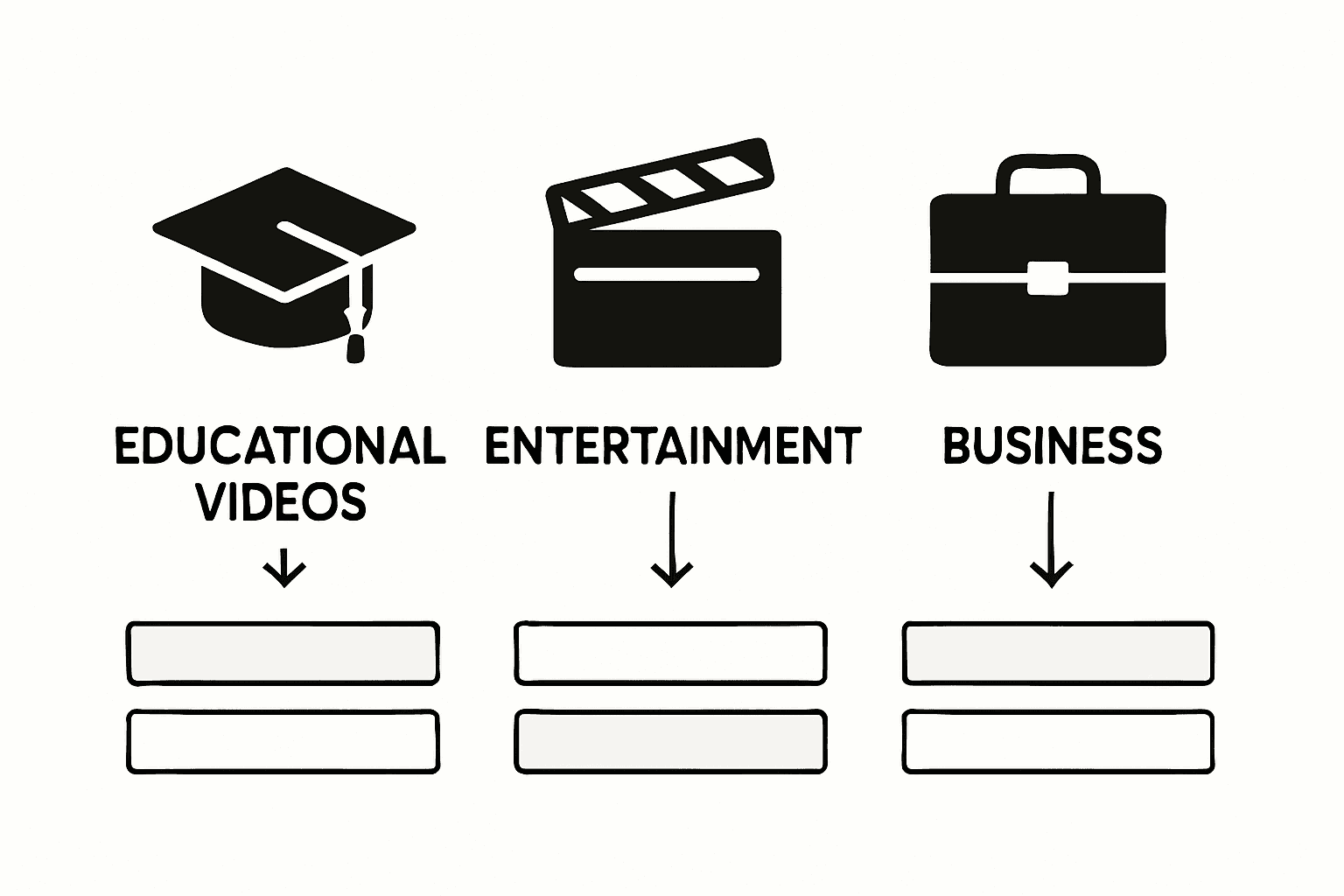
The primary video content categories can be broadly classified into several key segments:
-
Educational Content
- Academic tutorials
- Skill development workshops
- Professional training videos
- Language learning resources
-
Entertainment
- Music videos
- Comedy sketches
- Gaming streams
- Celebrity interviews
-
Professional/Business
- Corporate presentations
- Product demonstrations
- Marketing explainer videos
- Webinars and conference recordings
Language teaching video content reveals another fascinating category, illustrating how videos can serve specialized educational purposes. These include authentic videos providing real-world context, pedagogical videos focused on specific learning objectives, and cultural videos designed to enhance intercultural understanding.
The digital landscape has democratized content creation, enabling creators from diverse backgrounds to produce high-quality videos targeting specific audience segments. This proliferation means viewers can access incredibly specialized content tailored to their precise interests and learning needs.

Here's a comparison of video content categories and their typical audience focus:
| Category | Primary Audience | Typical Purpose |
|---|---|---|
| Educational | Students, Professionals | Skill and knowledge building |
| Entertainment | General Public | Leisure and enjoyment |
| Professional/Business | Employees, Clients | Communication and training |
| Language Teaching | Language Learners | Cultural and linguistic support |
Pro Tip - Content Category Strategy: Research your target audience's preferences thoroughly and design video content that precisely matches their consumption habits and informational requirements.
Platform-Specific Video Formats and Trends
The digital media landscape has witnessed a remarkable transformation in video content delivery, with social media platforms driving innovative content formats. YouTube introduced Shorts in 2021, creating a new paradigm for short-form video consumption, signaling a significant shift in audience engagement strategies.
Different platforms have developed unique video formats tailored to their specific user demographics and engagement models:
-
YouTube
- YouTube Shorts (vertical videos under 60 seconds)
- Standard long-form content
- Live streaming capabilities
- Monetized creator content
-
TikTok
- Ultra-short vertical videos
- Trend-driven content
- Music and dance challenges
- Algorithmic content discovery
-
Instagram
- Instagram Reels
- Stories (temporary video content)
- Live video broadcasts
- Professional and influencer content
Short-form video content has gained tremendous popularity, particularly among younger audiences, reflecting a broader trend toward concise, rapidly consumable media. These vertical videos, typically ranging from 15 seconds to a few minutes, have revolutionized how viewers interact with digital content.
The emergence of platform-specific video formats demonstrates the dynamic nature of digital communication. Creators must now adapt their storytelling techniques to suit specific platform algorithms, audience expectations, and technical constraints, making video production more nuanced and strategically complex.
This table summarizes how major platforms shape video format trends:
| Platform | Signature Video Format | User Engagement Style |
|---|---|---|
| YouTube | Shorts, Long Form, Live | Both broad and niche communities |
| TikTok | Ultra-Short Vertical | Viral trends and quick sharing |
| Reels, Stories, Live | Influencer-driven interactions |
Pro Tip - Multi-Platform Strategy: Develop platform-specific video variations that maintain your core message while adapting to each platform's unique content consumption patterns and technical requirements.
Core Features of Effective Video Content
Effective video content transcends mere visual presentation, representing a strategic communication tool designed to captivate, educate, and inspire audiences. Educational videos demonstrate the critical importance of creating purposeful, engaging visual experiences that align closely with specific objectives and viewer expectations.
The core features of compelling video content can be systematically categorized into several key dimensions:
-
Technical Quality
- High-resolution visual clarity
- Professional audio engineering
- Smooth visual transitions
- Color grading and aesthetic consistency
-
Narrative Structure
- Clear storytelling arc
- Logical content progression
- Emotional engagement
- Memorable messaging
-
Audience Relevance
- Targeted content design
- Contextual information
- Problem-solving orientation
- Actionable insights
Video content in educational and professional contexts facilitates deeper understanding by transforming complex concepts into accessible visual narratives. The most effective videos integrate technical excellence with strategic communication principles, creating immersive experiences that transcend traditional informational delivery.
Successful video content creators understand that audience engagement requires a delicate balance between informative substance and creative presentation. This means developing videos that are not just visually appealing, but intellectually stimulating and emotionally resonant across diverse viewer segments.
Pro Tip - Content Alignment Strategy: Always design your video content with a precise understanding of your target audience's specific needs, learning preferences, and consumption patterns to maximize impact and retention.
Choosing the Right Video Format for Your Goals
Selecting the appropriate video format requires a strategic approach that aligns with your specific communication objectives and target audience characteristics. YouTube's content analysis reveals significant variations in video performance across different formats, underscoring the importance of intentional content design.
Video format selection depends on several critical factors:
-
Audience Demographics
- Age range
- Professional background
- Digital consumption habits
- Platform preferences
-
Content Complexity
- Information density
- Narrative requirements
- Visual explanation needs
- Engagement objectives
-
Communication Goals
- Educational purpose
- Entertainment value
- Brand storytelling
- Technical demonstration
Short-form content strategies have revolutionized digital communication, particularly for engaging younger audiences, offering concise, trend-driven video experiences that capture attention rapidly. These vertical, quick-format videos enable creators to deliver impactful messages within extremely condensed timeframes.
Successful video format selection requires a nuanced understanding of your audience's preferences, technological access, and content consumption patterns. Creators must balance technical constraints, storytelling effectiveness, and platform-specific algorithmic considerations to develop truly resonant video experiences.
Pro Tip - Format Matching Strategy: Conduct audience research and platform-specific testing to identify which video format generates the most engagement for your specific content and target demographic.
Elevate Your Video Content Strategy with AI-Powered Creation
The article highlights the challenges of selecting the right video format and producing high-quality content that truly engages your target audience. Whether you aim to create educational tutorials, compelling brand stories, or quick social clips, the key pain points are maintaining technical quality, crafting clear narratives, and adapting to platform-specific demands. At Palmedor.ai, we understand these hurdles and provide a solution that simplifies video production through AI-driven script generation, scene management, and customizations tailored for various formats and audience preferences.
Unlock the power of cinematic videos without the technical complexity: With Palmedor.ai you can transform your concepts or images into polished videos perfectly designed for platforms like YouTube Shorts, Instagram Reels, or professional presentations. This streamlines your workflow and ensures consistent audience relevance and engagement across all content categories discussed in the article. Explore how smart presets and flexible output options can boost your brand impact effortlessly.
Ready to create impactful videos that resonate with your audience? Visit Palmedor.ai now to experience the future of video creation. Discover how our platform’s intelligent features can help you craft powerful, professionally rendered content that aligns with your strategy and goals. Start turning your ideas into captivating videos today and stay ahead in the competitive digital environment.
Frequently Asked Questions
What are the main types of video content?
Video content can be categorized into several types, including educational content, entertainment, professional/business videos, and language teaching videos. Each serves different audience needs and interests.
How can video content benefit my brand?
Video content enhances brand impact by increasing engagement, building trust, and improving communication. It allows companies to convey their messages effectively and connect emotionally with their audience.
What factors should I consider when choosing a video format?
When selecting a video format, consider audience demographics, content complexity, and communication goals. Understanding these factors helps in creating content that resonates well with viewers.
How important is technical quality in video content?
Technical quality is crucial in video content as it affects viewer perception. High-resolution visuals, professional audio, and smooth transitions all contribute to an engaging and trustworthy viewing experience.