Create Video Script for Impactful AI Videos Easily
Learn how to create video script step by step for professional-grade videos using AI. Discover actionable tips to craft, refine, and prepare scripts for any project.
Create Video Script for Impactful AI Videos Easily

Over 82 percent of internet traffic now comes from video, putting immense pressure on creators to deliver content that truly stands out. Making a professional video is no longer just about filming and editing. It starts with clear goals, a deep understanding of your viewers, and a process that blends creativity with strategy. Whether you want to explain, persuade, or entertain, following a proven step by step approach can make your video more effective and memorable.
Table of Contents
- Step 1: Define Your Video's Purpose And Target Audience
- Step 2: Generate Core Scenes And Storyline With Palmedor AI
- Step 3: Refine Dialogues, Visual Cues, And Pacing
- Step 4: Integrate Branding Elements And Required Assets
- Step 5: Review, Test, And Finalize Your Video Script
Quick Summary
| Key Point | Explanation |
|---|---|
| 1. Clearly define video purpose | Understanding your video's purpose helps shape the script tone and visual style essential for effective communication. |
| 2. Identify target audience deeply | Go beyond demographics; understand their pain points and interests to tailor your content effectively. |
| 3. Utilize AI for storyline generation | Use Palmedor AI to create structured scene progressions that align with your video's objectives. |
| 4. Refine dialogues and visuals | Ensure dialogues sound natural and visuals enhance the narrative, maintaining audience engagement. |
| 5. Conduct thorough script reviews | Review the script from multiple perspectives and gather feedback to enhance clarity and emotional impact. |
Step 1: Define your video's purpose and target audience
Before diving into video creation, you need crystal clear clarity on why you are making this video and who exactly will be watching it. Understanding your purpose and audience determines everything from script tone to visual style and storytelling approach.
Start by asking yourself some fundamental questions. What specific outcome do you want from this video? Are you trying to educate your audience about a complex topic, generate brand awareness, drive product sales, or simply entertain? Each purpose requires a different strategic approach. For example, an educational video about a technical process needs a different script structure compared to a promotional video designed to spark emotional connection with potential customers.
When identifying your target audience, go deeper than basic demographics. Consider their pain points, interests, communication preferences, and media consumption habits. A 25 year old startup founder will engage differently with content than a 45 year old corporate executive. Create audience personas that help you visualize exactly who you are speaking to. This means understanding not just age and gender, but their professional challenges, aspirational goals, and the specific language that resonates with them.
Pro Tip: Always map your video content directly to your audience's needs and your core communication objectives. Your script should feel like a personalized conversation, not a generic broadcast.
Once you have defined your purpose and audience, you are ready to move into crafting a compelling script that speaks directly to the right people in the right way.
Step 2: Generate core scenes and storyline with Palmedor AI
With your video purpose and target audience clearly defined, it is time to transform your concept into a structured narrative using Palmedor AI's powerful scene generation capabilities. This step will help you craft a compelling storyline that resonates directly with your intended viewers.
Start by entering a clear and concise description of your video concept into the Palmedor AI scene generator. Think of this like providing a detailed creative brief. The more specific you are about the story elements you want to include the better results you will receive. For instance, instead of writing "make a marketing video," describe the exact scenario "create a 60 second startup pitch video highlighting a technology solution that helps remote teams collaborate more effectively." The AI will use this input to generate scene suggestions that capture the essence of your narrative.
Palmedor AI breaks down your concept into logical scene progressions, suggesting visual frameworks that match your communication objectives. The platform analyzes your input and recommends scene structures that build narrative flow. You might see suggested scene sequences like an opening hook, problem introduction, solution demonstration, customer testimonial, and compelling call to action. Each scene recommendation comes with potential visual approaches and narrative techniques tailored to your specific content goals.
Pro Tip: Treat the AI generated scenes as a flexible starting point. While the recommendations provide an excellent structural foundation, you should still review and adjust to ensure the storyline feels authentic and aligns perfectly with your brand voice.
Once you have your core scene structure, you are ready to move into detailed script development and refining each scene's specific narrative elements.

Step 3: Refine dialogues, visual cues, and pacing
With your core scene structure established, it is time to breathe life into your video by meticulously refining dialogues, visual elements, and narrative rhythm. As Carnegie Mellon University emphasizes, scripting plays a critical role in maintaining audience focus and delivering a professional narrative.
Start by reviewing each scene dialogue with a critical ear. Read your script aloud to catch any unnatural language or awkward phrasings. Pay attention to the rhythm of speech and ensure each line sounds conversational and authentic. As recommended by Minot State University, practicing your delivery helps eliminate unnecessary pauses and filler words. Consider the emotional tone you want to convey in each scene and adjust your language accordingly. Are you aiming for inspiration, humor, excitement, or serious explanation?
Visual cues are equally important in maintaining audience engagement. Align your scene descriptions with compelling visual suggestions that enhance the narrative. Think about how camera angles, lighting, actor expressions, and background elements can amplify your message. Your visual choices should not just complement the dialogue but actively contribute to storytelling. Match the visual pacing with the emotional arc of your script creating smooth transitions that keep viewers connected to the narrative.
Pro Tip: Always remember that great video scripts are a delicate balance between what is spoken and what is shown. Every visual and dialogue element should serve your core communication objective.
Once you have refined your dialogues and visual framework, you are ready to move into the final script polishing stage.
Step 4: Integrate branding elements and required assets
Now it is time to infuse your video with distinct brand identity and visual consistency. Purdue University emphasizes the critical importance of incorporating images and visual elements that powerfully reinforce your brand narrative.
Start by gathering all essential brand assets. This includes your logo, color palette, typography, brand icons, and any specific visual guidelines that define your brand identity. Consider how these elements can be strategically integrated into your video without feeling forced or overwhelming. Your goal is subtle yet memorable brand representation. Think about placement such as intro and outro sequences, watermarks, lower thirds graphics, or background design elements that echo your brand aesthetic.
Accessibility is another crucial consideration when integrating branding. As recommended by UC Davis, ensure your visual branding elements include descriptive metadata and alt text. This practice not only enhances inclusivity for viewers with visual impairments but also improves your video's overall searchability and SEO performance. Pay attention to color contrast, font readability, and ensuring that any branded graphic elements communicate clearly across different viewing platforms and screen sizes.
Pro Tip: Your branding should feel like a natural extension of your narrative not an interruption. Aim for seamless integration that enhances rather than distracts from your core message.
With your branding elements thoughtfully incorporated, you are now prepared to move into the final refinement and production stages of your video project.
Step 5: Review, test, and finalize your video script
With your script and branding elements carefully crafted, the final stage involves rigorous review and validation. As University of Wyoming Extension recommends, conducting thorough script testing is essential to ensure your message resonates precisely with your intended audience.
Begin by performing multiple read throughs of your script from different perspectives. First, read it as the creator checking technical accuracy and narrative flow. Next, read it as a potential viewer asking yourself if the content feels engaging and clear. Consider having colleagues or trusted members of your target audience provide external feedback. Pay attention to how the script sounds when spoken aloud. Does each line feel natural? Are there any awkward phrasings or tongue twisting sections that might trip up a presenter?
During your review process, focus on three critical areas: content clarity, emotional resonance, and alignment with your original communication objectives. Evaluate whether each scene effectively communicates its intended message and contributes to the overall narrative arc. Look for opportunities to tighten language remove unnecessary complexity and enhance the script's emotional impact. Your goal is a script that feels simultaneously professional and authentically human.
Pro Tip: Read your script backwards. This counterintuitive technique helps you catch grammatical errors and awkward phrasings by removing the narrative context that can sometimes blind you to technical issues.
Once you have completed your comprehensive review and incorporated feedback, you are ready to move forward with video production.
Transform Your Script Into Stunning AI Videos Effortlessly
Creating an impactful video script is only the first step toward capturing your audience's attention and conveying your message clearly. The challenge many face is turning that well-crafted script and storyboard into a professional video without the need for complex tools or expert skills. If you want to elevate your narrative with seamless scene generation, refined dialogues, and integrated branding, Palmedor.ai offers exactly what you need. Our AI-powered platform handles the heavy lifting of scene creation and video production so you can focus on your story.
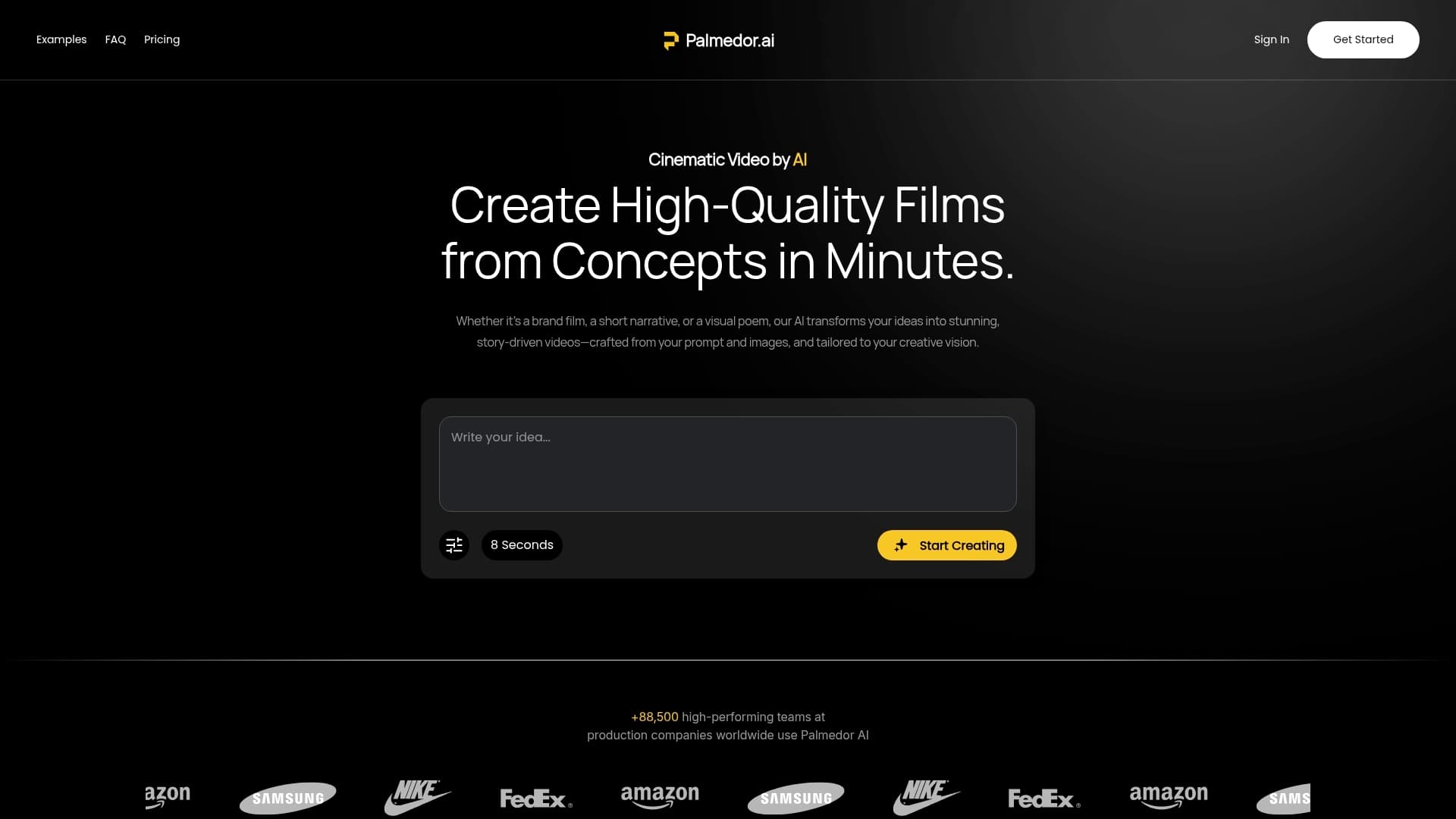
Explore how Palmedor.ai can help you convert your creative concepts into cinematic videos quickly and effortlessly. Whether you are aiming for educational content, startup pitches, or brand storytelling, our smart presets and customizable outputs are tailored to your unique goals. There is no better time to bring your video ideas to life and connect with your audience on a deeper level.
 Start your video creation journey today at Palmedor.ai and see how simple and powerful professional video scripting and production can be.
Frequently Asked Questions
How do I define the purpose of my AI video script?
To define the purpose of your AI video script, start by identifying the specific outcome you want to achieve—whether to educate, promote, or entertain. Ask yourself what your audience needs and tailor the script to address those needs directly.
What steps can I take to identify my target audience for an AI video?
Identify your target audience by creating detailed audience personas that include demographics, pain points, and interests. Consider their professional challenges and communication preferences to ensure your video resonates with them effectively.
How can I use Palmedor AI to generate storylines for my video?
You can use Palmedor AI by entering a detailed description of your video concept into the scene generator. For example, specify the purpose, like "creating a video pitch highlighting a tech solution for remote teams," to receive tailored scene recommendations that enhance your storyline.
What elements should I refine in my video script for better engagement?
Refine dialogues, visual cues, and pacing to enhance viewer engagement. Read your script aloud to ensure it sounds conversational and aligns visual elements with the narrative for seamless storytelling.
What branding elements are essential to integrate into my video script?
Essential branding elements include your logo, color palette, and typography. Gather these assets and incorporate them subtly into your video to reinforce brand identity without overwhelming the viewer.
How do I conduct an effective review of my video script?
Conduct a thorough review by reading your script multiple times from different perspectives, including as a creator and as a viewer. Focus on clarity, emotional impact, and narrative alignment, aiming for a polished script that feels both professional and approachable.