Corporate Video Editor: Streamlining Brand Storytelling
Corporate video editor tools empower marketing teams to automate editing, enhance storytelling, and boost efficiency using AI-driven features.
Corporate Video Editor: Streamlining Brand Storytelling
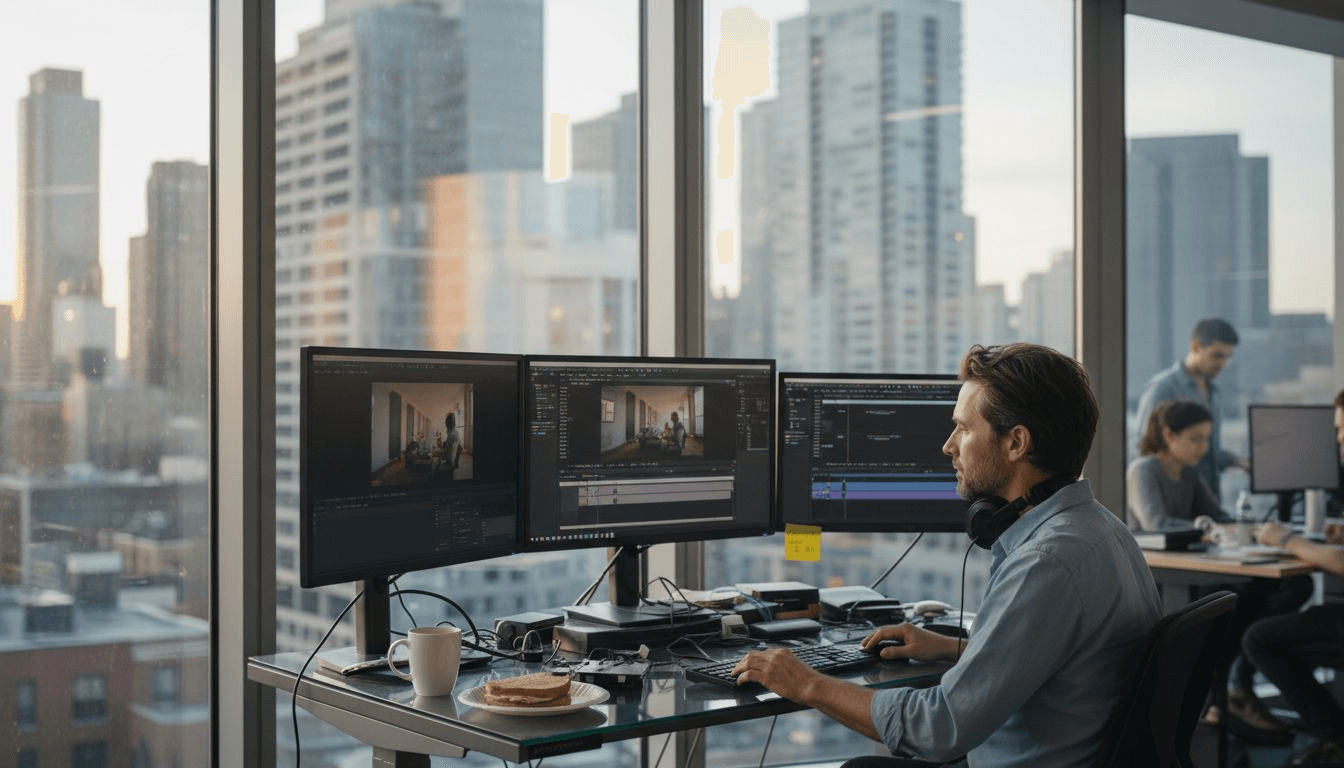
Managing fast-paced brand campaigns often means juggling tight deadlines, complex feedback loops, and ever-evolving visual standards. For corporate video editors, the challenge has grown with expanding content demands and the need for unified storytelling across every channel. By exploring the strategic transformation of the corporate video editor's role, you will see how AI-powered tools and modern editing platforms can empower your workflow, deepen creative impact, and ensure brand stories resonate—without sacrificing speed or quality.
Table of Contents
- Defining The Corporate Video Editor Role
- Types Of Corporate Video Content For Brands
- Essential Features Of Modern Editing Tools
- AI-Powered Editing: How It Works
- Benefits For Marketing Teams And Organizations
- Common Pitfalls And Ethical Considerations
Key Takeaways
| Point | Details |
|---|---|
| Role of Corporate Video Editors | They serve as strategic visual storytellers, blending technical skills with creative vision to enhance corporate messaging. |
| Importance of AI in Editing | AI-powered tools streamline workflows, allowing for faster production and democratizing video creation across teams. |
| Types of Corporate Video Content | Different video categories cater to specific audiences, enhancing engagement and driving business objectives. |
| Ethical Considerations | AI editing raises concerns about authorship and originality, necessitating clear guidelines and responsible practices. |
Defining the Corporate Video Editor Role
Corporate video editors are strategic visual storytellers who transform raw footage, graphics, and narrative concepts into compelling brand communications. Their role extends far beyond simple video assembly, requiring a sophisticated blend of technical skills, creative vision, and strategic understanding of corporate messaging.
At its core, the corporate video editor's job involves translating complex organizational narratives into engaging visual experiences. This means working across multiple domains: understanding brand guidelines, interpreting marketing objectives, managing technical production requirements, and crafting stories that resonate with target audiences. They seamlessly integrate elements like interview footage, b-roll, motion graphics, and sound design to create cohesive narrative arcs that communicate key messages effectively.
The professional toolkit for corporate video editors has dramatically expanded in recent years. Modern editors must be proficient in advanced editing software like Adobe Premiere Pro, understand color grading techniques, manage complex audio mixing, and often collaborate with graphic designers, marketers, and creative directors. Their technical responsibilities include:
- Selecting and arranging video clips for maximum narrative impact
- Color correcting and enhancing visual quality
- Integrating motion graphics and text overlays
- Synchronizing audio elements
- Preparing final video deliverables in multiple formats
Understanding the nuanced role of corporate video editors means recognizing they are more than technical operators - they are visual translators who bridge communication gaps between organizations and their audiences. They must simultaneously serve multiple stakeholders: capturing the creative vision of marketers, maintaining brand consistency, and producing content that drives engagement.
Pro tip: Invest time in developing a deep understanding of your brand's visual language and storytelling style, as this will dramatically improve your ability to create resonant corporate video content.
Types of Corporate Video Content for Brands
Corporate video content has evolved into a sophisticated strategic communication tool that enables organizations to connect with diverse audiences through targeted visual storytelling. Corporate video categories range from external marketing materials to internal communication assets, each designed to achieve specific business objectives and engage particular audience segments.
The primary categories of corporate video content can be broadly classified into strategic communication types. Marketing and sales videos form a critical subset, including brand anthem videos that communicate core organizational values, product demonstration videos showcasing specific offerings, and explainer videos that simplify complex processes for potential customers. These videos serve as powerful narrative instruments that translate technical information into compelling visual experiences.
Internal communication videos represent another significant category, supporting organizational knowledge transfer and employee engagement. These include:
- Training and onboarding videos
- Recruitment and talent attraction content
- Leadership communication updates
- Safety and compliance instructional materials
- Event and milestone celebration videos
Corporate video strategies also extend to specialized formats like investor relations updates, corporate social responsibility (CSR) narratives, and testimonial content. Each format requires a nuanced approach that balances production quality, messaging clarity, and audience-specific communication objectives. Modern corporate video editors must skillfully navigate these diverse requirements, understanding how visual storytelling can effectively communicate complex organizational messages.
Here's a summary of major corporate video content types and their primary objectives:
| Video Type | Primary Audience | Typical Objective |
|---|---|---|
| Brand Anthem Video | External consumers | Showcase company values and vision |
| Product Demo | Prospects and customers | Demonstrate key product features |
| Training & Onboarding | Employees | Facilitate learning and integration |
| Leadership Communication | Internal staff | Share updates and strategic goals |
| Event/Milestone Recap | Employees and partners | Celebrate achievements and culture |
The most successful corporate video content transcends mere information delivery, creating emotional connections that resonate with viewers and reinforce brand identity. By strategically selecting and executing the appropriate video format, organizations can transform traditional communication channels into dynamic, engaging storytelling platforms.
Pro tip: Always develop a clear content brief that outlines your specific communication goals, target audience, and key messaging before beginning any corporate video production.
Essential Features of Modern Editing Tools
Modern video editing tools have transformed dramatically, integrating sophisticated technologies that dramatically enhance creative workflows and production efficiency. The contemporary editing landscape is defined by intelligent software that goes far beyond traditional cutting and splicing, offering corporate video editors unprecedented capabilities to streamline complex visual storytelling processes.
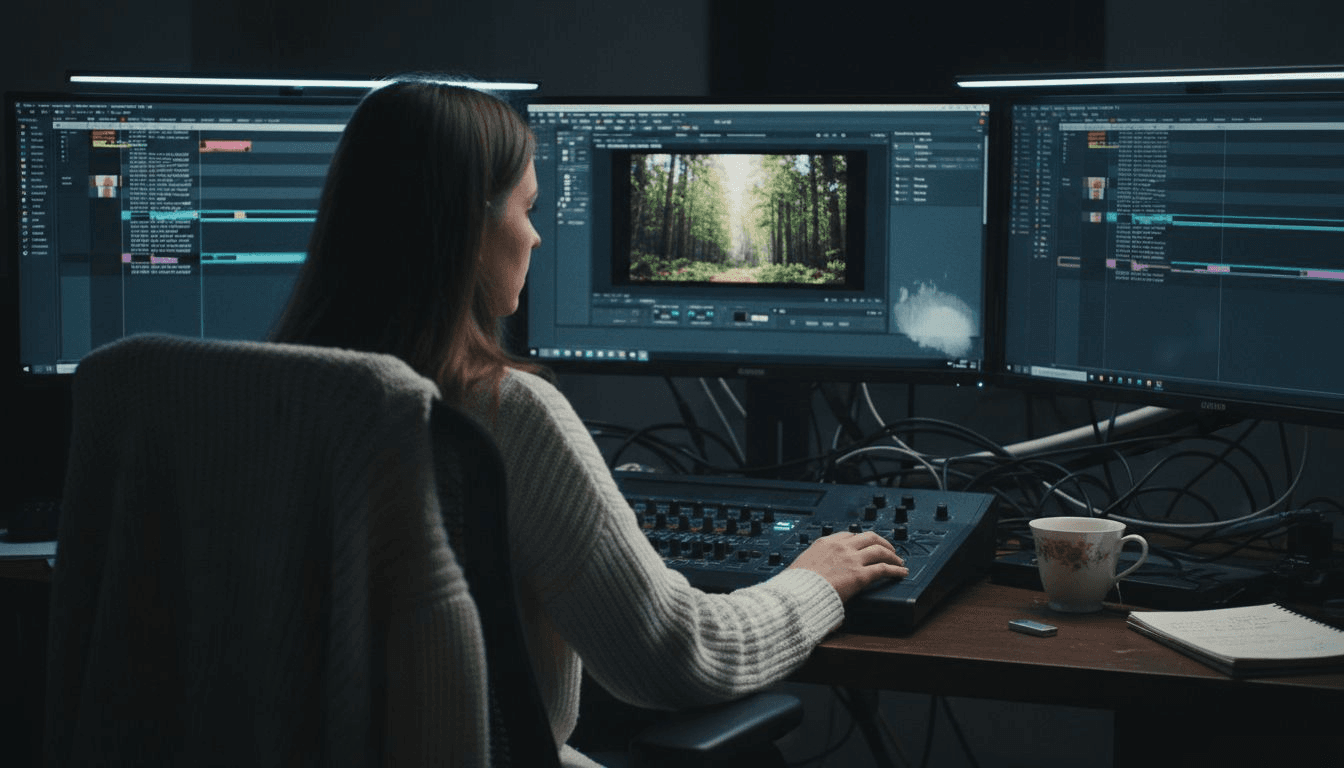
The core of modern editing tools revolves around non-linear editing (NLE) platforms that provide comprehensive production environments. Industry-standard software like Adobe Premiere Pro, DaVinci Resolve, and Final Cut Pro now incorporate advanced features such as AI-driven motion tracking, intelligent object removal, and smart reframing technologies. These tools enable editors to manipulate footage with unprecedented precision and creative flexibility, reducing manual labor and accelerating production timelines.
Key technological innovations in modern editing tools include:
- Integrated AI automation for repetitive tasks
- Advanced cloud collaboration capabilities
- High-performance GPU rendering support
- Multi-camera editing functionalities
- Sophisticated color grading tools
- Intelligent audio mixing and restoration
- Real-time visual effects integration
- HDR and high-resolution workflow support
Professional editing software now emphasizes efficiency through intelligent design. AI plugins can automatically generate captions, detect scene transitions, and suggest optimal edit points, allowing corporate video editors to focus more on creative storytelling and less on technical minutiae. The most advanced tools provide seamless integration between different production stages, from initial footage import to final color correction and audio mastering.
The evolution of editing tools reflects a broader trend toward democratizing high-quality video production. By incorporating machine learning, cloud technologies, and intuitive interfaces, these platforms are making sophisticated video editing more accessible to corporate teams of all sizes and technical expertise levels.
Pro tip: Invest time in learning keyboard shortcuts and custom workspace configurations in your preferred editing software to significantly reduce your overall production time.
AI-Powered Editing: How It Works
AI video editing technologies represent a revolutionary approach to transforming raw footage into polished, professional content. By leveraging advanced machine learning algorithms, these intelligent systems analyze visual and audio data with unprecedented precision, automating complex editing tasks that traditionally required hours of manual intervention.
The core mechanism of AI editing involves multiple sophisticated processes. Machine learning models are trained on thousands of professional video examples, enabling them to understand narrative structures, visual composition, and optimal editing techniques. These algorithms can intelligently identify key moments, assess emotional tone, recognize subjects, and generate rough cuts that align with storytelling objectives. Unlike traditional editing software, AI tools can transcribe spoken content, detect scene transitions, and even suggest optimal sequence arrangements based on established cinematic principles.
Key AI-powered editing capabilities include:
- Automatic scene detection and segmentation
- Intelligent content recognition
- Smart color correction and grading
- Audio enhancement and noise reduction
- Real-time subtitle generation
- Emotional tone analysis
- Facial recognition and tracking
- Automated rough cut assembly
The technological infrastructure supporting AI editing relies on complex neural networks that continuously learn and improve. These systems process visual information through deep learning models, breaking down footage into granular components like movement, color, sound, and contextual elements. By comparing incoming video data against extensive training datasets, AI can make nuanced editing decisions that previously required human intuition and expertise.
While AI editing technologies dramatically accelerate production workflows, they are designed to augment rather than replace human creativity. The most advanced systems provide intelligent recommendations and automate repetitive tasks, allowing corporate video editors to concentrate on high-level creative storytelling and strategic narrative development.
Pro tip: Experiment with different AI editing tools and train the algorithms by providing feedback on their initial suggestions to improve future automated editing recommendations.
Benefits for Marketing Teams and Organizations
AI-powered video editing tools are revolutionizing how marketing teams approach content creation, transforming traditional production workflows into agile, efficient processes. These advanced technologies eliminate long-standing technical barriers that have historically limited video production capabilities for organizations of all sizes.
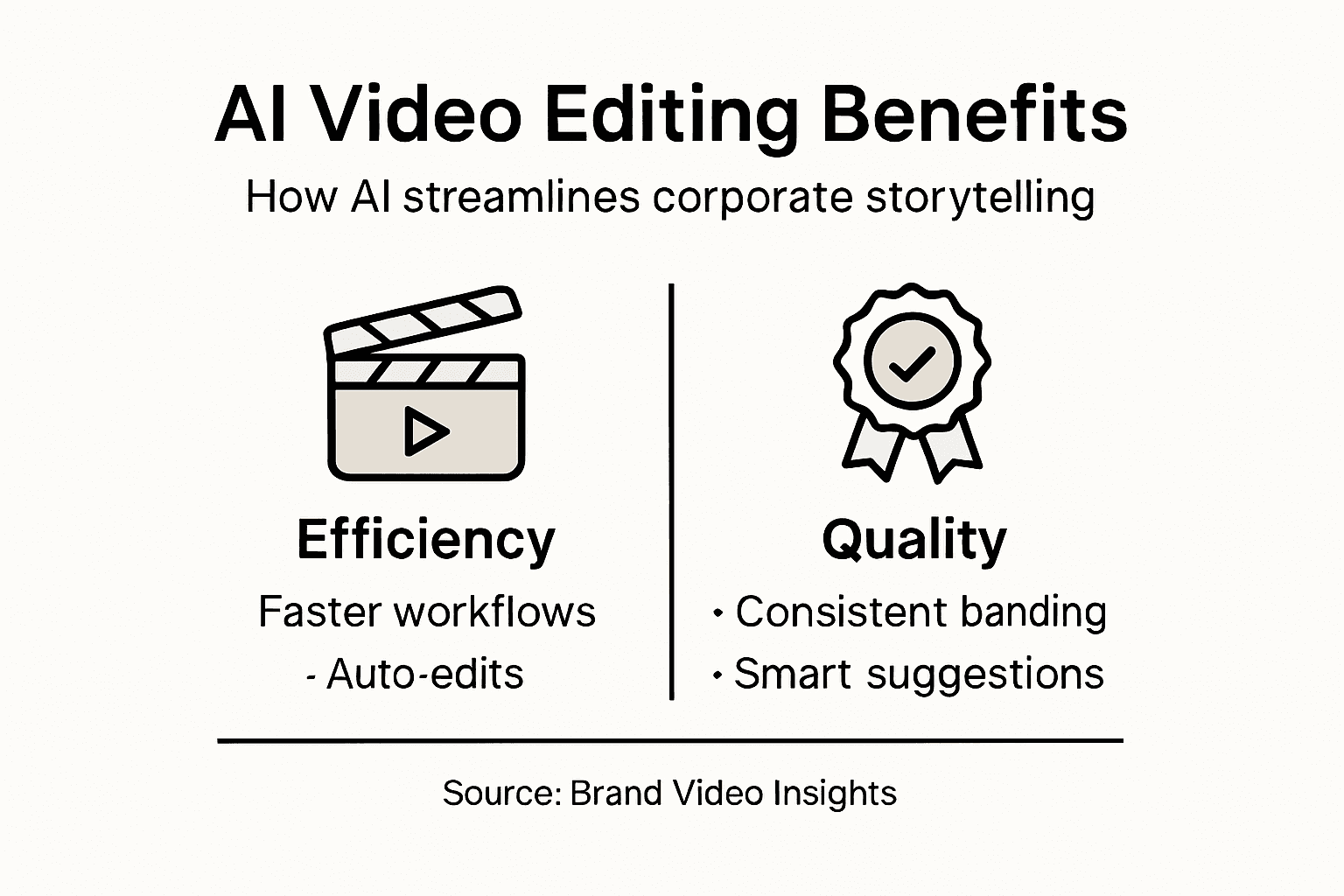
The strategic advantages of implementing AI-powered video editing are profound and multifaceted. Marketing teams can now compress production timelines dramatically, reducing content development from weeks to mere hours. This acceleration enables organizations to respond more quickly to market trends, create timely content, and maintain a competitive edge in rapidly evolving digital landscapes. By removing the need for extensive technical training, these tools democratize video production, allowing teams with varied skill levels to generate professional-quality visual content.
Key benefits for marketing teams and organizations include:
- Dramatically reduced content production timelines
- Elimination of specialized video editing expertise requirements
- Consistent brand messaging across multiple content formats
- Scalable video production capabilities
- Cost-effective content generation
- Enhanced personalization at scale
- Faster audience engagement
- Lower barrier to entry for video marketing
Moreover, AI-powered editing tools provide unprecedented flexibility in content creation. Organizations can now generate multiple video variations tailored to different audience segments, platforms, and marketing objectives with minimal additional effort. These technologies enable marketers to experiment more boldly, test different creative approaches, and rapidly iterate their visual storytelling strategies without significant resource investment.
The transformative potential of these tools extends beyond immediate production efficiencies. By automating technical aspects of video editing, marketing teams can reallocate human creativity toward strategic storytelling, brand narrative development, and more nuanced audience engagement strategies. This shift represents a fundamental reimagining of how organizations approach visual communication in the digital age.
The table below compares traditional and AI-powered video editing for marketing teams:
| Editing Approach | Required Expertise | Production Speed | Customization Potential |
|---|---|---|---|
| Traditional Editing | Advanced technical skills | Weeks to complete | Highly manual |
| AI-Powered Editing | Minimal technical barriers | Hours to finish | Easily scalable |
Pro tip: Start with small, low-stakes projects to familiarize your team with AI editing capabilities and gradually expand your usage as comfort and proficiency increase.
Common Pitfalls and Ethical Considerations
AI editing technologies introduce complex ethical challenges that corporate video editors must carefully navigate. While these powerful tools offer unprecedented efficiency, they simultaneously raise critical questions about authorship, originality, transparency, and intellectual property rights that demand proactive and responsible management.
The primary ethical considerations surrounding AI-powered video editing center on several key domains. Unintentional content replication represents a significant risk, as machine learning algorithms might inadvertently reproduce existing material without proper attribution. This challenge necessitates rigorous verification processes to ensure original content creation and prevent potential copyright infringements. Corporate teams must establish clear guidelines that mandate thorough review and explicit disclosure of AI assistance in content generation.
Critical ethical challenges in AI video editing include:
- Potential unintended plagiarism
- Transparency of AI content generation
- Maintaining creative authenticity
- Protecting intellectual property rights
- Preventing algorithmic bias
- Ensuring informed consent
- Managing data privacy concerns
- Establishing clear accountability frameworks
Responsible AI deployment requires ongoing collaboration between technologists, legal experts, and creative professionals. Organizations must develop comprehensive ethical guidelines that balance technological innovation with human creativity. This involves creating transparent processes for AI tool usage, implementing robust review mechanisms, and continuously educating teams about potential risks and responsible practices.
Moreover, the ethical landscape of AI editing is dynamic and rapidly evolving. Video editors must remain adaptable, continuously updating their understanding of emerging technologies and corresponding ethical frameworks. This proactive approach ensures that AI tools enhance rather than compromise creative integrity, maintaining the fundamental human elements of storytelling and artistic expression.
Pro tip: Develop a comprehensive internal policy document that explicitly outlines acceptable AI editing practices, including mandatory disclosure and review protocols for AI-generated content.
Empower Your Brand Storytelling with AI-Powered Video Editing
Corporate video editors face the challenge of crafting compelling, on-brand narratives while managing complex workflows that demand both creativity and technical skill. The need to streamline production timelines and maintain consistent messaging across diverse content types can feel overwhelming. Palmedor.ai offers a powerful solution tailored to these exact pain points by transforming simple prompts and images into professional-quality videos without requiring advanced editing expertise. With features like intelligent script generation, scene management, and smart presets, you can focus on storytelling while our AI handles the technical details of scene creation, editing, and rendering.
Ready to revolutionize your corporate video production and communicate your brand vision faster and more effectively? Discover how Palmedor.ai can transform your ideas into cinematic brand films, social clips, or narrative videos effortlessly. Explore the possibilities today at Palmedor and start streamlining your video workflows with cutting-edge AI technology. Learn more about how AI can enhance your editing process and create stunning visual stories by visiting our platform now.
Frequently Asked Questions
What does a corporate video editor do?
Corporate video editors are visual storytellers who transform raw footage and narratives into engaging brand communications, focusing on translating complex organizational stories into compelling visual formats.
What types of corporate video content are commonly produced?
Common types of corporate video content include brand anthem videos, product demonstrations, training and onboarding videos, leadership communications, and event recaps, each serving specific business objectives.
How are modern editing tools enhancing video editing processes?
Modern editing tools feature advancements like AI-driven automation, cloud collaboration, advanced color grading, and real-time visual effects integration, enabling editors to streamline workflows and enhance creativity.
What are the benefits of AI-powered video editing tools for marketing teams?
AI-powered video editing tools significantly reduce production timelines, eliminate the need for extensive technical expertise, ensure consistent brand messaging, and allow for scalable, personalized content creation.