Commercial Video Company: Everything You Need to Know
Commercial video company guide covering types, workflows, key features, costs, and how AI tools like Palmedor.ai transform video production.
Commercial Video Company: Everything You Need to Know
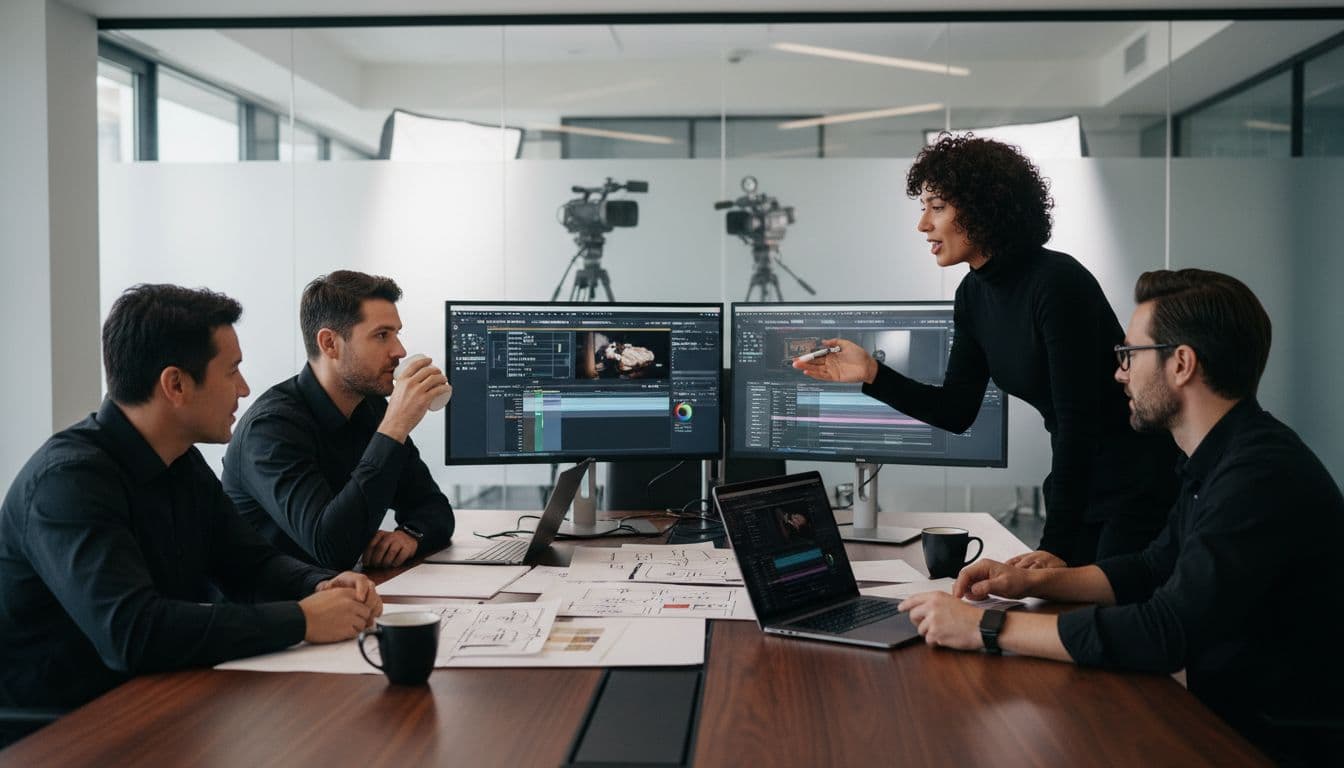
Nearly 90 percent of businesses now rely on video to communicate with customers and employees. In an age when attention spans are shrinking, companies need more than words to break through the noise. Commercial video companies fill this role by transforming complex ideas into clear, compelling visuals that spark engagement and drive results. If you want to understand how these professionals shape business communication and why their expertise matters, this guide will bring clarity to the world of commercial video production.
Table of Contents
- Defining Commercial Video Companies And Their Roles
- Types Of Commercial Video Productions Explained
- AI-Powered Video Creation: Modern Workflows
- Key Features And Processes Of Leading Companies
- Cost Factors And Budgeting For Video Projects
- Comparing AI Platforms With Traditional Video Services
Key Takeaways
| Point | Details |
|---|---|
| Role of Commercial Video Companies | They transform business communications into visual narratives, serving various functions like marketing, training, and investor relations. |
| AI's Impact on Video Production | AI technologies streamline video creation, allowing faster production and cost efficiency, significantly reducing traditional barriers. |
| Strategic Budgeting for Video Projects | Businesses should balance creativity with financial constraints, understanding key cost factors to maximize value while ensuring quality. |
| Combining Traditional and AI Approaches | A hybrid model leveraging both traditional and AI-driven methods enhances storytelling and operational efficiency in video production. |
Defining Commercial Video Companies and Their Roles
Commercial video companies are specialized creative organizations that transform business communication into powerful visual narratives. These professional teams design, produce, and deliver video content that helps organizations communicate complex messages, engage audiences, and achieve strategic objectives. According to Wikipedia, corporate films represent "non-advertisement based video content created for businesses to communicate with internal or external audiences", highlighting the multifaceted nature of these production services.
Commercial video companies typically offer a comprehensive range of services designed to meet diverse business communication needs. These services often include:
- Corporate Overview Videos: Showcasing company history, mission, and values
- Training and Educational Content: Creating instructional materials for employee development
- Marketing and Promotional Videos: Developing compelling visual stories that highlight products or services
- Investor Relations Materials: Producing professional presentations for stakeholder communication
- Event Documentation: Capturing and producing high-quality recordings of corporate events
The strategic value of commercial video companies extends beyond simple content creation. These organizations function as crucial communication partners, translating complex business narratives into engaging visual experiences. While traditional advertising focuses on direct product promotion, commercial video companies specialize in crafting nuanced storytelling that connects organizations with their target audiences on a deeper, more meaningful level.
Modern commercial video production has evolved dramatically with technological advancements. What was once a resource-intensive process requiring extensive equipment and large teams can now be accomplished more efficiently, thanks to digital tools and platforms like AI-powered video generation systems. These technological innovations are democratizing video production, enabling businesses of all sizes to access high-quality visual communication tools that were previously available only to large corporations with substantial budgets.
Types of Commercial Video Productions Explained
Commercial video productions represent a diverse ecosystem of visual storytelling designed to meet specific business communication objectives. These productions range from concise marketing clips to comprehensive corporate documentaries, each serving a unique strategic purpose. While no universal taxonomy exists, video productions can be strategically categorized based on their intended function, target audience, and communication goals.
Commercial video types can be broadly classified into several key categories:
- Promotional Videos: Short-form content designed to generate interest and excitement about products, services, or brand identity
- Corporate Documentaries: In-depth narratives exploring company history, mission, and organizational culture
- Training and Educational Videos: Structured content focused on skill development, compliance training, and knowledge transfer
- Testimonial and Case Study Videos: Real-world narratives featuring customer experiences and successful implementation stories
- Executive Communication Videos: Leadership messages, investor updates, and strategic announcements
- Event Highlight Reels: Condensed visual summaries capturing the essence of conferences, product launches, or corporate gatherings
Each video type requires a nuanced approach to storytelling, production techniques, and audience engagement. Promotional videos might leverage high-energy editing and compelling graphics, while training videos prioritize clarity, step-by-step explanations, and educational effectiveness. The key is matching the production style with the specific communication objective.
Modern commercial video production has become increasingly sophisticated, leveraging advanced technologies like AI-driven editing, motion graphics, and personalized content generation. These technological innovations allow businesses to create more targeted, engaging, and cost-effective video content that can be rapidly adapted for different platforms and audience segments. From social media snippets to comprehensive corporate presentations, commercial video productions now offer unprecedented flexibility in how organizations communicate their stories and connect with their audiences.
AI-Powered Video Creation: Modern Workflows
AI-powered video creation represents a transformative approach to visual content production, fundamentally reshaping how businesses and creators develop compelling visual narratives. This innovative technology enables professionals to generate high-quality video content with unprecedented speed, precision, and creative flexibility. By leveraging advanced machine learning algorithms, AI systems can now interpret text prompts, generate scripts, design scenes, and produce complete video productions with minimal human intervention.
The modern AI-powered video creation workflow typically involves several sophisticated stages:
- Concept Generation: AI analyzes input prompts and generates comprehensive creative concepts
- Script Development: Intelligent systems draft structured, contextually appropriate scripts
- Scene Design: Algorithmic scene composition using intelligent visual generation techniques
- Asset Creation: Automated selection and generation of visual and audio elements
- Editing and Refinement: AI-driven editing that optimizes pacing, transitions, and visual coherence
- Output Customization: Adaptive formatting for various platforms and audience requirements
These advanced workflows dramatically reduce production time and eliminate many traditional barriers to high-quality video creation. Where traditional video production might require weeks of planning, shooting, and editing, AI-powered platforms can generate professional-grade content in hours or even minutes. This efficiency enables businesses to rapidly respond to market trends, create timely content, and experiment with multiple creative approaches without significant financial investment.
The future of commercial video production lies in this symbiotic relationship between human creativity and artificial intelligence. By automating technical and repetitive aspects of video creation, AI empowers creators to focus on strategic storytelling, emotional nuance, and innovative conceptualization. As these technologies continue to evolve, we can expect increasingly sophisticated tools that not only generate video content but also understand and anticipate audience engagement, making video production more intuitive, accessible, and responsive to dynamic business communication needs.

Key Features and Processes of Leading Companies
Commercial video production companies have evolved to offer sophisticated, technology-driven solutions that transform how businesses communicate visually. These organizations distinguish themselves through comprehensive service offerings, cutting-edge technological capabilities, and streamlined production processes that meet diverse client needs across multiple industries and communication objectives.
Leading commercial video companies typically provide an integrated suite of services characterized by the following key features:
- Advanced Technology Integration: Utilizing AI-powered tools, machine learning algorithms, and sophisticated editing platforms
- Customized Production Workflows: Flexible processes adaptable to specific client requirements and project complexity
- Multi-Platform Content Creation: Ability to generate video content optimized for diverse digital and traditional media channels
- Strategic Content Consulting: Offering creative direction and communication strategy alongside technical production
- Rapid Turnaround Capabilities: Leveraging efficient production methodologies to deliver high-quality content quickly
- Comprehensive Quality Control: Implementing rigorous review processes to ensure professional standards and client satisfaction
The modern commercial video production landscape is defined by its remarkable blend of creativity and technological innovation. Companies now employ sophisticated workflow management systems that integrate project tracking, collaborative tools, and real-time communication platforms. This approach allows for unprecedented transparency, enabling clients to participate actively in the creative process while maintaining professional efficiency.
Technological sophistication has become the primary differentiator among leading commercial video production companies. The most competitive organizations invest heavily in emerging technologies like AI-driven content generation, advanced motion graphics capabilities, and intelligent editing systems. These technological investments allow companies to offer more personalized, adaptive, and cost-effective video production services that can rapidly respond to changing market demands and client expectations. The result is a dynamic ecosystem where creativity, technology, and strategic communication converge to produce compelling visual narratives.
Cost Factors and Budgeting for Video Projects
Budgeting for commercial video projects requires a strategic approach that balances creative vision with financial constraints. According to Moonb, "the cost of commercial videography varies based on project complexity, crew size, location, and timeline, with straightforward videos ranging from $5,000 to $10,000, while high-end productions can exceed tens of thousands". This wide range underscores the importance of meticulous planning and understanding the key variables that influence video production expenses.
Multiple critical factors impact video project budgeting:
- Production Style: Determining the visual approach (live-action, animation, hybrid)
- Technical Complexity: Number of shooting locations, equipment requirements
- Talent and Crew: Professional rates for directors, actors, camera operators
- Post-Production Needs: Editing time, special effects, motion graphics
- Content Duration: Longer videos typically require more resources
- Distribution Channels: Formatting and optimization for different platforms
As Levitate Media highlights, the choice between production formats significantly influences overall project costs. Live-action shoots demand location expenses, equipment rentals, and personnel costs, while animation projects require specialized software and graphic design expertise. Modern AI-powered video creation platforms are disrupting traditional cost structures by offering more affordable and efficient production alternatives that can dramatically reduce both time and financial investments.
Smart budgeting involves creating a comprehensive cost breakdown that anticipates potential variables and includes strategic contingency planning. Successful video projects balance creative ambition with financial pragmatism, leveraging technologies and production approaches that maximize value without compromising quality. By understanding these nuanced cost factors, businesses can develop video content that delivers powerful communication impact while maintaining fiscal responsibility.
Comparing AI Platforms With Traditional Video Services
AI-powered video platforms and traditional video production services represent two fundamentally different approaches to visual content creation, each with distinct advantages and limitations. While traditional services have long dominated the market, emerging AI technologies are rapidly transforming the landscape of video production, challenging established workflows and offering unprecedented efficiency and accessibility.
Key differences between AI platforms and traditional video services include:
- Production Speed: AI platforms can generate content in hours, traditional services typically require weeks
- Cost Structure: AI solutions offer significantly lower per-project expenses
- Creative Flexibility: Traditional services provide nuanced human creativity, AI platforms offer rapid iteration
- Technical Requirements: AI platforms need minimal technical expertise, traditional services demand specialized skills
- Scalability: AI technologies can easily reproduce and adapt content across multiple formats
- Customization: Traditional services offer deeper personalization, while AI provides template-based solutions
The transition from traditional to AI-powered video creation represents more than a technological shift - it's a fundamental reimagining of content production workflows. Traditional video services rely on human expertise, complex production hierarchies, and extensive creative collaboration. In contrast, AI platforms leverage machine learning algorithms to streamline content generation, enabling creators to transform simple text prompts or image references into fully realized video experiences with minimal manual intervention.
Ultimately, the most effective approach combines the strengths of both methodologies. AI platforms excel at rapid prototyping, cost-effective content generation, and standardized production, while traditional video services remain unparalleled in creating emotionally nuanced, highly specialized narrative experiences. Forward-thinking organizations are increasingly adopting hybrid models that integrate AI technologies into existing creative workflows, maximizing efficiency without sacrificing the irreplaceable human touch of professional storytelling.

Transform Your Commercial Video Projects with AI-Powered Precision
The article highlights how commercial video companies face challenges like balancing creative vision with time, budget, and technical complexity. Many businesses struggle to produce high-quality, engaging videos quickly without extensive resources or long production timelines. Whether it is corporate documentaries, promotional clips, or training materials, the need to streamline workflows and deliver professional results is clear.
Palmedor.ai offers a powerful solution designed to overcome these exact obstacles. Our AI-driven platform simplifies video production by generating scripts, scenes, and edits from your ideas and images with minimal effort. You can create cinematic-quality videos tailored for multiple platforms without needing expert skills or costly equipment. This means faster turnaround, reduced costs, and creative freedom for your commercial projects.
Elevate your brand with ease and efficiency by exploring what Palmedor.ai can do for you.
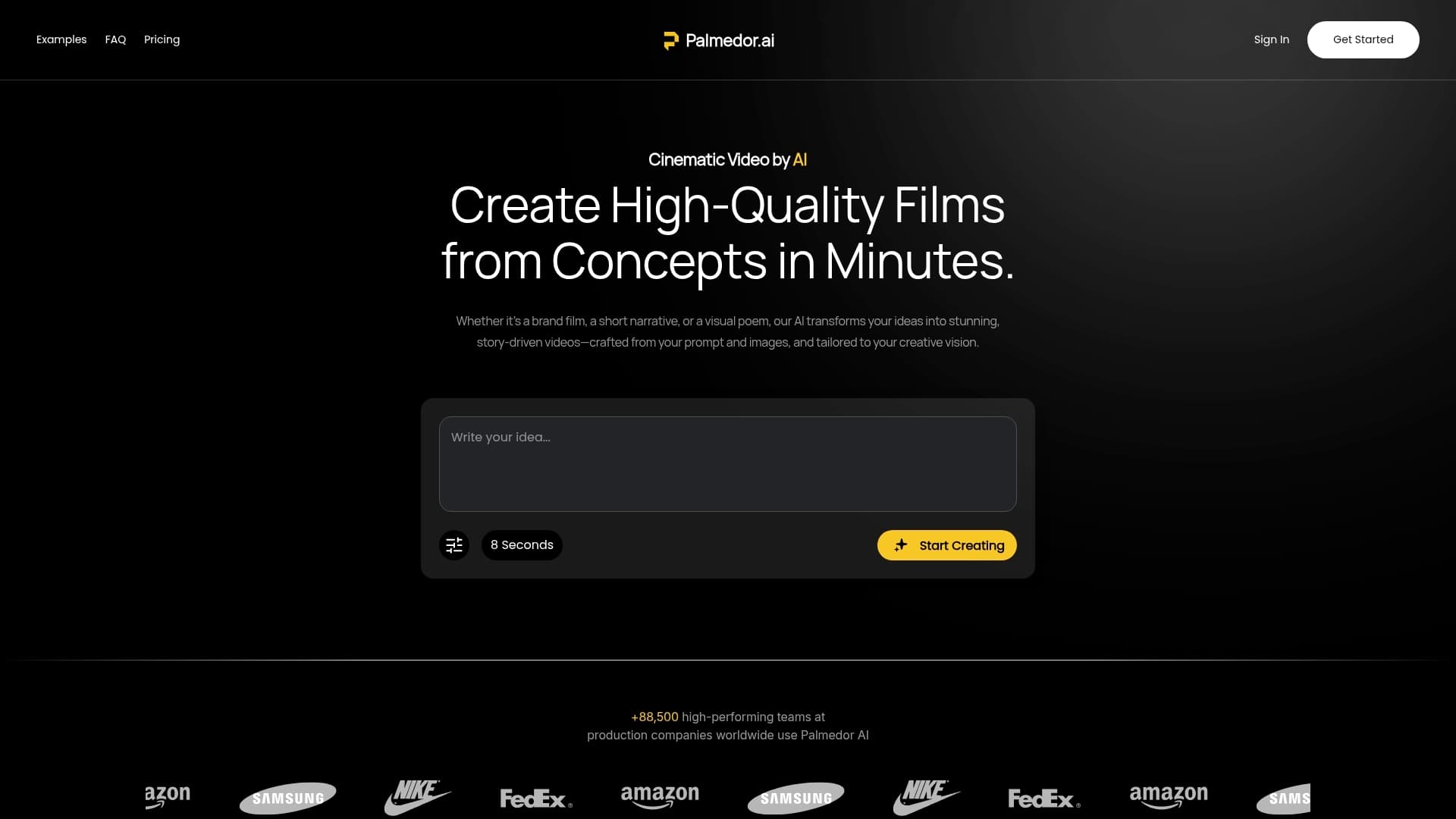
Ready to reimagine your commercial video production process and save valuable time and money? Visit Palmedor.ai today to start creating stunning videos that connect and inspire. Discover how our AI video creation platform can revolutionize your content strategy and bring your stories to life.
Frequently Asked Questions
What are the main services provided by commercial video companies?
Commercial video companies typically offer services such as corporate overview videos, training and educational content, marketing and promotional videos, investor relations materials, and event documentation.
How does AI-powered video creation differ from traditional video production?
AI-powered video creation allows for faster content generation, reduced costs, and less need for technical expertise. In contrast, traditional video production offers deeper creative personalization and emotionally nuanced storytelling.
What factors should I consider when budgeting for a commercial video project?
Key factors include production style, technical complexity, talent and crew costs, post-production needs, content duration, and distribution channels.
What types of commercial video productions are available?
Commercial video productions can include promotional videos, corporate documentaries, training and educational videos, testimonial and case study videos, executive communication videos, and event highlight reels.