Brand Video Production: Driving Engagement With AI
Brand video production made simple: AI-powered tools, workflow optimization, and key strategies for impactful business videos across all formats.
Brand Video Production: Driving Engagement With AI

Over half of all american digital marketers now rely on video to connect with audiences, reflecting a massive industry shift. Rising demand for visual storytelling puts pressure on brands to deliver high-impact content faster and at a lower cost. As new AI-driven tools transform brand video production, marketers worldwide can harness data, creative automation, and real-time insights to elevate their strategy and achieve measurable results.
Table of Contents
- Defining Brand Video Production Today
- Major Types of Brand Videos Explained
- Step-By-Step Video Production Workflow
- Benefits of AI in Brand Video Creation
- Key Challenges and Common Pitfalls
- Cost, ROI, and Platform Comparisons
Key Takeaways
| Point | Details |
|---|---|
| Evolution of Brand Video Production | Brand video production has shifted to a multidisciplinary approach, integrating technology, strategy, and narrative to enhance audience engagement. |
| Importance of Audience Understanding | Prioritizing audience emotional triggers and visual preferences is crucial for creating impactful video content. |
| Role of AI in Video Creation | AI significantly improves efficiency in video production, offering personalized content and data-driven insights to enhance engagement. |
| Challenges of AI Utilization | Organizations must navigate challenges like emotional nuance and content authenticity when using AI tools in video production. |
Defining Brand Video Production Today
Brand video production has radically transformed from traditional linear storytelling into a sophisticated, multidisciplinary process that integrates technology, strategy, and creative narrative. Modern video production techniques now demand collaboration between creative professionals, technological experts, and strategic communicators to craft compelling visual stories that resonate with target audiences.
At its core, contemporary brand video production represents a strategic communication tool designed to establish emotional connections and convey complex brand messages through visual storytelling. Professionals must now navigate a complex landscape that requires technical proficiency, creative insight, and deep understanding of audience psychology. Digital platforms have fundamentally reshaped how brands conceptualize and execute video content, demanding more agile, responsive, and data-driven approaches to visual communication.
Signal theory reveals how short-form videos create nuanced brand associations through narrative transparency and visual value, highlighting the intricate relationship between visual communication and audience perception. This means brands can no longer rely on traditional advertising methods but must craft authentic, engaging narratives that speak directly to viewer expectations and emotional landscapes.
Key characteristics of modern brand video production include:
- Rapid content adaptation across multiple digital platforms
- Integration of data analytics for audience targeting
- Emphasis on authentic, transparent storytelling
- Technical precision matched with creative storytelling
- Scalable production workflows enabled by emerging technologies
Pro Tip: Invest in understanding your audience's emotional triggers and visual preferences before producing brand videos, as this strategic approach will significantly enhance engagement and content effectiveness.
Major Types of Brand Videos Explained
Brand video production encompasses diverse strategies designed to communicate organizational narratives and engage target audiences through specialized visual content. Companies can leverage multiple video types to craft comprehensive communication strategies that address different audience needs and marketing objectives, each serving unique strategic purposes within the broader brand communication ecosystem.
The primary categories of brand videos include explainer videos, which break down complex products or services into digestible visual narratives, testimonial videos that leverage social proof through customer experiences, and brand story videos that communicate organizational mission and values. These different video formats allow brands to create nuanced, multifaceted communication approaches that connect emotionally and intellectually with viewers across various digital platforms.
Each video type requires distinct production approaches and strategic considerations. Explainer videos demand clear, concise messaging and engaging visual metaphors, while testimonial videos require authentic storytelling and genuine emotional resonance. Brand culture videos offer behind-the-scenes glimpses into organizational environments, humanizing corporate entities and establishing deeper audience connections through transparency and relatability.
Key brand video categories include:
- Explainer Videos: Simplifying complex concepts
- Customer Testimonial Videos: Building trust through real experiences
- Brand Story Videos: Communicating organizational mission
- Product Demonstration Videos: Showcasing functional capabilities
- Company Culture Videos: Revealing organizational personality
- Training and Educational Videos: Supporting internal and external learning
- Event Recap Videos: Documenting organizational milestones
- Interview-based Videos: Providing expert insights
- Animated Narrative Videos: Creating engaging visual storytelling
Pro Tip: Match your video type strategically with specific audience segments and marketing objectives to maximize engagement and communication effectiveness.
Here's a comparison of brand video types and their primary business outcomes:
| Video Type | Audience Impact | Typical Business Objective |
|---|---|---|
| Explainer | Clarifies complex ideas | Accelerate product adoption |
| Testimonial | Fosters viewer trust | Improve conversion rates |
| Brand Story | Drives emotional engagement | Strengthen brand loyalty |
| Product Demo | Highlights product features | Boost purchase intent |
| Culture | Humanizes organization | Attract talent and boost reputation |
| Educational | Improves knowledge transfer | Enhance customer support and retention |
| Event Recap | Celebrates milestones | Increase social media visibility |
| Interview-Based | Provides thought leadership | Establish industry authority |
| Animated Narrative | Engages visually | Simplify abstract concepts |
Step-By-Step Video Production Workflow
Brand video production requires a structured, systematic approach that transforms creative concepts into compelling visual narratives. The video production workflow typically encompasses four critical phases that guide teams from initial concept to final delivery, ensuring consistent quality and strategic alignment throughout the creative process.
The first phase, pre-production, represents the foundational planning stage where creative teams develop comprehensive strategies. This critical initial stage involves extensive research, audience analysis, scriptwriting, storyboard creation, location scouting, and casting decisions. Professionals meticulously outline project objectives, define visual aesthetics, and establish clear communication protocols to minimize potential production challenges and optimize resource allocation.
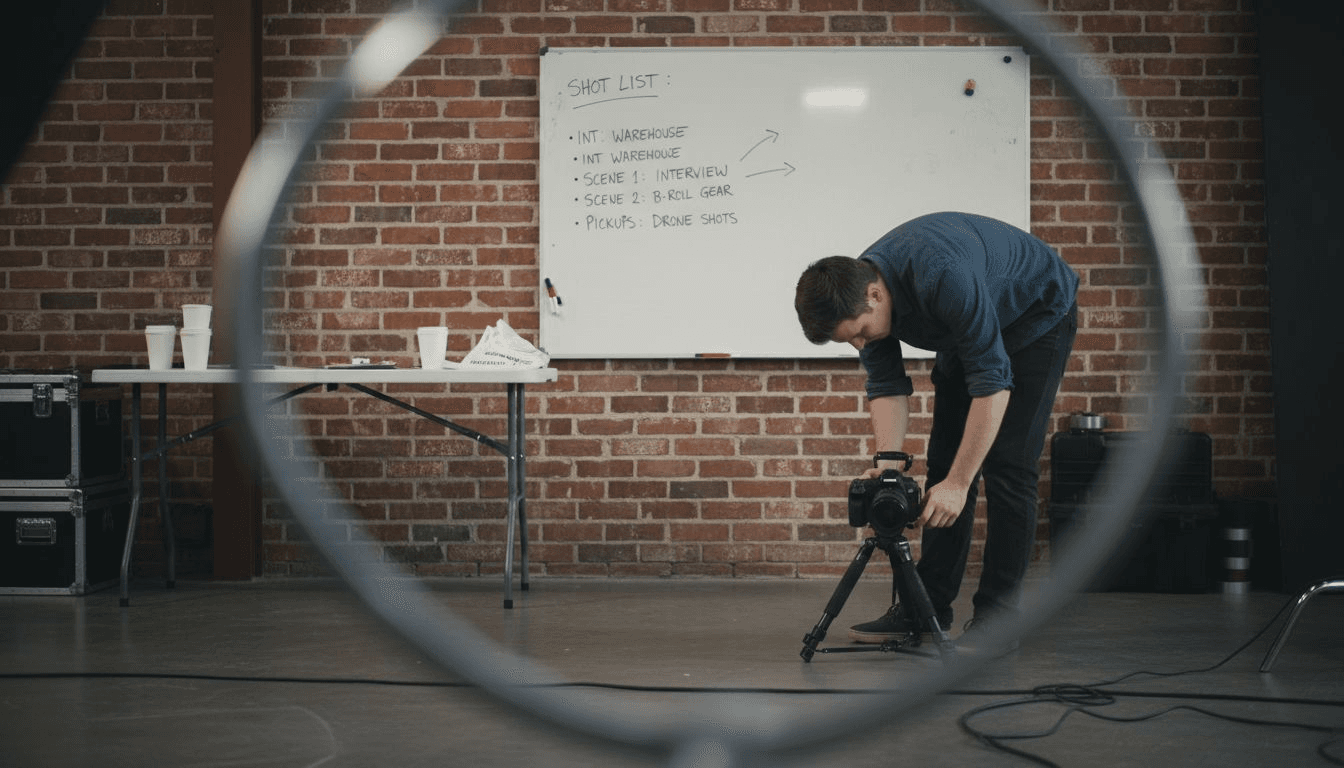
During the production phase, teams transition from planning to active content creation. This stage involves executing the carefully developed pre-production blueprint, with camera crews capturing footage according to predefined creative specifications. Technical considerations such as lighting, sound quality, performance direction, and visual composition become paramount. Successful production requires seamless collaboration between directors, cinematographers, performers, and technical specialists to translate conceptual designs into authentic, engaging visual experiences.
The workflow typically follows these key stages:
- Pre-Production Planning
- Concept development
- Script writing
- Storyboard creation
- Location and talent selection
- Production Execution
- Filming and recording
- Performance capture
- Technical asset gathering
- Post-Production
- Video editing
- Sound design
- Visual effects
- Color grading
- Distribution and Marketing
- Platform optimization
- Audience targeting
- Performance tracking
Key components of each production phase include:
- Comprehensive creative briefs
- Detailed project timelines
- Clear communication channels
- Flexible problem-solving approaches
- Robust quality control mechanisms
- Performance and engagement metrics
Pro Tip: Develop a detailed production checklist that covers every workflow stage, enabling your team to anticipate potential challenges and maintain consistent project quality across different video productions.
Benefits of AI in Brand Video Creation
Artificial Intelligence is revolutionizing brand video production by introducing unprecedented levels of efficiency, creativity, and personalization. Generative AI technologies are transforming marketing content creation, enabling scalable and targeted video production strategies that dramatically reduce time and resource investments, empowering brands to create more sophisticated visual narratives with minimal manual intervention.
AI-driven video production platforms streamline complex creative processes by automating multiple production stages, from initial concept generation to final editing and optimization. This technological approach allows marketing teams to rapidly prototype video concepts, generate personalized content variations, and adapt messaging dynamically based on real-time audience engagement metrics. The integration of machine learning algorithms enables brands to analyze viewer preferences, predict content performance, and continuously refine their visual storytelling approaches.
The most significant advantages of AI in brand video creation include enhanced efficiency, unprecedented personalization capabilities, and data-driven creative decision-making. Advanced AI systems can generate contextually relevant scripts, recommend optimal visual compositions, and even predict potential audience reactions before final production. These capabilities transform traditional linear video production workflows into agile, responsive creative ecosystems that can quickly adapt to changing market dynamics and audience preferences.
Key benefits of AI in brand video production:
- Accelerated content creation timelines
- Reduced production costs
- Enhanced creative personalization
- Automated script and storyboard generation
- Intelligent audience targeting
- Real-time performance analytics
- Consistent brand messaging across platforms
- Scalable content variation
Additional AI-powered capabilities include:
- Dynamic scene composition
- Emotion recognition and sentiment analysis
- Multilingual content generation
- Adaptive visual styling
- Predictive audience engagement modeling
Pro Tip: Start with small-scale AI video production experiments to understand the technology's capabilities, gradually expanding your approach as you gain confidence and insights into its potential for your specific brand communication needs.
Key Challenges and Common Pitfalls
Artificial Intelligence in brand video production presents a complex landscape of technological potential and significant challenges that demand careful navigation. Organizations must critically examine the practical limitations and potential risks associated with AI-driven content creation, understanding that technological capabilities do not automatically translate to seamless creative execution.
AI video production tools introduce substantial risks related to content authenticity, emotional nuance, and brand representation, requiring sophisticated human oversight to maintain creative integrity. The primary challenges emerge from AI's current limitations in understanding subtle contextual and emotional elements that define truly compelling brand storytelling. While AI can efficiently generate content, it frequently struggles to capture the intricate emotional landscapes that human creators naturally understand and communicate.
The most critical challenges in AI-powered video production encompass multiple interconnected domains, including technical performance, creative authenticity, and ethical considerations. Potential pitfalls range from algorithmic biases that can produce inappropriate or insensitive content to technical inconsistencies that undermine brand messaging. Organizations must develop robust frameworks for AI content validation, ensuring that generated materials align with brand values, maintain visual consistency, and effectively communicate intended messages.
Key challenges in AI video production include:
- Limited emotional intelligence
- Potential algorithmic bias
- Inconsistent narrative coherence
- Risk of generic or repetitive content
- Difficulty capturing brand-specific nuances
- Potential legal and copyright complications
Critical mitigation strategies:
- Implement human creative oversight
- Develop comprehensive AI content guidelines
- Create robust review and validation processes
- Maintain flexible production workflows
- Continuously update AI training models
- Establish clear ethical usage frameworks
Pro Tip: Develop a hybrid production approach that leverages AI's efficiency while maintaining strong human creative direction, treating AI as a collaborative tool rather than a complete replacement for human creativity.
Cost, ROI, and Platform Comparisons
Brand video production investments require careful financial analysis and strategic platform selection, balancing technological capabilities with budgetary constraints. Understanding the complex economic landscape of AI-powered video creation involves evaluating multiple factors beyond simple price comparisons, including potential efficiency gains, content quality, and long-term strategic value.
The financial considerations for AI video production platforms extend far beyond initial subscription costs. Organizations must conduct comprehensive total cost of ownership assessments that incorporate factors such as content generation speed, creative versatility, potential labor cost reductions, and measurable performance improvements. Advanced platforms offer sliding scale pricing models that accommodate different production volumes, allowing businesses to scale their video content strategies without prohibitive upfront investments.
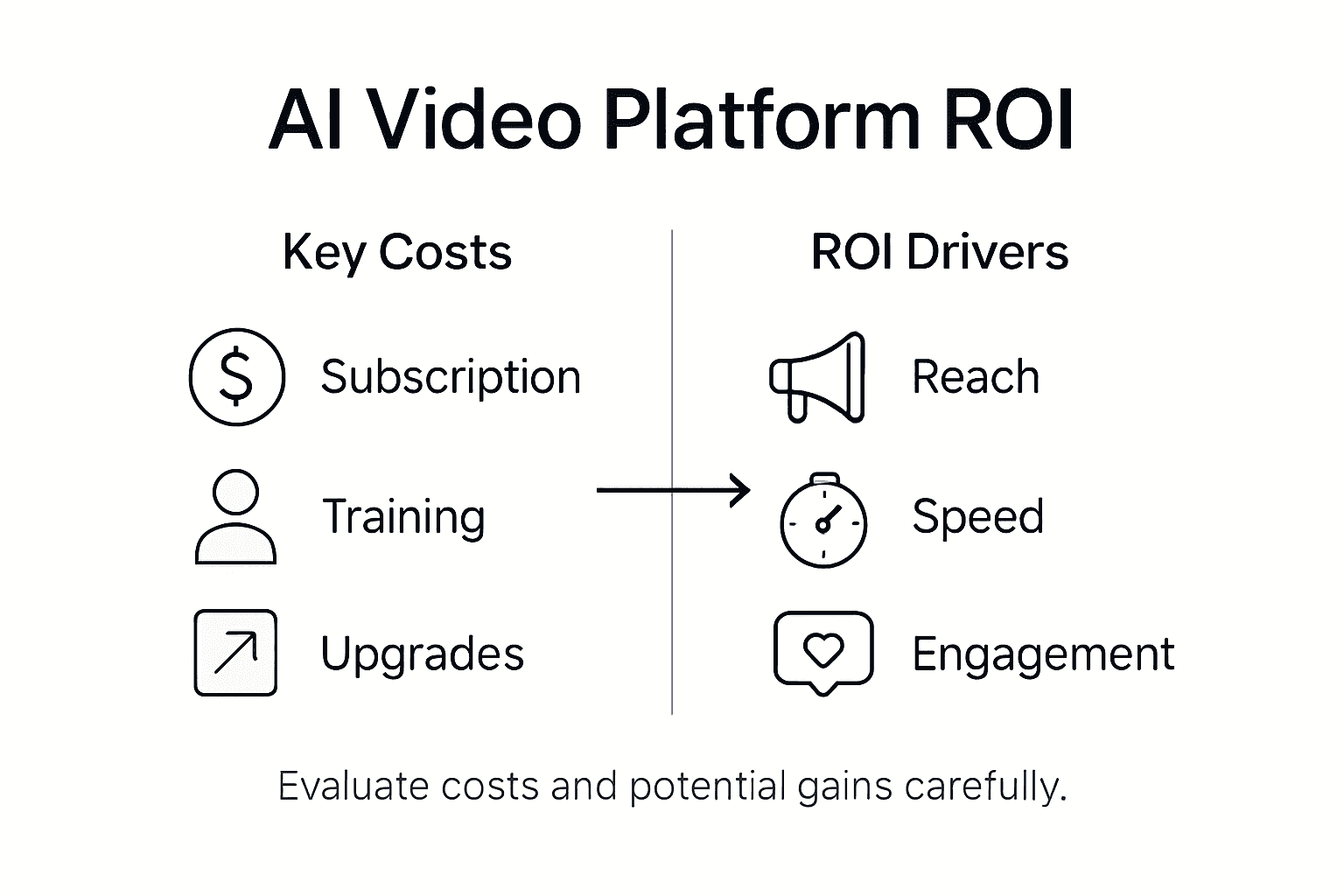
Evaluating return on investment (ROI) for AI video production requires a multifaceted approach that considers both quantitative and qualitative metrics. Key performance indicators should include production time reduction, content variation capabilities, audience engagement rates, and potential revenue generation through more targeted, personalized video marketing strategies. Small to medium enterprises might see significant advantages through reduced production overhead, while larger organizations can leverage AI tools for rapid prototyping and global content localization.
Key cost and ROI considerations:
- Initial platform subscription expenses
- Potential labor cost reductions
- Content production speed improvements
- Scalability of video generation
- Quality consistency across productions
- Performance tracking capabilities
Comparative platform evaluation criteria:
For quick reference, here's how AI video platforms differ by evaluation criteria:
| Criterion | Importance for Brands | Long-term Value |
|---|---|---|
| Pricing Flexibility | Enables budget optimization | Controls recurring expenditures |
| Creative Customization | Supports unique messaging | Allows brand-specific visual styles |
| Integration | Facilitates workflow adoption | Eases future upgrades |
| Output Quality | Impacts viewer experience | Drives sustained audience growth |
- Pricing structure flexibility
- Creative customization options
- Technical integration capabilities
- Content generation speed
- Output quality and consistency
- Customer support responsiveness
- Learning curve and user experience
Pro Tip: Conduct pilot projects with multiple AI video platforms, measuring specific performance metrics to determine the most cost-effective solution for your unique brand communication requirements.
Unlock the Power of AI for Your Brand Video Production
The article highlights the complex challenges of creating authentic, engaging brand videos that resonate emotionally while maintaining efficiency. Key pain points such as navigating technical workflows, ensuring creative authenticity, and scaling content quickly are exactly where AI-driven platforms shine. If you want to overcome issues like limited emotional nuance or slow production timelines, embracing intelligent automation and data-driven personalization is critical.
Palmedor.ai is designed to transform your brand video creation by offering AI-powered script generation, automated scene management, and custom output formats. Whether you need explainer videos or brand stories that speak directly to your audience’s emotional triggers, our platform streamlines every step of the production workflow. Visit Palmedor.ai to discover how to turn simple prompts into cinematic-quality visual narratives that save time without sacrificing impact.
Ready to elevate your brand storytelling with the latest AI innovations? Experience firsthand how Palmedor.ai addresses the most common pitfalls of traditional video production while unlocking new levels of efficiency and personalized creative control.
Start creating compelling, professional-grade brand videos effortlessly today at Palmedor.ai and explore our AI video creation platform to discover pricing plans tailored for your production needs.
Frequently Asked Questions
What are the key phases of brand video production?
The key phases of brand video production include pre-production, production, post-production, and distribution. Each phase involves specific tasks such as planning, filming, editing, and marketing the video content.
How does AI improve brand video production?
AI enhances brand video production by automating various processes, accelerating content creation, facilitating audience targeting, and generating personalized video variations. This leads to increased efficiency and allows for data-driven creative decision-making.
What types of videos can brands produce to boost engagement?
Brands can produce several types of videos, including explainer videos, testimonials, brand stories, product demos, and company culture videos. Each type serves distinct strategic purposes and targets different audience needs.
How can companies measure the ROI of AI in video production?
Companies can measure the ROI of AI in video production by analyzing performance metrics such as production time reduction, audience engagement rates, content variation capabilities, and any increase in revenue resulting from more targeted and personalized video marketing strategies.