How to Write an Audio Video Script for Cinematic Videos
Learn to create an effective audio video script with clear steps, from brainstorming concepts to refining and testing for flawless video production results.
How to Write an Audio Video Script for Cinematic Videos

Most video projects fall short before the cameras even roll because the foundation is never set properly. Nearly 60 percent of failed productions can be traced back to unclear objectives or mismatched messaging. Getting your audio video script right starts with concrete goals and a clear sense of who your audience is. A well-structured process helps you avoid wasted time, budget overruns, and lackluster results while transforming your vision into a narrative that captivates from the first frame.
Table of Contents
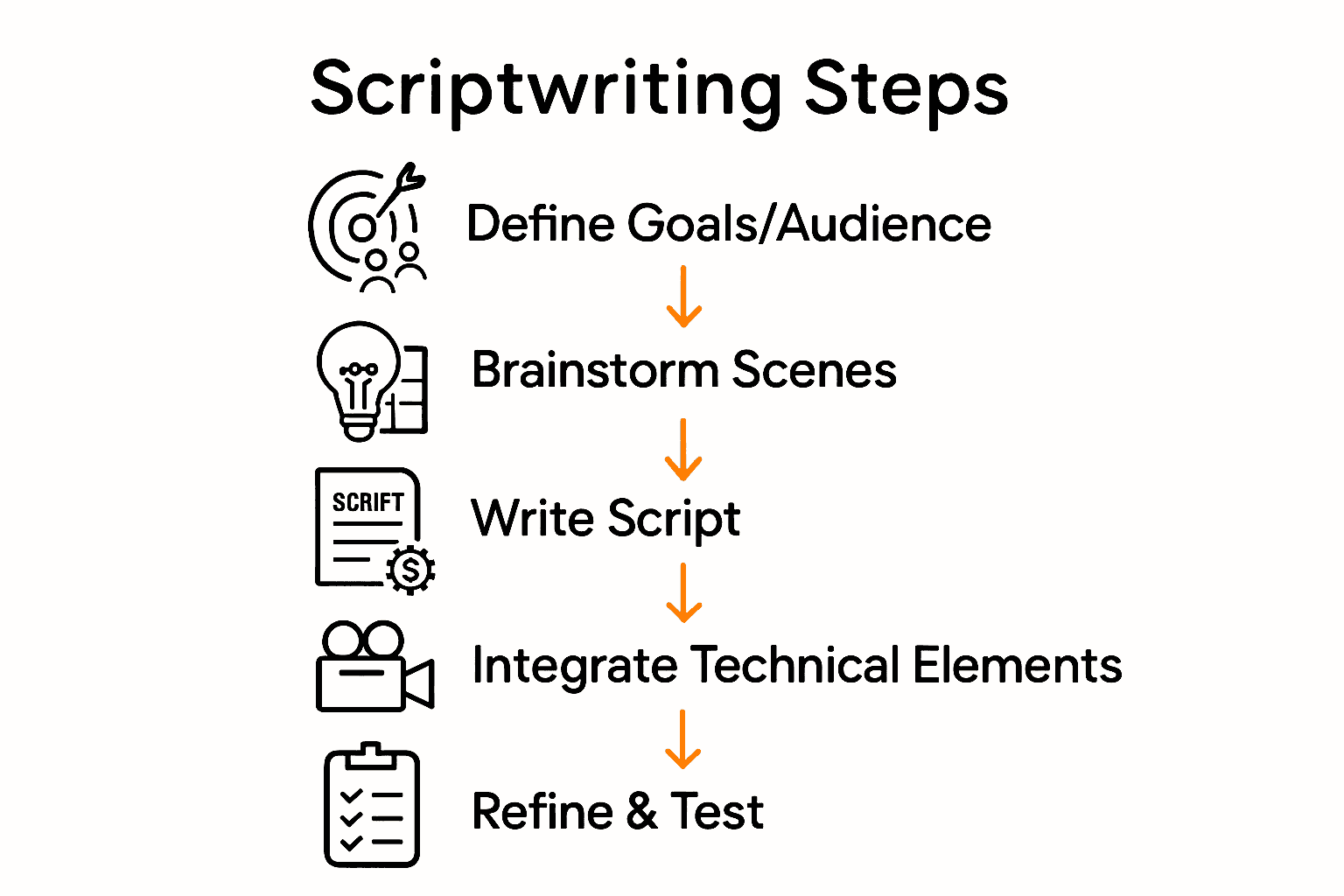
- Step 1: Define Project Goals And Target Audience
- Step 2: Brainstorm Ideas And Outline Key Scenes
- Step 3: Write The Audio Video Script For Visual Flow
- Step 4: Integrate Technical And Creative Elements
- Step 5: Refine, Test, And Finalize The Script
Quick Summary
| Key Point | Explanation |
|---|---|
| 1. Define clear project goals | Establish core objectives to guide your script. Understand what outcome you seek from the video to stay focused and efficient. |
| 2. Analyze your target audience | Create a profile based on demographics and interests. Tailor your message to resonate with viewers effectively. |
| 3. Brainstorm creatively using visuals | Organize ideas visually, categorizing scenes into beginning, middle, and end. This structure enhances storytelling and engagement. |
| 4. Structure the script for synchronization | Use a two-column format to align visuals and audio. This helps maintain a cohesive narrative flow throughout the project. |
| 5. Refine your script through feedback | Continuously improve your script based on peer reviews. Incorporate actionable insights to ensure clarity and impact. |
Step 1: Define project goals and target audience
Before diving into your audio video script, you need a crystal clear roadmap. This critical first step involves establishing your project's core objectives and understanding exactly who will be watching your cinematic video. According to isbe.net, defining your main goal is crucial for avoiding potential delays and unnecessary expenses.
Start by asking yourself fundamental questions: What specific outcome do you want from this video? Are you aiming to increase web traffic, boost conversion rates, educate viewers, or create brand awareness? Next, develop a precise profile of your target audience. As research from en.wikipedia.org suggests, audience analysis involves examining key demographic factors like age, cultural background, and existing knowledge level to craft a message that truly resonates.
To nail down your project goals, create a simple worksheet with three columns: primary objective, target metrics, and audience characteristics. This will help you maintain focus throughout the scriptwriting process. Pro tip: Be as specific as possible. Instead of a vague goal like "get more views," aim for something measurable like "increase YouTube engagement by 25% among marketing professionals aged 25-40."
With your goals and audience clearly defined, you are now ready to move into developing the narrative structure of your script.
Step 2: Brainstorm ideas and outline key scenes
With your project goals and target audience locked in, it is time to unleash your creative potential and transform abstract concepts into a compelling visual narrative. According to milanote.com, brainstorming is an essential process for exploring and organizing ideas visually, helping you collaborate and develop your initial film concept into a structured outline.
Start your brainstorming session by creating a mind map or digital board where you can freely associate ideas related to your video concept. Throw out every potential scene, character moment, or narrative twist without judgment. Research from en.wikipedia.org suggests using storyboards as graphic organizers that help pre-visualize your motion picture by deciding on camera shots, angles, and character positioning.
To streamline your brainstorming, divide your potential scenes into three core categories: beginning (setup), middle (confrontation), and end (resolution). For each category, sketch out 2-3 key moments that drive your narrative forward. Ask yourself critical questions: What emotional journey will your audience experience? Which scenes will create the most impact? Pro tip: Use color coding or digital tools to categorize and connect related ideas quickly.
Once you have a rough outline of scenes, you will be ready to start crafting your detailed script narrative.

Step 3: Write the audio video script for visual flow
Transforming your brainstormed ideas into a cohesive audio video script is where your creative vision truly comes to life. The script serves as the blueprint for your entire cinematic project, guiding every visual and auditory element to create a seamless storytelling experience.
Begin by structuring your script into two primary columns: visual descriptions on the left and corresponding audio or dialogue on the right. This format allows you to synchronize your visual narrative with the spoken content. Think of each scene as a mini story within your larger narrative. Break down complex sequences into bite sized moments that flow naturally from one to another. Pay close attention to pacing create visual rhythms that keep viewers engaged through strategic scene transitions and emotional arcs.
When writing your script, focus on creating vivid visual descriptions that are both precise and evocative. Instead of generic instructions, provide specific details about camera movements, character actions, and environmental elements. Use active language that captures the energy and emotion of each moment. Pro tip: Read your script out loud to ensure the dialogue sounds natural and the visual descriptions create a compelling mental image. Your goal is to craft a script that not only guides production but also tells a captivating story that resonates with your target audience.
With your script completed, you will be prepared to move into the next crucial stage of video production.
Step 4: Integrate technical and creative elements
Bringing your audio video script to life requires a delicate balance between technical precision and creative expression. According to research from arxiv.org, successful cinematography hinges on effectively integrating technical parameters with semantic descriptors to generate truly expressive camera behaviors that communicate your narrative intent.
Start by mapping out the technical specifications for each scene. This includes camera angles, lighting requirements, audio capture techniques, and visual transition styles. Research from arxiv.org suggests that meaningful video segmentation relies on combining perceptual, audio, and semantic cues to create a cohesive storytelling experience. Consider how each technical choice will enhance the emotional impact of your scene. Will a close up capture a character's subtle emotional shift? Can a specific camera movement underscore the narrative tension?
As you integrate technical elements, maintain a flexible creative mindset. Technical constraints should not limit your storytelling but rather serve as a framework for innovation. Pro tip: Create a technical reference guide that outlines your creative vision alongside practical production requirements. This will help your production team understand how each technical choice supports the broader narrative arc. Your goal is to create a seamless blend where technology becomes invisible and the story takes center stage.
With your technical and creative elements aligned, you are now ready to prepare for the actual production process.
Step 5: Refine, test, and finalize the script
Your script has evolved from a raw concept to a structured narrative and now demands meticulous refinement. According to research from arxiv.org, the ScreenWriter framework emphasizes the critical importance of iterative refinement and comprehensive testing in script development.
Begin the refinement process by creating a production board similar to what en.wikipedia.org describes a visual planning tool where you can color code and rearrange scenes to optimize narrative flow. Read your script multiple times, each pass focusing on a different aspect: first for overall story arc, then for dialogue authenticity, next for technical feasibility, and finally for emotional resonance. Ask yourself critical questions. Does each scene advance the story? Are the character motivations clear? Does the pacing feel natural and engaging?
Invite trusted peers or potential audience members to review your script and provide candid feedback. Their fresh perspectives can reveal blind spots you might have missed. Pro tip: Create a feedback template with specific questions to guide their review and ensure you receive actionable insights. Be prepared to make tough editing decisions some beautiful moments might need to be cut if they do not serve the broader narrative. Your ultimate goal is a script that tells a compelling story efficiently and powerfully.
With your script refined and tested, you are now prepared to move forward into the production phase.
Bring Your Audio Video Scripts to Life with Effortless Cinematic Video Creation
Writing a compelling audio video script can be challenging when you need to balance clear visual flow, precise scene descriptions, and emotional storytelling. This article highlights common hurdles like outlining key scenes, integrating technical elements, and refining narratives to resonate with your audience. If you want to bypass these complex steps and still generate professional cinematic videos that match your script perfectly, Palmedor.ai offers an innovative solution designed just for creators like you.
Unlock your creative potential by turning simple prompts and script concepts into full-fledged videos with ease. Palmedor.ai's AI-powered platform handles everything from scene management and smart presets to audio and moodboard integration, ensuring your story flows smoothly on screen without needing advanced technical skills. Ready to elevate your video production workflow and create stunning cinematic content? Explore the possibilities now at Palmedor.ai. Discover how you can streamline every step from script to screen and captivate your audience like never before.
Frequently Asked Questions
How do I define the goals for my audio video script?
Start by identifying the specific outcome you want from your video, such as increasing engagement or educating viewers. Create a worksheet that includes your primary objective, target metrics, and audience characteristics to guide your script development.
What should I include when brainstorming ideas for my video script?
Focus on generating a variety of concepts related to your video theme. Use a mind map to organize your thoughts and categorize potential scenes into beginning, middle, and end sections, ensuring a structured narrative flow.
How can I create a visual flow in my audio video script?
Organize your script into two columns, with visual descriptions on the left and corresponding audio or dialogue on the right. This setup allows you to synchronize visuals and spoken content, ensuring a cohesive storytelling experience.
What technical elements should I integrate into my video script?
Map out specific technical requirements for each scene, such as camera angles, lighting, and audio capture techniques. Consider how these elements can enhance emotional impact and ensure they align with your script's narrative.
How can I refine my audio video script before production?
Read your script multiple times, focusing on different aspects such as story arc, dialogue, and pacing. Invite peers to review your script and provide feedback, then use their insights to make necessary edits, ensuring clarity and engagement throughout.
What is the importance of audience analysis in scriptwriting?
Understanding your target audience helps tailor your script to their demographics, preferences, and knowledge levels. Identify key audience characteristics to craft a message that resonates, boosting the chances of achieving your project's goals.