Aspect Ratio for Social Media Videos: Maximizing Visual Impact
Learn the best aspect ratios for social media videos, platform-specific requirements, creative workflow solutions, and common pitfalls to avoid.
Aspect Ratio for Social Media Videos: Maximizing Visual Impact

Over 70 percent of social media videos in the American market are cropped or formatted incorrectly, leading to lost viewers and weaker engagement. As content creators fight for attention across countless platforms, the way your video fits the screen becomes just as important as what is on it. This guide breaks down how aspect ratio shapes your visual message and helps you tailor every project for maximum impact in the fast-moving world of American digital content.
Table of Contents
- Defining Aspect Ratio In Video Content
- Platform-Specific Video Aspect Ratio Standards
- Optimizing Visual Composition For Each Ratio
- Integrating Aspect Ratios Into Production Workflow
- Common Mistakes In Social Media Video Formatting
Key Takeaways
| Point | Details |
|---|---|
| Understanding Aspect Ratio | Aspect ratio defines the relationship between a video’s width and height, crucial for engaging viewers and conveying a message effectively. |
| Platform-Specific Standards | Each social media platform has distinct aspect ratio requirements that must be adhered to for optimal viewer engagement and professional presentation. |
| Composition Strategies | Different aspect ratios influence visual storytelling; thus, creators should adjust composition techniques based on the chosen ratio. |
| Common Formatting Mistakes | Avoiding platform-specific requirements, using low-resolution video, and neglecting accessibility features can severely impact viewer experience and engagement. |
Defining Aspect Ratio in Video Content
Aspect ratio represents the proportional relationship between a video's width and height, serving as a critical technical parameter that determines how visual content appears across different screens and devices. Mathematically defined as the ratio between width and height, aspect ratio influences everything from visual composition to viewer perception.
In practical terms, aspect ratio is typically expressed as two numbers separated by a colon, such as 16:9 or 4:3. These numerical representations) provide creators a standardized way to understand and communicate frame dimensions. Different ratios create distinct visual experiences - wider ratios like 16:9 offer cinematic expansiveness, while narrower ratios like 4:3 provide more compact, traditional framing.
Understanding aspect ratio goes beyond simple measurement. It impacts how viewers perceive content, affecting everything from emotional engagement to information clarity. Professional video creators must strategically choose aspect ratios that complement their storytelling goals, considering factors like platform requirements, audience expectations, and intended visual impact.
Pro Video Sizing Tip: Always preview your video content across multiple device sizes and platforms before finalizing your aspect ratio to ensure optimal visual presentation and viewer experience.
Pro Composition Tip: Match your aspect ratio to your storytelling style - wider ratios work best for cinematic landscapes, while square or vertical formats excel for social media and mobile viewing.
Platform-Specific Video Aspect Ratio Standards
Navigating the complex landscape of social media video standards requires understanding the unique aspect ratio requirements for each platform. Comprehensive platform guidelines emphasize the critical importance of adapting video dimensions to improve viewer engagement and brand visibility. These specifications aren't just technical details - they're fundamental to ensuring your content looks professional and performs effectively across different digital environments.
Primary Social Media Platform Aspect Ratios include:
- Instagram: 1:1 (square) and 9:16 (vertical)
- TikTok: 9:16 (vertical)
- YouTube: 16:9 (horizontal)
- Facebook: 1:1 and 16:9
- LinkedIn: 1:1 and 16:9
Detailed video specifications help content creators optimize their visual storytelling by matching platform expectations. Each social network has unique viewing behaviors and technical constraints, which means a one-size-fits-all approach simply won't work. Professional creators must strategically resize and reformat content to maximize reach and engagement.
The technical nuances extend beyond simple width-to-height measurements. Resolution, file size, and compression also play crucial roles in determining how your video will appear and perform. Mobile viewers, who represent a significant portion of social media traffic, have different visual consumption patterns compared to desktop audiences, further complicating the aspect ratio landscape.
Pro Platform Optimization Tip: Create a master video in the highest quality possible, then strategically crop and resize for different platform requirements to maintain visual integrity across all channels.
Pro Flexibility Tip: Develop a flexible video production workflow that allows easy reformatting, ensuring your content can be quickly adapted to multiple aspect ratios without losing its core storytelling impact.
Optimizing Visual Composition for Each Ratio
Understanding the nuanced characteristics of different aspect ratios is critical for creating visually compelling video content. Each ratio presents unique challenges and opportunities for visual storytelling, demanding strategic composition techniques that maximize viewer engagement and communicate your message effectively.
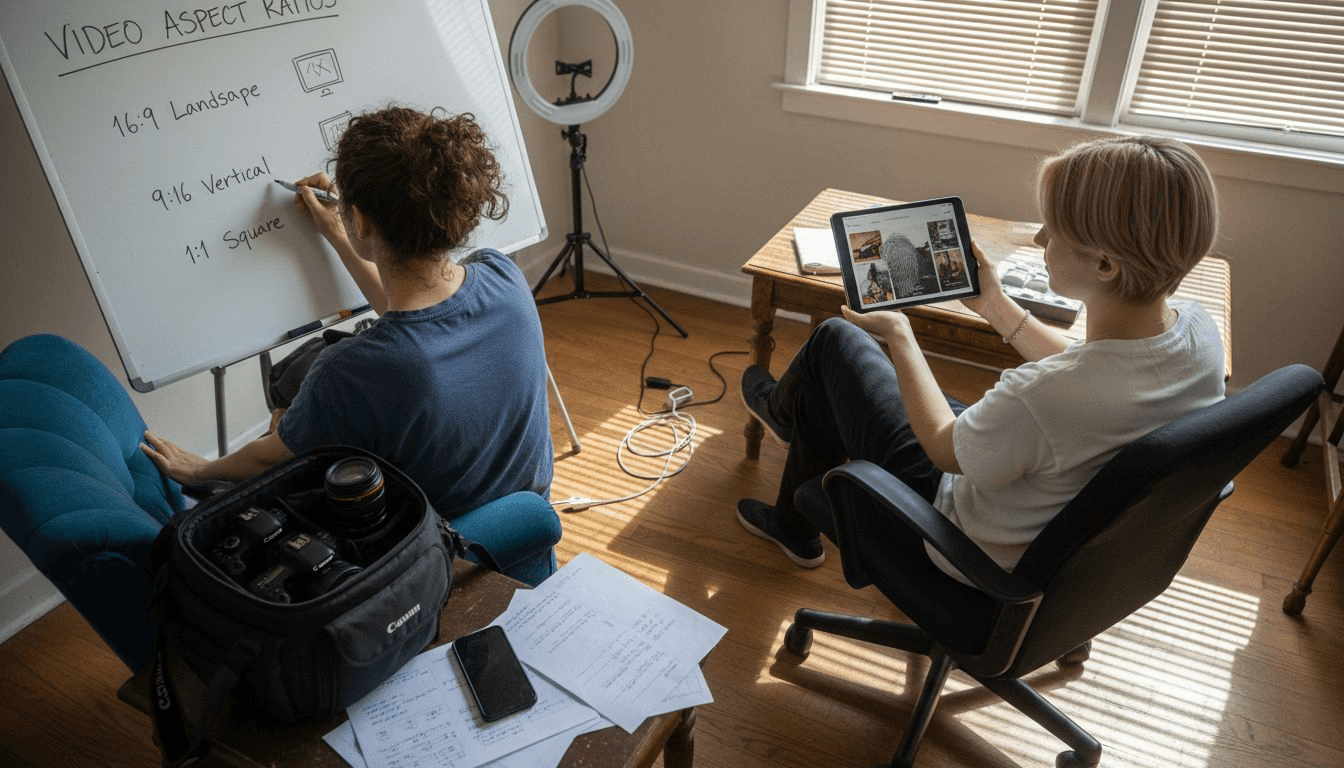
Composition Strategies for Key Aspect Ratios:
Here's how common aspect ratios shape video composition and viewer experience:
| Aspect Ratio | Typical Use Case | Visual Impact | Platform Suitability |
|---|---|---|---|
| 16:9 | Movies, YouTube | Expansive, cinematic feel | Compatible with most modern screens |
| 1:1 | Social feeds | Focused, balanced framing | Well-suited for Instagram, Facebook |
| 9:16 | Short mobile content | Intimate, vertical storytelling | Essential for TikTok, Stories |
| 21:9 | Cinematic features | Ultra-wide, immersive scenes | Best for films, select platforms |
- 16:9 (Widescreen): Ideal for cinematic landscapes, complex scenes
- 1:1 (Square): Perfect for centered subjects, minimalist designs
- 9:16 (Vertical): Optimal for mobile-first storytelling, close-up interactions
- 21:9 (Ultrawide): Excellent for immersive, panoramic visual experiences
Social media best practices emphasize capturing viewer attention within the first few seconds, which becomes even more critical when working with constrained aspect ratios. Vertical formats like 9:16 require tighter framing and more dynamic visual elements to maintain viewer interest, while horizontal formats offer more breathing room for complex visual narratives.
Successful visual composition transcends simple dimensional constraints. It involves understanding how viewers perceive space, movement, and visual hierarchy within different frame shapes. Creators must thoughtfully position key elements, manage negative space, and use visual weight strategically to guide the viewer's eye across the limited canvas of each aspect ratio.
Pro Framing Tip: Always plan your shot composition with the specific aspect ratio in mind, sketching or previewing how critical visual elements will be positioned before final recording.
Pro Adaptability Tip: Develop a flexible shooting approach that allows multiple framing options, capturing extra visual information around the edges to enable easier recomposition across different aspect ratios.
Integrating Aspect Ratios Into Production Workflow
Professional video production workflows require strategic planning to accommodate multiple aspect ratios from the earliest stages of content development. Modern creators must shift from traditional linear production approaches to more flexible, adaptive methodologies that anticipate multiple distribution channels and viewing platforms.
Key Workflow Integration Strategies:
- Plan initial shot compositions with multiple ratios in mind
- Use flexible camera settings and wider initial framing
- Invest in editing software with robust recomposition tools
- Create comprehensive pre-production storyboards accounting for different formats
- Develop consistent visual guidelines across all aspect ratios
Social media video best practices emphasize the critical importance of platform-specific aspect ratio considerations throughout the production process. This means reimagining traditional cinematography techniques to ensure content remains compelling and coherent across vertical, square, and widescreen formats.
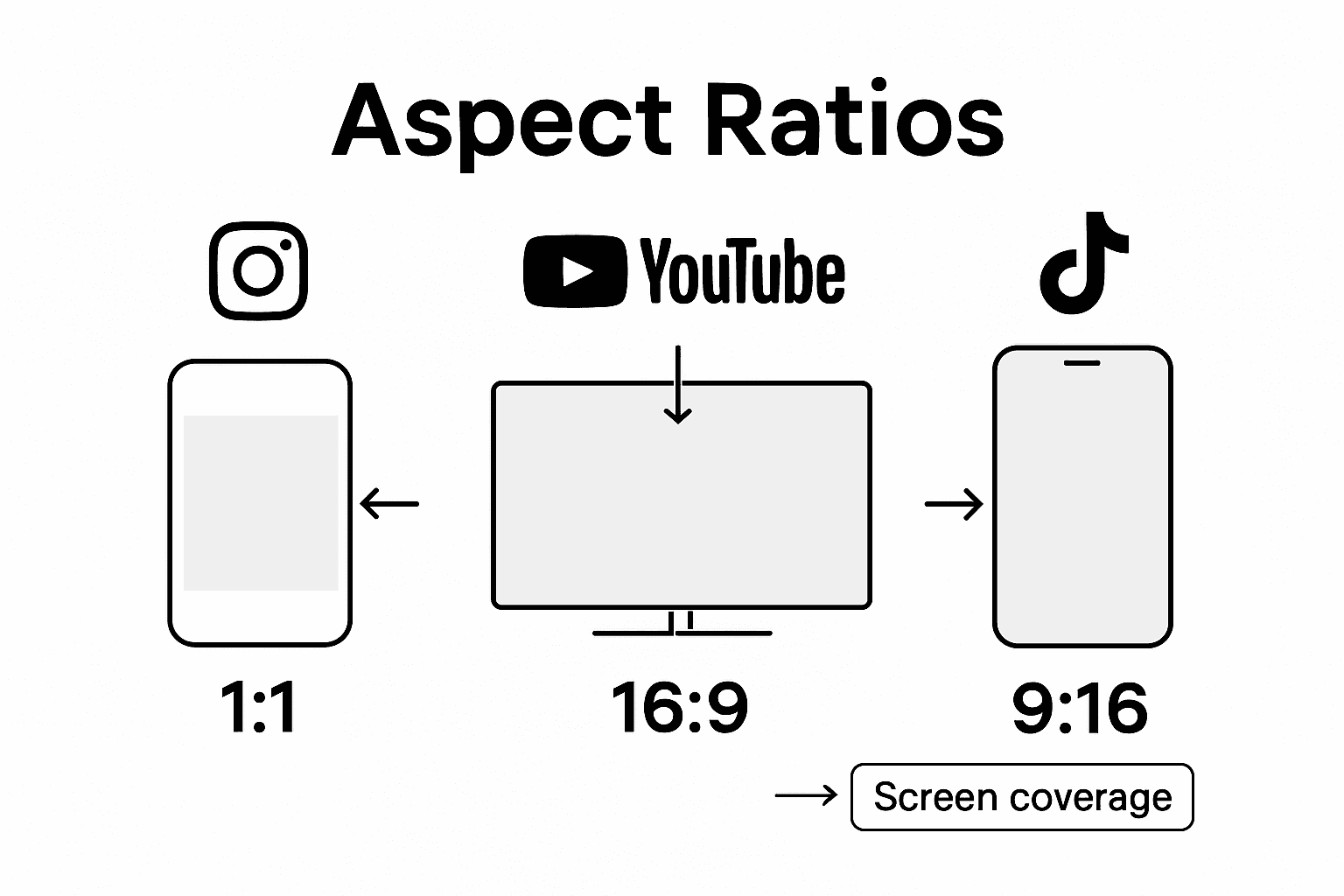
Successful aspect ratio integration demands a holistic approach that combines technical precision with creative flexibility. Cinematographers and editors must develop new skills in dynamic framing, understanding how visual elements shift and transform across different screen dimensions. This requires not just technical expertise, but a nuanced understanding of viewer psychology and platform-specific consumption behaviors.
Pro Preparation Tip: Create a comprehensive aspect ratio checklist during pre-production that outlines specific framing requirements, shot composition guidelines, and editing strategies for each intended platform.
Pro Adaptability Tip: Develop a standardized post-production workflow that includes dedicated recomposition sessions, allowing your team to efficiently resize and reframe content without losing visual integrity.
Common Mistakes in Social Media Video Formatting
Social media video formatting involves numerous potential pitfalls that can dramatically undermine content performance, catching even experienced creators off guard. Understanding these common errors is crucial for developing more effective and engaging video content across different platforms.
Critical Formatting Mistakes to Avoid:
- Ignoring platform-specific aspect ratio requirements
- Using low-resolution or poorly compressed video files
- Failing to include subtitles or closed captions
- Producing overly long videos for mobile consumption
- Neglecting visual engagement in the first 3 seconds
- Inconsistent branding across different format versions
Video production guidelines consistently highlight the importance of understanding technical specifications before creating content. Many creators mistakenly assume that a single video can be universally applied across all platforms, which leads to suboptimal viewing experiences and reduced audience engagement.
The most significant formatting errors often stem from a lack of platform-specific knowledge. Each social media platform has unique technical requirements, viewer behaviors, and content consumption patterns. What works brilliantly on YouTube might completely fail on TikTok, making adaptive formatting not just a technical consideration, but a critical creative strategy.
Compare the main formatting challenges and their content impact across video platforms:
| Formatting Challenge | Viewer Impact | Example Platforms |
|---|---|---|
| Cropped or blocked content | Loss of key visuals, confusion | Instagram, TikTok |
| Low resolution or compression | Reduced clarity, unprofessional look | YouTube, Facebook |
| Ignoring platform specs | Poor engagement, misaligned interface | All social platforms |
| No captions or accessibility | Lower accessibility, lost audience | LinkedIn, Facebook |
Pro Quality Control Tip: Develop a comprehensive pre-upload checklist that verifies video resolution, aspect ratio, file size, and platform compatibility before publishing.
Pro Adaptation Tip: Create master video files with extra padding and resolution, allowing flexible recomposition without losing visual quality across different platforms.
Elevate Your Social Media Videos with Perfect Aspect Ratios and AI Precision
Struggling to adapt your content for multiple social media platforms and aspect ratios? You are not alone. Many creators find it challenging to navigate platform-specific ratios like 9:16 for TikTok or 1:1 for Instagram while maintaining cinematic quality and optimal visual composition. Palmedor.ai understands these pain points and offers an AI-powered video creation platform that simplifies this complex process. With smart presets and output customization, you can effortlessly tailor your videos for every social channel, eliminating the guesswork of recomposition and resizing.

Transform your ideas into professional-grade videos that captivate audiences whether on YouTube, Facebook, or LinkedIn. Benefit from features like automated scene creation and script generation that streamline your workflow and help you avoid common formatting mistakes discussed in the article. Discover how easy it is to produce visually stunning content that fits perfectly within your chosen aspect ratio by visiting Palmedor.ai. Start maximizing your video's impact and engagement today by exploring our AI video creation platform and taking advantage of tools designed specifically for social media success.
Frequently Asked Questions
What is aspect ratio, and why is it important for social media videos?
Aspect ratio is the proportional relationship between a video's width and height, typically expressed as two numbers separated by a colon (e.g., 16:9). It is important for social media videos because it influences how content is displayed on various platforms, affecting viewer engagement and overall visual impact.
What are the standard aspect ratios for different social media platforms?
Common aspect ratios for social media platforms include 1:1 (square) and 9:16 (vertical) for Instagram; 9:16 for TikTok; 16:9 for YouTube; and both 1:1 and 16:9 for Facebook and LinkedIn. Adhering to these standards enhances content visibility and engagement.
How can I optimize my video composition based on aspect ratio?
To optimize video composition, match the aspect ratio to your storytelling objectives. For instance, use 16:9 for expansive views in cinematic content, 1:1 for focused, balanced framing on social media, and 9:16 for engaging, mobile-first storytelling. Consider key elements' positioning and negative space to enhance viewer experience.
What are common mistakes to avoid when formatting social media videos?
Common mistakes include ignoring platform-specific aspect ratios, using low-resolution files, not adding subtitles, producing overly long videos for mobile, and failing to grab viewer attention in the first few seconds. Avoiding these pitfalls can significantly improve content performance.