Animated Video Studio: Everything You Need to Know
Animated video studio explained for creators: discover core concepts, studio types, advanced features, project workflow, and cost considerations in this comprehensive guide.
Animated Video Studio: Everything You Need to Know
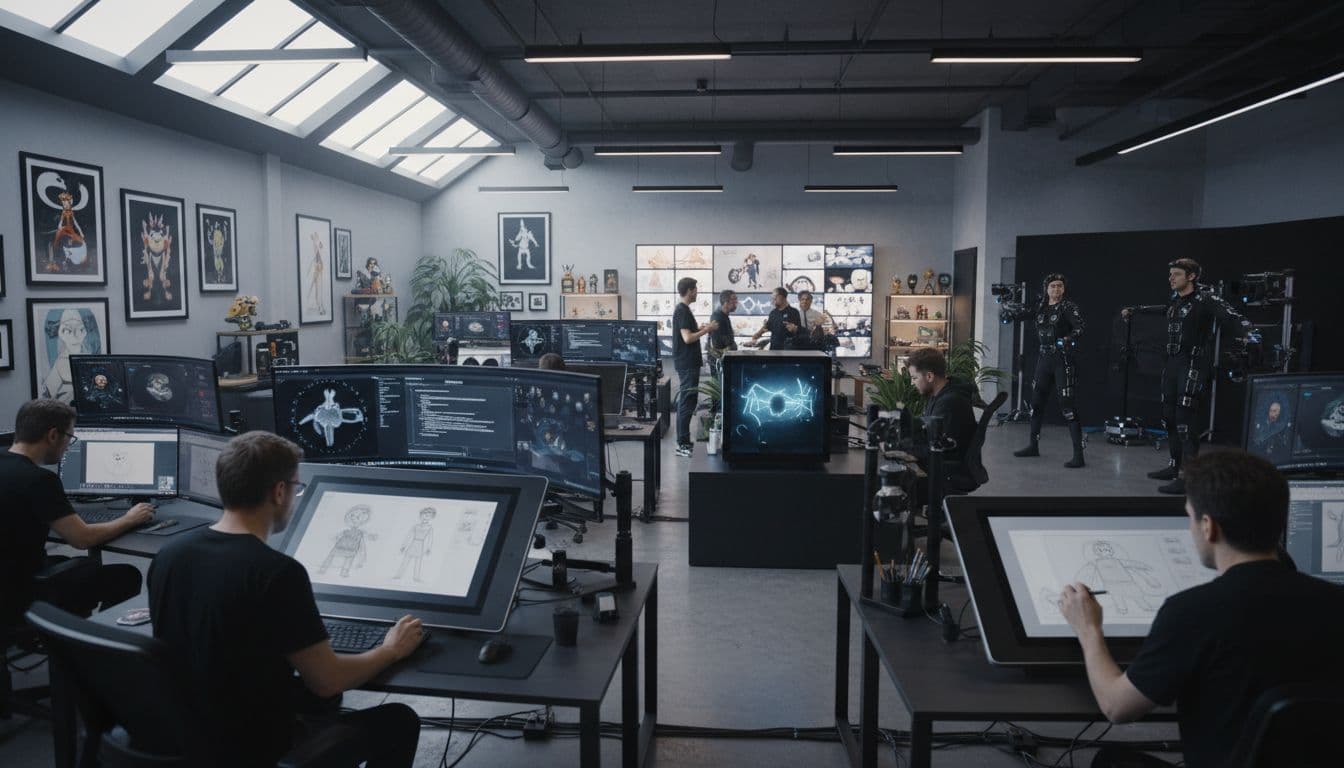
Animated video studios are transforming the way american businesses and creators tell their stories. Over 80 percent of digital content now includes some form of animation, showing just how vital these studios have become. As tools powered by artificial intelligence rapidly evolve, understanding the core concepts and workflows behind modern animation is more important than ever. This article sheds light on the major studio types, essential technologies, and practical uses that drive innovation in visual storytelling across the american market.
Table of Contents
- Defining Animated Video Studios And Core Concepts
- Major Types Of Animated Video Studios Explained
- Essential Technologies And Workflow Processes
- Real-World Uses For Businesses And Creators
- Cost Structures, Licensing, And Project Considerations
Key Takeaways
| Point | Details |
|---|---|
| Integration of Technology and Art | Modern animated video studios combine artistic creativity with advanced technologies, such as AI and computational storytelling, to enhance visual narratives. |
| Diverse Studio Types | Animated video studios fall into categories such as traditional, digital, and AI-powered, each utilizing distinct methodologies and technologies to achieve their storytelling goals. |
| Efficient Production Workflows | Leveraging advanced technologies, contemporary studios streamline workflows, enabling quicker iterations and higher-quality outputs in animation production. |
| Strategic Business Implementation | Businesses effectively use animation for diverse purposes, including marketing, training, and product demonstration, enhancing communication and audience engagement. |
Defining Animated Video Studios and Core Concepts
Animated video studios represent sophisticated digital environments where visual storytelling comes to life through advanced technological frameworks. These creative spaces blend artistic vision with cutting-edge technological capabilities to transform conceptual ideas into dynamic, engaging visual narratives.
At their core, animated video studios leverage complex multi-agent storytelling systems that enable seamless content generation. According to groundbreaking research from arxiv, frameworks like AniMaker are revolutionizing how animated stories are conceptualized and produced. These systems incorporate sophisticated processes such as:
- Storyboard Generation: Automated creation of narrative sequences
- Video Clip Production: Intelligent rendering of animated scenes
- Narrative Evaluation: Advanced algorithms assessing storytelling quality
The technological landscape of animated video studios has dramatically evolved from traditional hand-drawn techniques to sophisticated AI-powered production pipelines. Modern studios now employ computational storytelling methods that can generate entire animated sequences from minimal input, transforming abstract concepts into rich, immersive visual experiences. These advanced systems analyze narrative structures, character interactions, and visual dynamics to create compelling content with unprecedented efficiency and creativity.
Creative professionals working within animated video studios must now blend artistic intuition with technical proficiency. Understanding computational storytelling frameworks, mastering AI-assisted generation tools, and maintaining a deep appreciation for narrative flow have become essential skills. The future of animation lies not just in artistic talent, but in the seamless integration of human creativity with intelligent technological systems that can interpret, generate, and refine visual storytelling at remarkable speeds.
Major Types of Animated Video Studios Explained
Animation studios represent a diverse ecosystem of creative production environments, each specializing in unique approaches to visual storytelling. These studios can be categorized based on their technological infrastructure, creative focus, and production methodologies, offering creators and brands multiple pathways to bring their visual narratives to life.
Traditional Animation Studios
Traditional animation studios focus on hand-drawn and classic animation techniques. These studios prioritize artistic craftsmanship, often employing skilled illustrators and animators who meticulously create frame-by-frame animations. Their workflow typically involves:
- Detailed storyboarding
- Manual character design
- Frame-by-frame animation techniques
- Extensive artistic collaboration
Digital Animation Studios
Digital animation studios leverage advanced computer graphics and 3D rendering technologies to create sophisticated visual experiences. These studios specialize in:
- Complex 3D character modeling
- Advanced motion capture techniques
- Photorealistic rendering
- Sophisticated animation software integration
AI-Powered Animation Studios
Emergent AI-powered animation studios represent the cutting edge of visual content creation. These studios utilize machine learning and computational storytelling frameworks to generate animated content with unprecedented speed and complexity. Key characteristics include:
- Automated storyboard generation
- Intelligent scene composition
- Rapid content iteration
- Algorithmic narrative development
The evolution of animation studios reflects the broader technological transformation in creative industries.
 Modern studios are no longer confined to traditional artistic boundaries but are increasingly becoming hybrid environments where human creativity intersects with intelligent technological systems. Whether focusing on hand-drawn techniques, digital rendering, or AI-assisted generation, each studio type contributes uniquely to the rich tapestry of animated storytelling.
Essential Technologies and Workflow Processes
Animation production technologies represent a complex ecosystem of interconnected tools, software, and methodologies that transform creative concepts into compelling visual narratives. These sophisticated systems enable creators to streamline production processes, enhance creative efficiency, and deliver high-quality animated content across multiple platforms.
According to research from arxiv, advanced multi-agent frameworks like AniMaker are revolutionizing workflow processes through integrated technological solutions. The core technological infrastructure for animation studios typically encompasses several critical components:
- Storyboarding Software: Digital tools for narrative planning and scene sequencing
- 3D Modeling Platforms: Advanced rendering environments for character and environment creation
- Motion Capture Systems: Technologies tracking human movement for realistic animation
- Rendering Engines: High-performance computational systems generating complex visual sequences
Computational Workflow Processes
Modern animation workflows integrate computational storytelling techniques that dramatically reduce production time and enhance creative possibilities. As detailed by Hatch Studios, these workflows typically follow a structured progression:
- Conceptualization and scripting
- Storyboard development
- Character and environment design
- Animation and rigging
- Rendering and post-production
AI-Enhanced Production Technologies
Cutting-edge animation studios are increasingly adopting artificial intelligence to optimize workflow efficiency. These intelligent systems can autonomously generate preliminary storyboards, predict animation sequences, and even suggest creative improvements to narrative structures. The integration of machine learning algorithms allows for:
- Automated scene composition
- Intelligent character movement prediction
- Rapid iteration and content generation
- Sophisticated narrative analysis
The convergence of human creativity and technological innovation continues to reshape animation production. By leveraging advanced computational frameworks, studios can now produce more complex, nuanced, and visually stunning content with unprecedented speed and precision.
 The future of animation lies not just in artistic skill, but in the seamless integration of creative vision with intelligent technological systems.
Real-World Uses for Businesses and Creators
Animated video production has transformed from a niche creative medium to a powerful communication tool for businesses across diverse industries. Organizations now leverage sophisticated visual storytelling techniques to engage audiences, explain complex concepts, and create memorable brand experiences that transcend traditional marketing approaches.
According to Sonnix Studios, animation offers businesses remarkable versatility across multiple communication channels. The most prominent real-world applications include:
- Marketing Campaigns: Creating compelling brand narratives
- Product Explanations: Simplifying technical information
- Training Materials: Developing engaging educational content
- Social Media Content: Generating shareable visual experiences
- Customer Support: Producing instructional and onboarding videos
Strategic Business Applications
Hatch Studios highlights that different animation styles serve unique business objectives. Explainer videos break down complex services, corporate presentations humanize brand messaging, and product demonstrations showcase technological capabilities with unprecedented clarity.
Industry-Specific Use Cases
Animation's adaptability makes it invaluable across sectors:
- Technology Companies: Visualizing abstract software concepts
- Healthcare Providers: Explaining medical procedures
- Educational Institutions: Creating interactive learning modules
- Financial Services: Simplifying investment and economic narratives
- Startups: Communicating innovative business models
The strategic integration of animated content enables businesses to communicate more effectively, transform complicated information into digestible visual experiences, and create emotional connections with their target audiences. By combining storytelling artistry with technological innovation, animated videos have become an essential communication tool for modern organizations seeking to differentiate themselves in increasingly competitive markets.
Cost Structures, Licensing, and Project Considerations
Animation project economics represent a complex landscape of financial planning, technological investment, and creative resource allocation. Businesses and creators must navigate intricate cost structures that balance technological capabilities, creative talent, and budgetary constraints while ensuring high-quality visual storytelling.
Project Cost Breakdown
Animation production costs typically involve multiple financial components:
- Talent Expenses: Artist and animator compensation
- Software Licensing: Digital tool and rendering platform subscriptions
- Hardware Infrastructure: High-performance computing equipment
- Rendering Computational Costs: Cloud processing and computational resources
- Post-Production Services: Editing, sound design, and final refinement
Licensing Complexity
Licensing considerations in animation production encompass several critical dimensions:
- Software Licensing: Tiered pricing for professional animation platforms
- Asset Usage Rights: Permissions for character designs, music, and visual elements
- Distribution Agreements: Costs associated with broadcasting and digital distribution
- Intellectual Property Considerations: Ownership and derivative work rights
Strategic Project Planning
Successful animation projects require comprehensive financial and creative strategy. Key considerations include:
- Defining precise project scope and deliverables
- Establishing realistic budget parameters
- Selecting appropriate technological infrastructure
- Managing computational and human resource allocation
- Planning for iterative development and potential revisions
The financial landscape of animation production continues to evolve rapidly, with emerging technologies like AI-assisted generation and cloud-based rendering dramatically transforming traditional cost structures. Creators must remain adaptable, understanding that technological innovation can simultaneously reduce production expenses while expanding creative possibilities. Strategic investment in the right tools, talent, and technologies will determine a project's financial viability and creative potential.
Elevate Your Animated Video Projects with AI-Powered Creativity
Creating engaging animated videos involves complex processes like storyboard generation, scene composition, and narrative evaluation that often require advanced skills and significant time investment. If you find yourself overwhelmed by the need to blend artistic vision with technical tools or by managing costly software and hardware, you are not alone. Many creators and businesses struggle to efficiently transform ideas into captivating animated stories while maintaining high quality and controlling costs.
At Palmedor.ai, we understand these challenges and offer a streamlined solution that harnesses cutting-edge AI technology to simplify animation production. Our platform automates key stages discussed in the article such as script generation, scene management, and rendering. By turning simple prompts or reference images into professional-grade videos, Palmedor.ai removes barriers created by traditional workflows and expensive infrastructure. This means you can focus on creative storytelling without sacrificing speed or quality.

Ready to bring your animation ideas to life faster and with less effort Discover how Palmedor.ai can transform your approach using AI-powered tools designed for creators and professionals eager to produce high-impact videos. Explore features like smart presets, customizable output formats, and flexible pricing tailored to your unique needs. Take the next step toward mastering animated video creation with technology that works for you today.
Frequently Asked Questions
What is an animated video studio?
An animated video studio is a creative environment where visual storytelling is brought to life using advanced technologies. These studios combine artistic vision with technological capabilities to produce dynamic animated narratives.
How do traditional and digital animation studios differ?
Traditional animation studios focus on hand-drawn techniques and artistic craftsmanship, while digital animation studios utilize computer graphics and 3D rendering technologies to create complex visual experiences.
What are the key technologies used in animation production?
Key technologies in animation production include storyboarding software, 3D modeling platforms, motion capture systems, and rendering engines. These tools help streamline the workflow and enhance creative efficiency.
How can businesses benefit from using animated videos?
Businesses can use animated videos for various purposes, such as marketing campaigns, product explanations, training materials, and customer support. Animation simplifies complex information and creates engaging visual narratives that resonate with audiences.